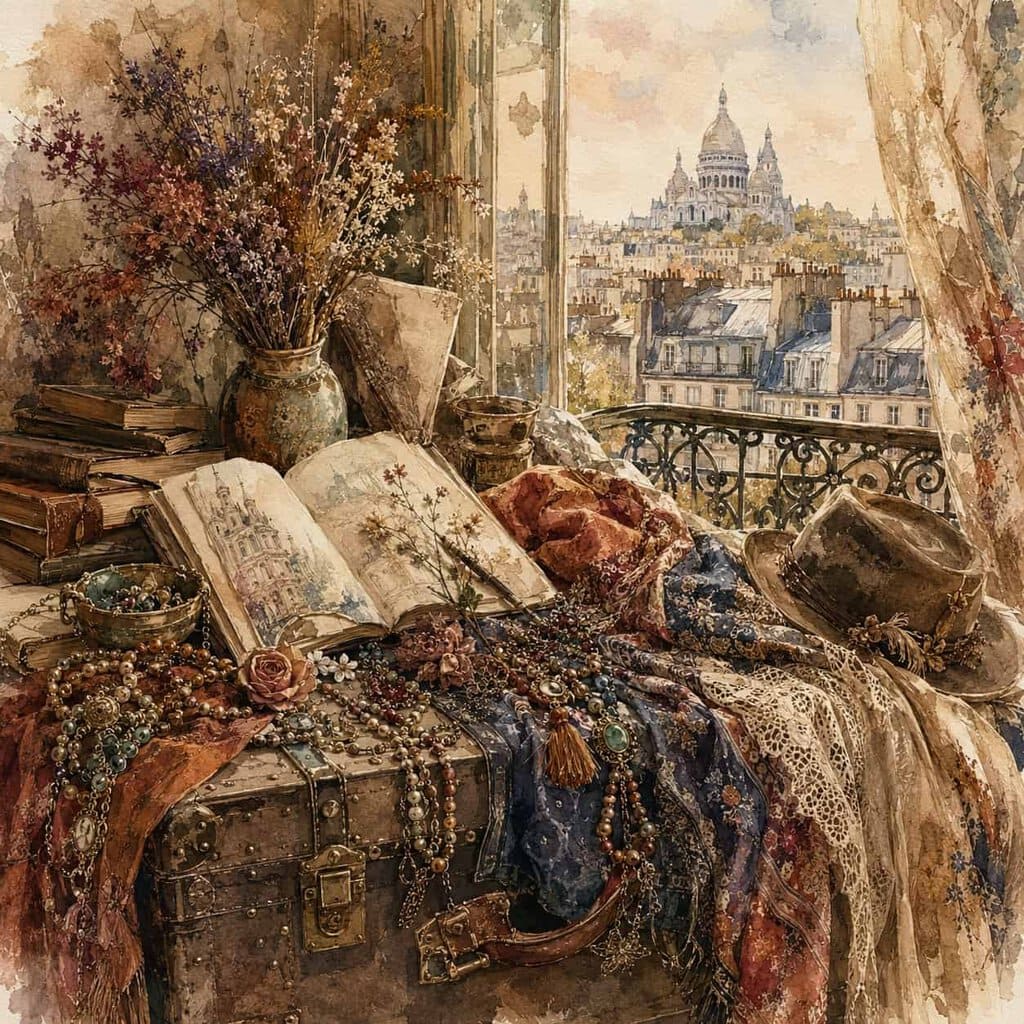
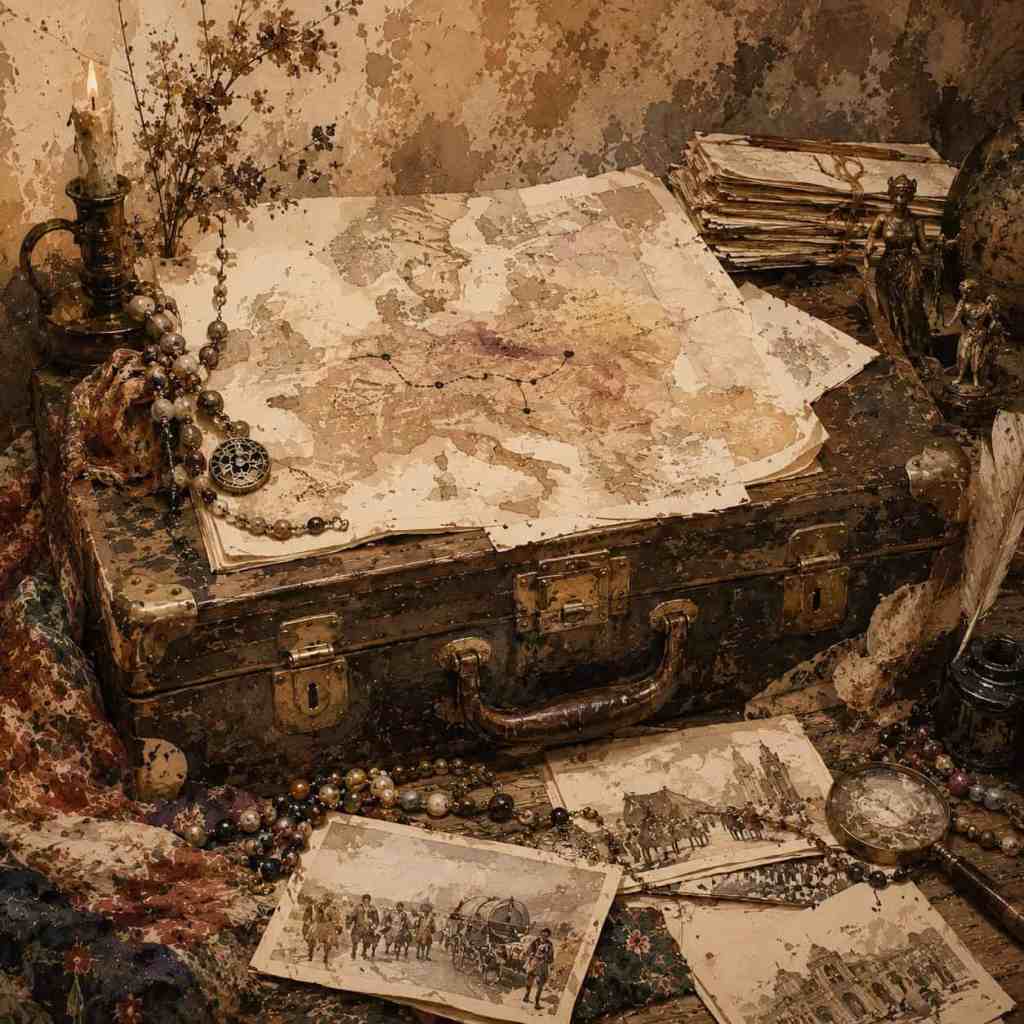
Boho has no birth certificate. It has an old suitcase covered with labels from several centuries, and some of them are held on mostly by determination and historical misunderstanding. Parisian bohemia stuck on one, artists and counterculture added others, then came hippies, fashion designers and festivals; a few labels arrived by routes far less romantic than they look today on a beige moodboard beside pampas grass.
That is why the history of boho cannot be told as a neat straight line from a poor poet through flower children to a rattan chair. Modern boho grew from several historical layers that met, separated, were rediscovered, sold at a higher price and occasionally pretended they had known each other forever. A nineteenth-century Parisian bohemian was not a hippie, a hippie was not boho chic, and Sienna Miller probably did not wake up wondering what Henry Murger would think of her boots.
Still, threads run between them. Some are real; others were tied together retrospectively because people love a handsome family tree, and fashion is especially good at discovering a great-grandmother precisely when having one becomes useful.
Lola Tralala: Boho may be the only style that managed to build a career out of the idea that having a career is suspiciously bourgeois.
Bohemia was not boho yet — and the word itself has an uncomfortable past
Today we use boho mainly for an aesthetic: loose silhouettes, layering, vintage pieces, statement jewelry, craft, texture, old and new objects together, sometimes festival messiness and sometimes an interior so perfectly arranged that even the “casually thrown” blanket clearly attended a three-hour meeting. Historical bohemia, however, was not a fashion style, and nobody subscribed to a “bohemian lifestyle starter pack”.
It described a way of life, a social environment and gradually a cultural image of people living outside ordinary bourgeois certainties: artists, writers, musicians, students and others who sometimes rejected convention on principle and at other times simply found that life refused to deliver regular income, stable housing and an orderly future in one elegant package.
But the word bohemian has an older and much less romantic history. The French bohémien was used for centuries for Roma people and other groups perceived as itinerant, linked to the mistaken belief that they came from Bohemia in the Czech lands. Stereotypes about wandering, fortune-telling, unruliness, instability and criminality accumulated around the term. Europe thus created a strange double image: the “free person unbound by rules” on one side, and the person suspected, rejected and persecuted for that supposed lack of ties on the other.
This distinction matters. Roma people did not create modern boho style, but the later European idea of “bohemian life” did not emerge from nowhere; part of its vocabulary and imagery came from stereotypes the majority society had built around Roma communities. That is also why phrases such as gypsy style, gypsy boho or the romantic “gypsy soul” are not simply cute synonyms for a woman who likes long skirts and has no idea where she put her keys.
There is an uncomfortable historical irony here. Europe first reduced real people to the image of “free wanderers”, used that image to stigmatize them, and later borrowed parts of the same fantasy as a romantic costume for its own artists. History is occasionally very talented at making a mess and then leaving us to sort it into the right drawers two hundred years later.
Parisian bohemia: a legend born from rent bills
In the first half of the nineteenth century, Paris grew into a magnet for people who wanted to paint, write, perform, argue, change art and, if possible, avoid starving while doing it. That last point was not always guaranteed, a detail romantic images of bohemia tend to acknowledge rather reluctantly.
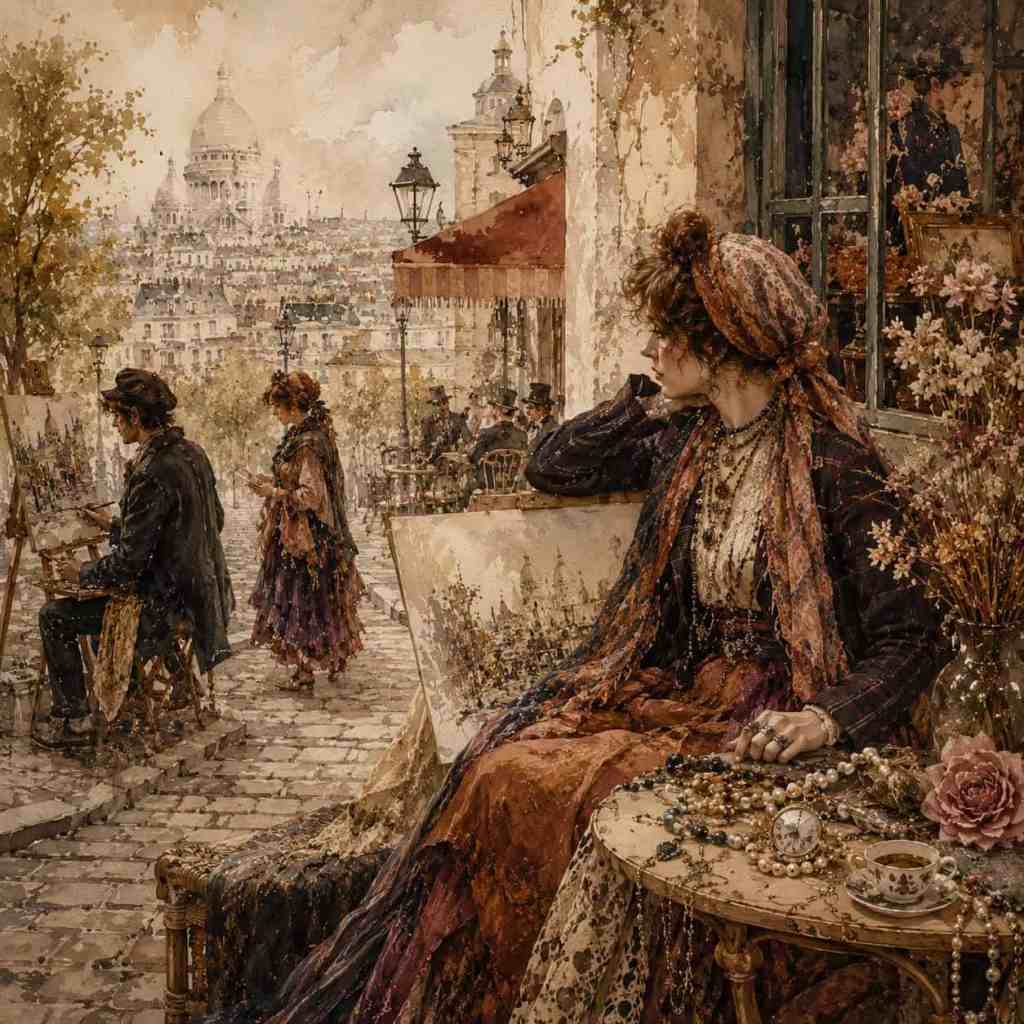
One of the key figures in shaping the image of the Parisian bohemian was Henry Murger. From the mid-1840s he published stories about young artists living among creativity, friendship, love, cafés, debt and a highly experimental relationship with financial planning. His Scènes de la vie de bohème helped turn the experience of part of Paris’s artistic milieu into a cultural legend more durable than most of its rental contracts.
Here begins a mechanism that will stay with boho: reality slowly becomes aesthetic. A freezing room is simply a freezing room in real life, but literature can turn it into an attic studio where an immortal work is born by the light of the last candle. Debt is an unpleasant letter in reality; in legend it can look like proof that somebody refused to sell their soul to the bourgeois world. A worn coat may be the result of having no money, yet generations later the same look can be sold as “authentic distressed bohemian outerwear” for enough to cover the original bohemian’s rent for several months.
That does not mean bohemia was only pose. Many people genuinely questioned social norms, looked for different forms of creation, relationships and life, and placed artistic or intellectual freedom above the security of a more conventional path. Cultural memory, however, likes to edit such worlds so they look good above the fireplace: it keeps the wine, poetry, lovers and midnight conversations, while tuberculosis, hunger and existential anxiety are discreetly cropped out.
The bohemian therefore stopped being merely a person. He became the archetype of someone who rejects the norm, creates, lives on their own terms and somehow looks as if regular office hours might give them hives. Modern boho inherits this archetype far more directly than any specific nineteenth-century wardrobe.
François Villon keeps peeking into this story too, our favourite guest who arrived about four centuries too early. Villon did not found bohemia and there is no secret historical thread running from him to festival waistcoats, but his later cultural image as a rebellious poet was so attractive that subsequent generations happily adopted him into the family of nonconformist artists.
It is, in fact, very human. When someone fits nicely into our history as a forefather of rebellion, we occasionally pencil them into the family tree ourselves.
Lola Tralala: Villon is welcome at the family gathering. Just please do not print him a business card saying “François Villon — founder of Boho Ltd., since 1431”.
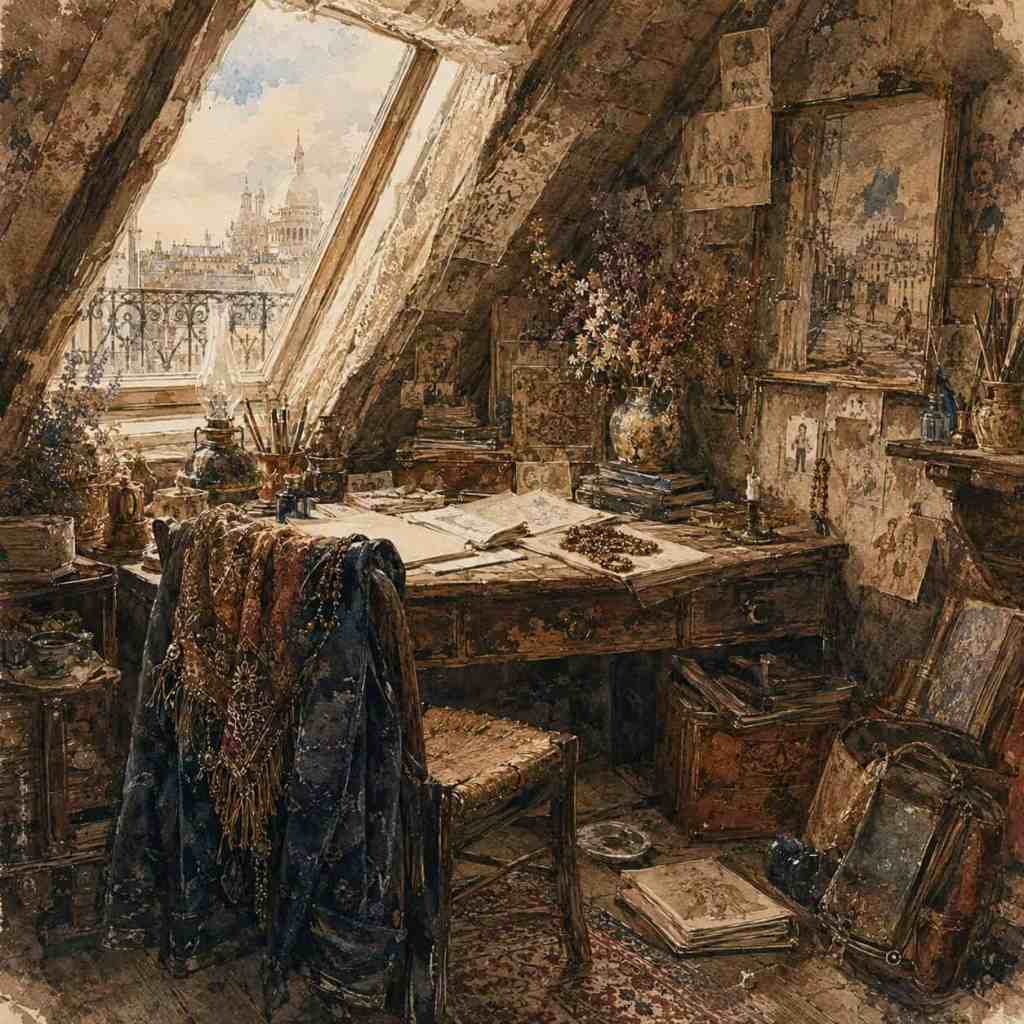
Montmartre and the moment an unconventional life became something you could wear
Collective imagination loves Montmartre because it contains everything needed for the perfect bohemian picture: sloping streets, studios, cafés, cabarets, smoke, painters, poets and so much absinthe that modern legend makes Paris sound as if it needed a separate absinthe sewer. Reality was more varied — and, crucially, later in time.
Artists began moving to Montmartre in larger numbers mainly from the 1870s onward. Lower rents, available space, light, the partly rural character of the district and later its dense social and nightlife drew them there. By the turn of the twentieth century Montmartre had become one of the great centres of artistic life, but it should not be moved several decades backwards merely because Murger looks good there.
For boho history, another shift matters even more: bohemia becomes visible. There was no single uniform and no Paris office issued a “bohemian licence” in exchange for a velvet waistcoat, but unconventional circles became associated with visual signals: looser or unusual clothes, older pieces, striking accessories, historicising elements and varying degrees of roughness, some deliberate and some imposed by economics.
Once society can recognize a way of life in a photograph, fashion is already at the door. Part of the look came from reality, part from self-expression and part from pose, because no alternative is so alternative that sooner or later it will not attract somebody carefully calculating how their spontaneity ought to look.
That remains one of boho’s most persistent paradoxes. The style is supposed to look as if it grew naturally from personality, life, travel and chance discoveries, even if someone spent forty minutes deciding which of seven nearly identical scarves looks least decided.
And this is where the original way of life starts turning into an image of a way of life. Once an image exists, somebody can borrow it, imitate it, modify it, sell it and eventually place it in a catalogue beside a coffee table.
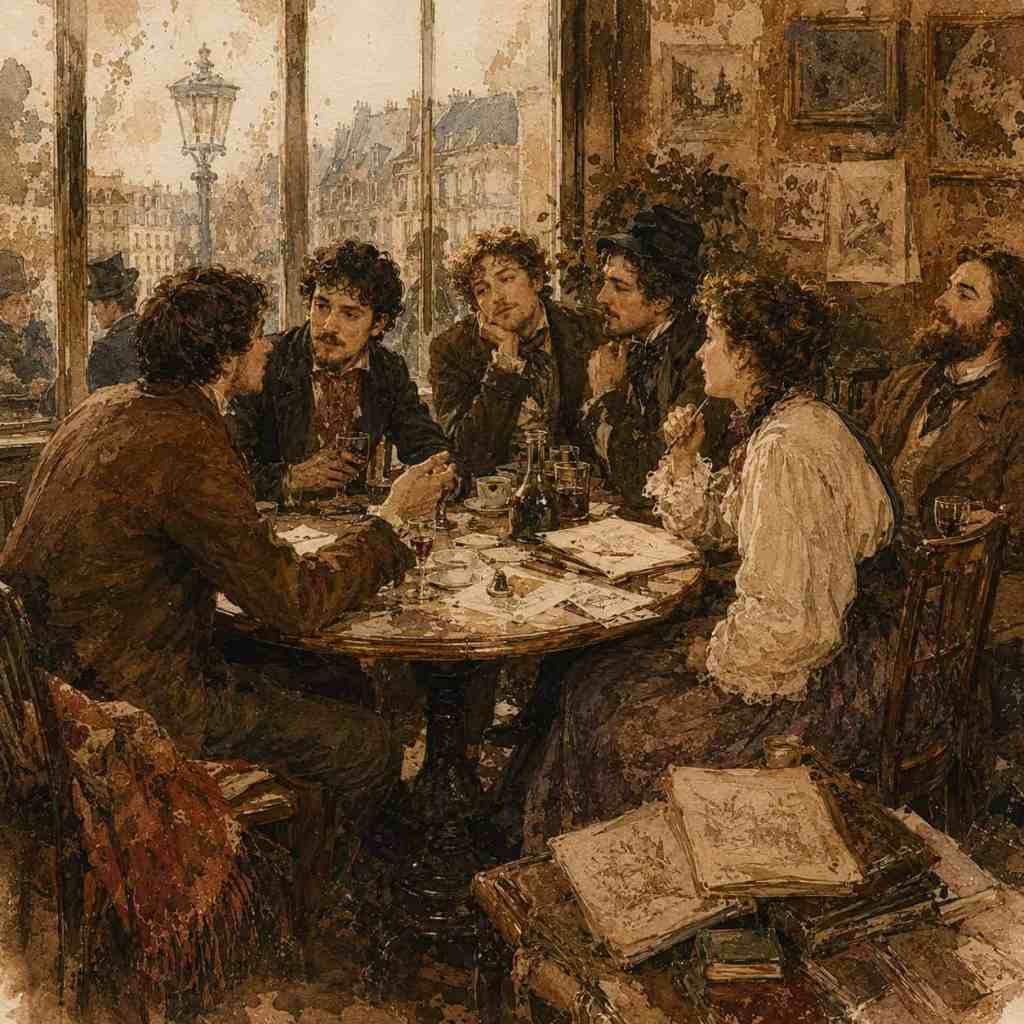
The world inside the wardrobe: cultural exchange, trade and objects that did not always travel voluntarily
Older stories about boho often break into a romantic gallop here. Artists supposedly “discovered” exotic fabrics, merchants brought marvellous objects from distant lands, cultures entered a creative dialogue and an open global aesthetic emerged from the colourful mixture. There is truth in that story, but also enough missing chapters to build a separate bookcase.
European fashion never developed in isolation. Textiles, dyes, shawls, silk, embroidery, garment cuts and production techniques travelled along trade routes for centuries, long before anyone used the word boho in its modern sense. Indian textiles were central to global trade, Kashmir shawls shaped European fashion, Chinese silk was a luxury commodity, and Japanese garments and aesthetics fascinated European designers and consumers at different times.
But every object travelled differently. Some moved through long-standing trade, some with migrants, some as luxury goods and others through colonial networks. Some were copied by European industry; others acquired new meanings in European markets while the original maker disappeared from the story faster than a small workshop’s name disappears from a multinational label.
That is why it no longer makes sense to write that “boho took jewelry from Africa, fabric from India and textiles from South America”. Africa is not one piece of jewelry, India is not one fabric and South America is certainly not a universal warehouse of colourful cushions from which a Western interior can fetch a little soul.
A more useful question is concrete: What is the object? Who made it? From which region? How did it travel, and what happened to its meaning on the way? The vague idea of “global inspiration” then becomes a real human story — exactly the kind of thread BeadCulture should untangle rather than weaving into one enormous generic ethnic blanket.
Cultural exchange itself is not the problem. People have always shared food, music, technologies, words, materials, decorative ideas and ways of dressing; if cultures had never mixed, the world would not be more authentic, only poorer in food and substantially less interesting in the wardrobe department.
The difference is that not every exchange happens under equal conditions. Sometimes it is admiration, collaboration or ordinary trade; sometimes copying, inequality or a situation in which people of origin carried stigma for a cultural marker while later users receive applause and three thousand likes for the same thing.
That is why writing “we use it respectfully” is not enough to declare the cultural audit complete. Respect is not fabric softener in which a problematic history can be washed at thirty degrees and pulled out clean. It means finding out what we are using, where it came from, what it means and who may be owed a name, context or money.
And, by the way, not every object from another culture has to be sacred, ritual and filled with ancient wisdom. Sometimes a beautiful bead was simply a beautiful bead and its maker was a craftsperson who wanted to do good work and sell it, not a mystical guardian of the cosmic energy of the third moon.
That is good news. Real people are much more interesting than generic shamans from a marketing catalogue.
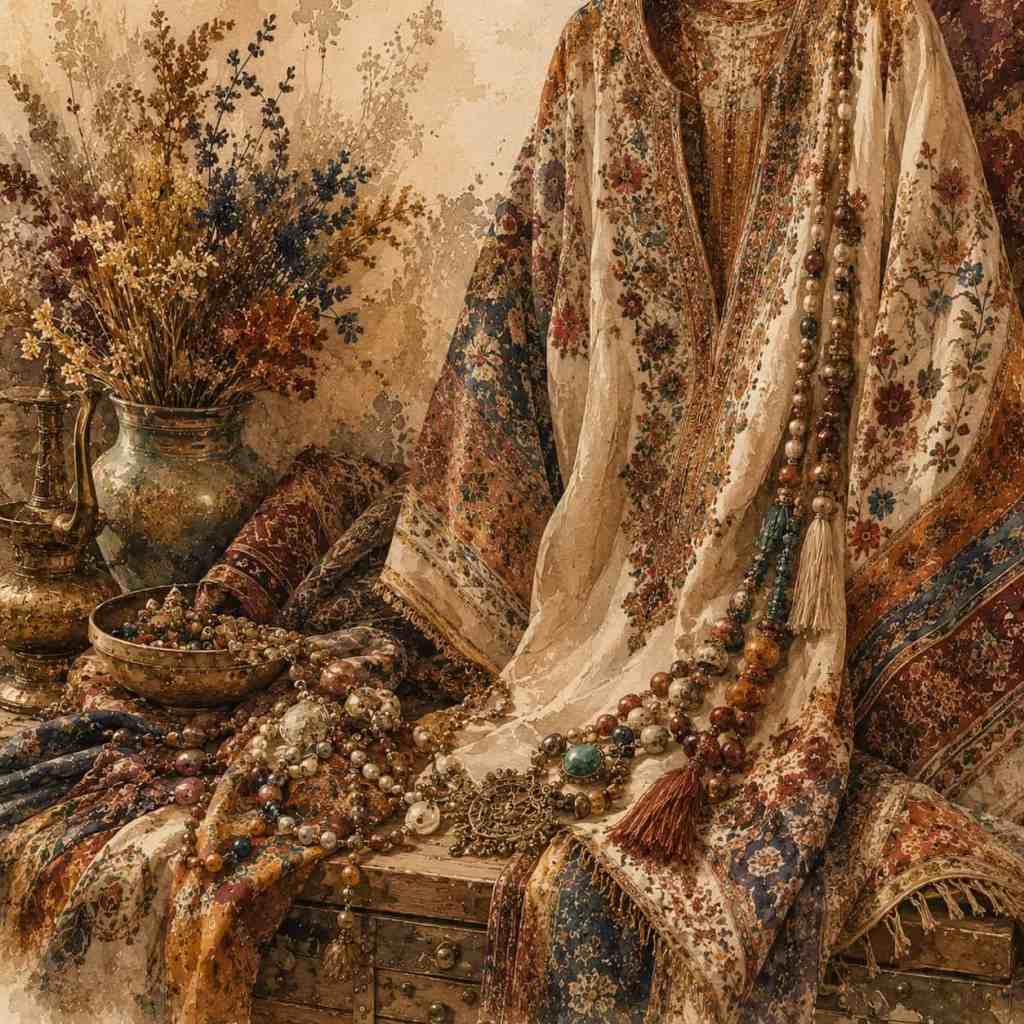
The 1960s and 1970s: now modern boho starts recognizing itself in the mirror
If we want the period when today’s visual boho DNA began arranging itself into a form we actually recognize, we have to jump from the nineteenth century to the 1960s and 1970s. Fashion was no longer just about what looked attractive; it became a tool of generational identity, political attitude, sexuality, musical belonging and sometimes a remarkably effective way to give parents several sleepless nights.
Hippie and broader countercultural environments brought looser silhouettes, long dresses and skirts, layering, second-hand clothing, older garments, embroidery, beads, tie-dye, patchwork and DIY. Many of these elements existed long before hippies, but they gained new meanings within Western youth culture and became visible ways of rejecting the polished, conventional and consumer-driven fashion of the previous generation.
Old clothes no longer had to mean that someone could not afford new ones. They could mean that they did not want new ones, and had found in a worn jacket something a mass-produced outfit lacked: a trace of life, individuality and the possibility of assembling one’s own image rather than buying it complete with instructions.
This period also intensified interest in non-European garments, textiles, jewelry and crafts alongside countercultural ideas of openness to different ways of living. Sometimes that produced real curiosity and exchange; at other times, a very shallow idea that wearing something from another part of the world automatically came with expanded consciousness included in the price.
Hippie culture was therefore no morally perfect fairy tale of openness. It was human: beautiful, naïve, brave, experimental, sometimes problematic and often several of those things at once.
From this layer modern boho inherited much of its favourite visual vocabulary: layering, texture, handwork, embroidery, beads, patchwork, long silhouettes, vintage and the pleasure of combining things a tidier fashion system would keep in separate drawers.
Then designers such as Thea Porter enter the story and show that countercultural aesthetics can also move into luxury fashion. Porter worked with rich textiles, kaftans and elements influenced by dress traditions of the Middle East, selling them to clients who certainly did not need to wait for somebody to donate an old dress to a thrift shop.
One of boho’s loveliest paradoxes was born: a style associated with resistance to mainstream consumption turned out to be a fantastic product for mainstream consumption. Capitalism simply looked at the counterculture, thought for a moment and said, “That’s cute. Do you have it in a medium?”
Lola Tralala: The revolution ended at the exact moment someone realized an embroidered vest could carry a price tag.
Festival culture then recycled and reshaped this visual language further. Glastonbury, especially in the 2000s, became one of the places where older hippie, vintage and boho elements mixed with mainstream festival fashion.
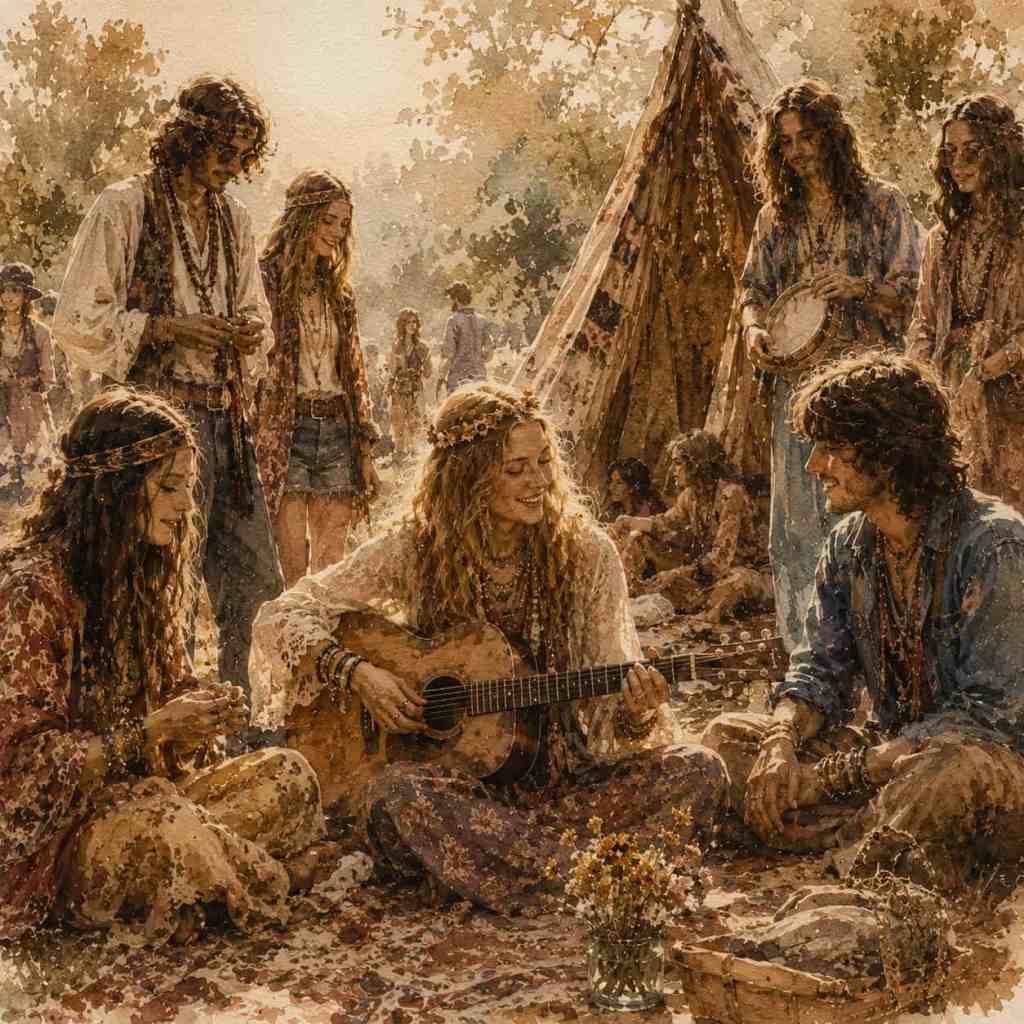
From boho chic to the internet: when controlled mess became a global product
Around the turn of the millennium, older bohemian and hippie inspirations were reorganized into a highly visible mainstream trend: boho chic. Sienna Miller, Kate Moss and other 2000s fashion icons helped popularize layered skirts, tunics, waistcoats, belts, boots, oversized bags, vintage pieces, loose hair and styling designed to look as if it had been assembled ten minutes before leaving the house.
Naturally, that apparent effortlessness was often prepared with the precision of a military operation. “Carelessness” is a fashion effect too, and it can require a surprising amount of work when every strand of hair has to demonstrate exactly how little you care about it.
Boho chic also shows how far the aesthetic had travelled from the original bohemian. A historical artist might have worn a worn-out coat because there was no money for a new one; a boho-chic customer can buy a brand-new expensive coat precisely because it resembles something that appears to have had three owners, two train journeys and a complicated relationship with the laundry.
That does not make modern boho “fake”. It means its function changed: a way of life became an aesthetic language that can now be used without any connection to historical bohemia or counterculture.
Then the internet did what it usually does with a broad aesthetic: multiplied it at the speed of a houseplant accidentally watered with tomato fertilizer. Today we have boho chic, dark boho, western boho, coastal boho, minimal boho, desert boho, artisan boho and many other fusions.
Some labels have a reasonably clear history and have been used for years; others are recent internet or marketing categories, and still others are appearing before our eyes. There is nothing wrong with that. Culture keeps branching, and a new style does not need permission from a historical committee.
The problem starts only when we manufacture fake ancestors for a modern micro-aesthetic. The internet has a fascinating ability to invent an aesthetic on Monday, add “ancient symbolism” on Wednesday and have somebody explain its mysterious Celtic roots on TikTok by Friday — roots that, strangely enough, appear in no Celtic source.
BeadCulture will therefore distinguish among different boho variants. A historical direction will be called historical, a newer fashion category will be called newer, and an internet or original fusion will be called exactly that, because imagination really does not need a fake family tree in order to be beautiful.
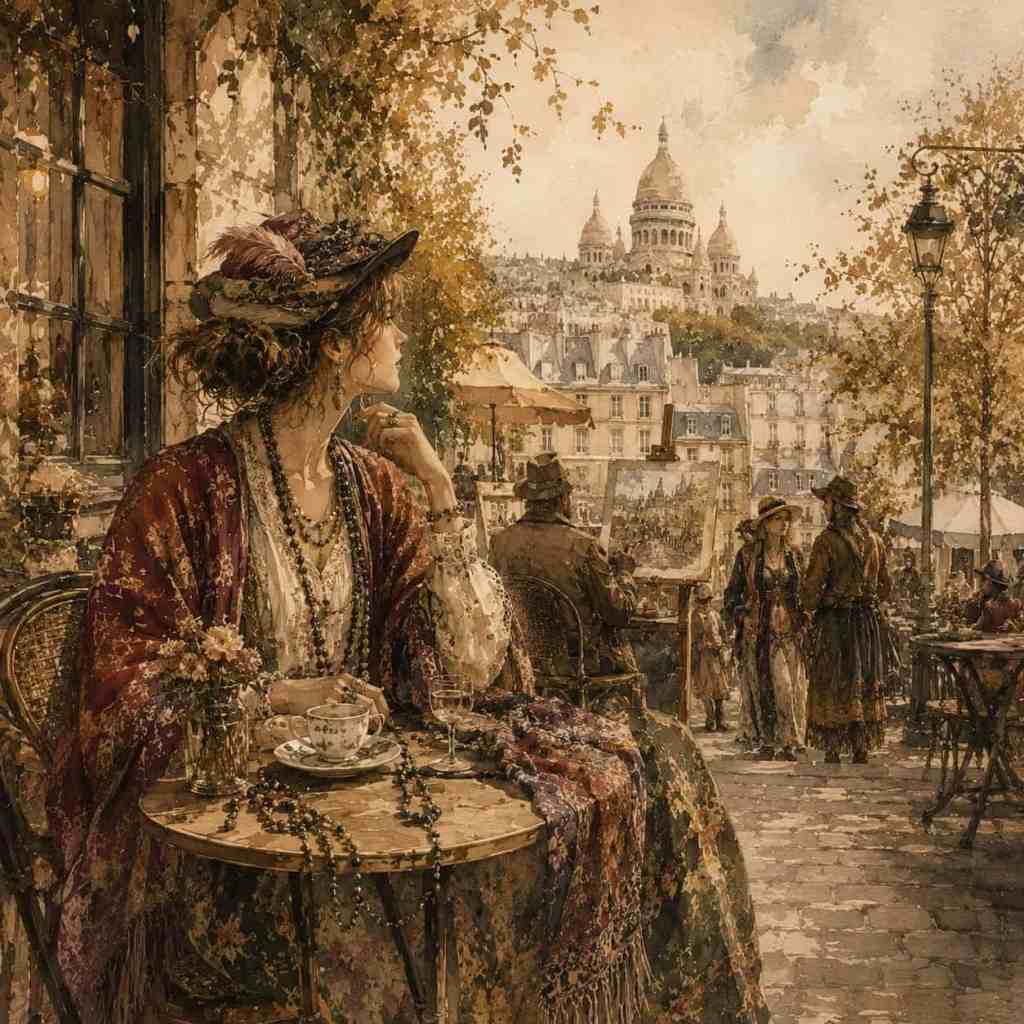
What survived in boho — and why it still has such pull
Strip away the specific dresses, fringe, colours, bags and regulation amount of dried grass per square metre, and several recurring principles remain. One is resistance to overly rigid rules; another is personal mixing and layering; others include an attraction to vintage, craft, texture, roughness and objects that look as if they have biographies of their own.
That is why boho often works best when it does not look like a complete set bought from one mannequin. An old ring, a new sweater, a bracelet from a small workshop, a second-hand bag and a scarf inherited from someone who would probably regard the phrase “boho aesthetic” as a diagnosis can feel more convincing together than a perfectly coordinated “boho collection”.
Visible human work matters too. Embroidery, weaving, ceramics, beadwork, repair, patina and small irregularities suggest an object that was not produced anonymously and untouched by human hands — even though the modern market is perfectly capable of industrially manufacturing a highly precise imitation of handmade imperfection, because civilization is nothing if not thorough.
Boho also overlaps naturally with sustainability, but it does not receive an automatic green halo. Vintage, second hand, repairs, upcycling, local craft and long use of quality objects can be sustainable choices; a mass-produced polyester blouse does not gain ecological citizenship because it has tassels and was photographed beside a cactus.
Perhaps this is where boho still offers something valuable. An object does not need to be new, perfectly smooth or bought yesterday to matter. It can carry a scratch, a repair, a history or a previous owner, and we do not have to retire it just because a new catalogue announces that this year’s fringe is four centimetres shorter.
And we do not have to stop looking for inspiration around the world. We can simply be more curious and precise — asking where a so-called “ethnic jewel” actually comes from, whether a “tribal pattern” belongs to a specific community, and whether a beautiful ornament may simply be a beautiful ornament without an invented spiritual story taped to it.
So what is boho, really?
After this entire journey it would be tempting to finish with one elegant definition, but boho resists that treatment. It is not a historical subculture with one birthday, not a direct continuation of Parisian bohemia, not identical with hippie culture and not automatically a sustainable lifestyle whose members receive a macramé hanging and a monstera ownership certificate on entry.
Boho is a modern aesthetic language made from several layers of history. From Parisian bohemia it inherited the powerful myth of the free artist; from counterculture and hippie fashion, part of its visual repertoire; from global cultural contacts, a huge range of materials and inspirations; from the fashion industry, the ability to repackage and sell all of it; and from the internet, an almost unlimited ability to branch into new variants.
Its strongest part may therefore lie not in a particular skirt, jewel or interior, but in the idea that things do not have to match perfectly according to somebody else’s rulebook to tell our own story together, and that personality can be built by layering different things rather than buying one complete identity off the shelf.
Today we can add something older romantic stories often lacked: curiosity about the real origins of the things we bring into our own story. Freedom of style does not have to mean carelessness toward other people’s histories; it can mean having enough confidence to know what we borrowed, where it came from and why it matters.
Lola Tralala: Real boho does not begin with counting the fringe on a handbag. It begins when you think “these two things absolutely do not go together”, wear both anyway — and then find out who actually made the second one.
Perhaps that is where the original bohemian survived best: not in a particular garment or bead, but in the small and remarkably stubborn idea that life does not have to look exactly the way somebody prescribed it, and that personal style can be a little autobiography instead of a uniform.
FAQ
When did boho style begin?
There is no single birth date for boho style because today’s aesthetic formed gradually. Parisian bohemia became a strong cultural phenomenon in the nineteenth century, while much of modern boho’s visual vocabulary came later through 1960s–70s counterculture and hippie fashion, followed by boho chic in the early twenty-first century.
Are historical bohemia and boho the same thing?
No. Historical bohemia described an unconventional cultural environment and way of life associated especially with artists. Boho today is mainly an aesthetic term used in fashion, interiors and popular culture.
Did boho style come from Roma people?
Roma people did not create modern boho style. The word ‘bohemian’, however, has a complex history tied to how Europeans named and stereotyped Roma and other itinerant groups, so that history cannot simply be removed while keeping only the romantic part.
How are hippie culture and boho related?
Hippie culture is not the same as boho, but it strongly influenced boho’s later visual language. Loose silhouettes, layering, vintage and second-hand clothing, DIY, beads, patchwork, embroidery and interest in clothing and crafts from different parts of the world all entered modern boho through this historical layer.
Is boho automatically sustainable?
No. A product’s appearance says nothing by itself about its environmental impact. Vintage, repair, upcycling and long use can be very sustainable, while a mass-produced polyester item remains mass-produced polyester even if it is photographed in the middle of a lavender field.
🧵 Where the threads come from
This article was built by following historical traces through archives, museums, specialist literature and material culture. These are the most important ones — and why we used them.
🏛 TRACE: Parisian bohemia
Bibliothèque nationale de France — Scènes de la vie de bohème. Murger’s texts, the 1845–1851 timeline and the making of the cultural myth of Parisian bohemia.
Why we use it: it helps separate the real milieu of Parisian artists from the later romantic image of the bohemian.
🏛 TRACE: Montmartre is not the whole story
Musée de Montmartre — Artistes de Montmartre : 1870–1910.
Why we use it: it places Montmartre correctly on the timeline instead of accidentally moving it into Murger’s Paris several decades too early.
🗃 TRACE: Where the word bohemian came from
Académie française — BOHÈME, 9th edition and BOHÉMIEN / BOHÉMIENNE.
Dictionnaire de l’Académie française — bohème
Dictionnaire de l’Académie française — bohémien.
Why we use them: they document the term’s complicated history, its links to European stereotypes about Roma people and its later transfer to an unconventional way of life.
🧵 TRACE: How textiles travelled
Metropolitan Museum of Art — Indian Textiles: Trade and Production
Perfect partners: Muslin and cashmere — V&A.
Why we use them: instead of vague “global inspiration”, we can follow specific materials, trade routes, imitation and power relations.
🏛 TRACE: Hippies, patchwork and boho DNA
Victoria and Albert Museum — 1960s fashion, patchwork, the Hippie Trail and Thea Porter.
Patchwork fashions — V&A
An introduction to 1960s fashion — V&A.
Why we use them: this is where many visual elements now automatically recognized as boho become especially visible.
📚 TRACE: What being bohemian actually meant
Jerrold Seigel — Bohemian Paris and Elizabeth Wilson — Bohemians: The Glamorous Outcasts.
Johns Hopkins University Press — Jerrold Seigel, Bohemian Paris: Culture, Politics, and the Boundaries of Bourgeois Life, 1830–1930.
Why we use them: they provide broader social context and guard against the overly simple story of “free artists versus boring bourgeois people”.
📚 Want to go deeper? Recommended books and further reading
If the journey from Parisian bohemia to modern boho has pulled you in, here are three good next stops. They are not the sources used to verify the article — those are in the 🧵 Where the threads come from block above. These are for when you want to stay with the subject a little longer.
📚 Jerrold Seigel — Bohemian Paris: Culture, Politics, and the Boundaries of Bourgeois Life, 1830–1930
A deeper dive into real Parisian bohemia and its relationship with art, society and bourgeois life. Not exactly light beach reading with fringe, but excellent historical context.
📚 Elizabeth Wilson — Bohemians: The Glamorous Outcasts
A more accessible cultural journey through the history of bohemia, its romanticization, style, identity and the transformation of the rebel into a cultural icon. A good choice if you are interested in the moment when a way of life begins turning into an appearance.
📖 François Villon — Complete Poems, edited and translated by Barbara N. Sargent-Baur
A bilingual scholarly edition with English translation and commentary. If Villon caught your attention during our brief trip into the fifteenth century, this lets you meet the poet directly rather than turning a later historical novel into evidence.
More articles:

Pin-up: a style that never came unpinned.
(aka how a smile defeated boredom and lipstick survived a war) Pin-Up Style Is Not Just a Style. The pin-up style is a mood, rhythm, scent, stance, and mirror where a tired face is replaced by a smile with its own…
Keep reading