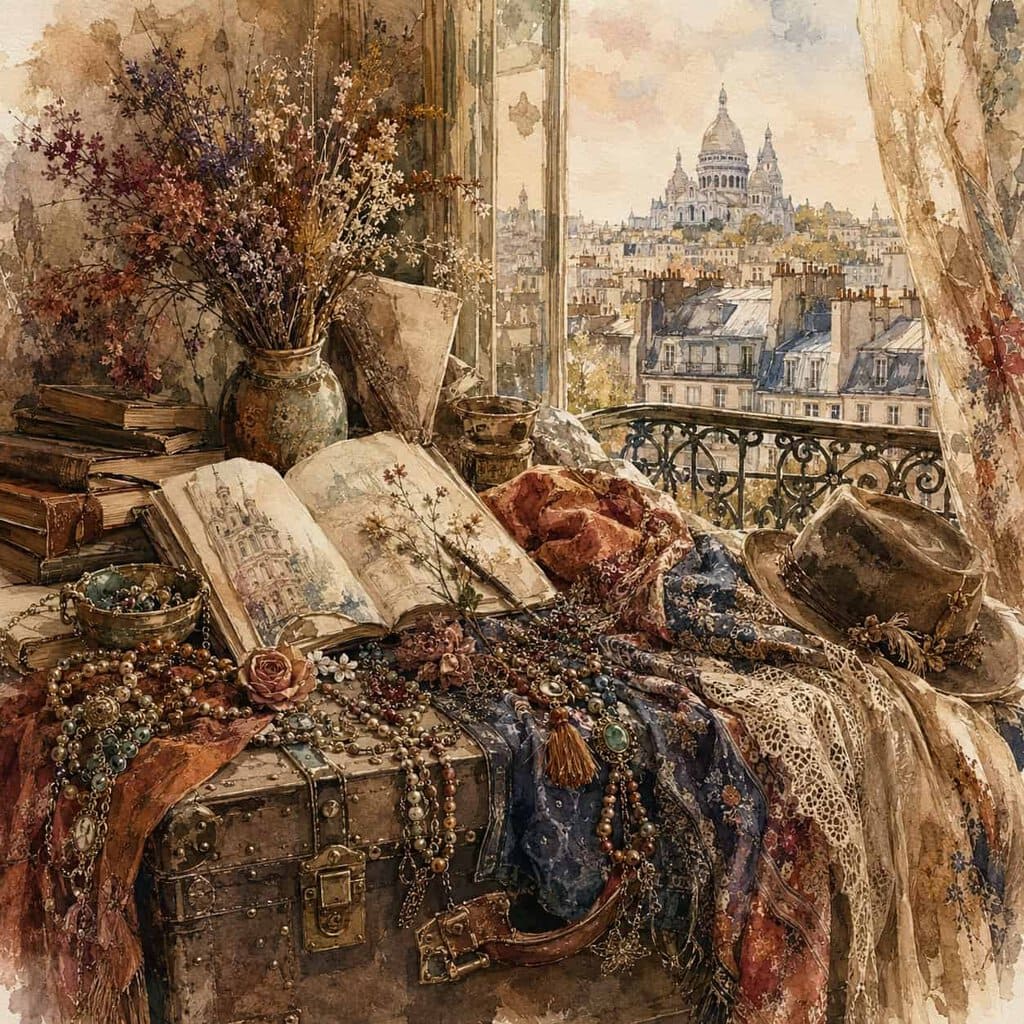
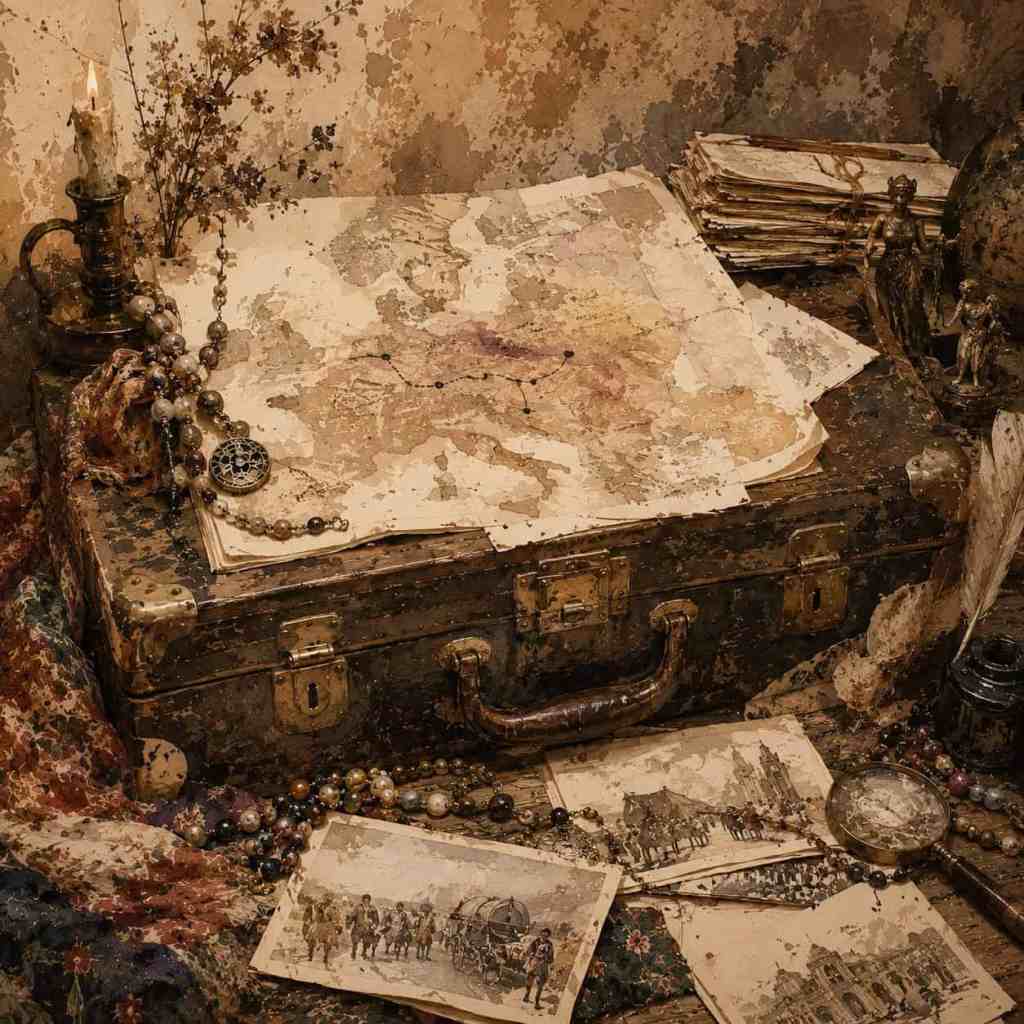
Boho එකට එකම උපන් සහතිකයක් නැහැ. ඒක සියවස් ගණනක labels අලවා ඇති පැරණි suitcase එකක් වගේ; සමහර labels තවමත් අල්ලගෙන ඉන්නේ ඉතිහාසමය වැරදි අවබෝධයක් සහ sheer determination එකක් නිසා. Paris bohemia එක label එකක් දාලා, artists සහ counterculture තවත් කිහිපයක් දාලා, පස්සේ hippies, fashion designers සහ festivals එකතු වුණා; සමහර labels අද beige moodboard එකක pampas grass එකක් ළඟ පේන තරම් romantic මාර්ගයකින් නම් ආවේ නැහැ.
ඒ නිසා Boho ඉතිහාසය දුප්පත් කවියෙකුගෙන් flower children හරහා rattan chair එකකට යන ලස්සන සෘජු line එකක් නෙවෙයි. අද Boho හදලා තියෙන්නේ හමු වූ, වෙන් වූ, නැවත හඳුනාගත්, වැඩි මිලකට විකිණු, සමහර වෙලාවට මුල ඉඳන්ම නෑදෑයින් වගේ හැසිරුණු ඉතිහාස ස්තර ගොඩකින්. 19 වැනි සියවසේ Parisian bohemian කෙනා hippie කෙනෙක් නෙවෙයි, hippie කෙනා boho chic නෙවෙයි, Sienna Miller හැම උදේම Henry Murger ඇගේ boots ගැන මොනවා කියයිද කියලා හිතුවා කියලත් හිතන්න අමාරුයි.
එහෙම වුණත් ඒ අතර threads තියෙනවා. සමහරක් සැබෑ, සමහරක් අපි පස්සේ බැඳපු ඒවා—මිනිස්සු ලස්සන family tree එකක් කැමති නිසාත්, fashion එකට great-grandmother කෙනෙක් හොයාගන්න හොඳම timing එක “දැන් ඒක useful” කියන වෙලාව නිසාත්.
Lola Tralala: Boho කියන්නේ “career එක වැඩියෙන් bourgeois” කියන idea එකෙන්ම career එකක් හදාගත්ත එකම style එක වෙන්න පුළුවන්.
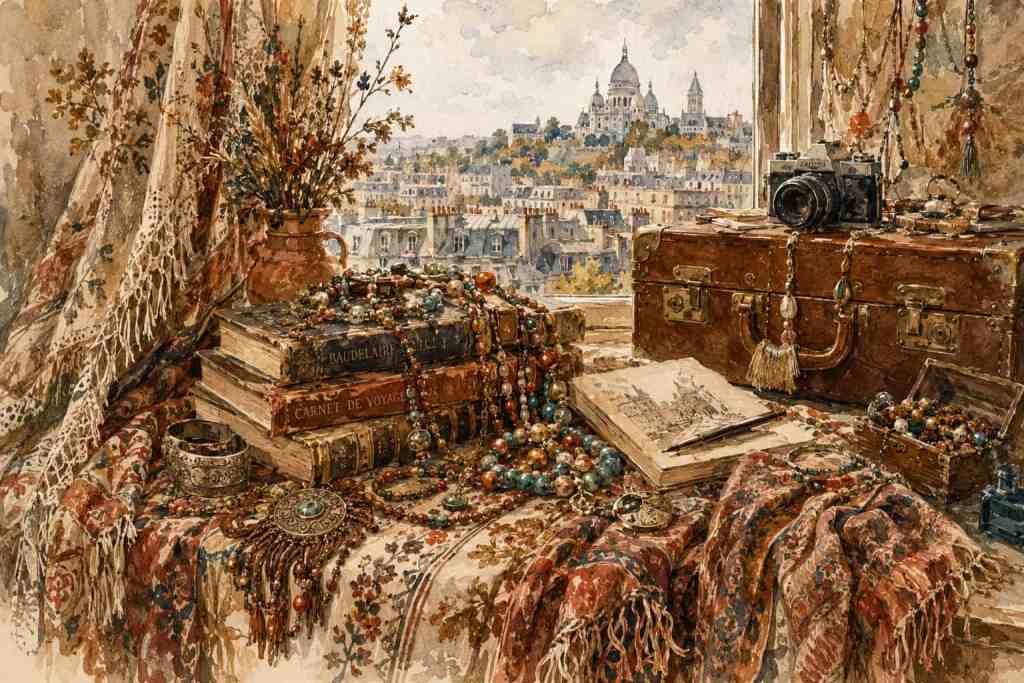
Bohemia තවම Boho නෙවෙයි — වචනයටත් uncomfortable past එකක් තියෙනවා
අද Boho ප්රධාන වශයෙන් aesthetic එකක්: loose silhouettes, layering, vintage, statement jewelry, craft, texture, පරණත් අලුත්ත් එකට, සමහර වෙලාවට festival-style mess එකක්, සමහර වෙලාවට “අහඹුවෙන් දාලා තියෙන” blanket එකත් පැය තුනක meeting එකකින් pass වුණා වගේ perfectly arranged interior එකක්. ඉතිහාසයේ bohemia නම් fashion style එකක් නෙවෙයි, කවුරුත් “bohemian lifestyle starter pack” subscribe කළේ නැහැ.
එය ජීවන රටාවක්, social environment එකක්, පස්සේ සාමාන්ය bourgeois security එකෙන් පිට ජීවත් වූ artists, writers, musicians, students සහ වෙනත් අය ගැන cultural image එකක් වුණා. සමහරු conviction එකෙන් convention reject කළා; සමහර අයට life එක regular income, stable housing සහ tidy future එක එක package එකක දුන්නේ නැහැ.
ඒත් bohémien වචනයට වඩා පරණ, වඩා අඩු romantic history එකක් තියෙනවා. French වල මේ වචනය Roma ජනතාව සහ mobile කියලා පෙනුණු groups ගැන සියවස් ගණනක් භාවිතා වුණේ ඔවුන් Bohemia ප්රදේශයෙන් ආවා කියන වැරදි අදහස එක්ක. wandering, fortune-telling, disorder, instability සහ crime stereotypes ඒ වචනයට අල්ලගත්තා.
මේ distinction එක වැදගත්. Roma ජනතාව modern Boho style එක නිර්මාණය කළේ නැහැ, ඒත් පසුව European “bohemian life” image එකත් හිස් අවකාශයකින් එළියට ආවේ නැහැ; ඒකේ vocabulary සහ imagery කිහිපයක් majority society එක Roma ගැන හදපු stereotypes වලින් ණයට ගත්තා. ඒ නිසා gypsy style, gypsy boho හෝ “gypsy soul” කියන්නේ long skirt කැමති, keys නැතිකරන කෙනෙකුට cute නමක් විතරක් නෙවෙයි.
මෙතන uncomfortable historical irony එකක් තියෙනවා. Europe මුලින් real people “free wanderers” image එකකට අඩු කරලා, ඒ image එකෙන්ම ඔවුන් stigmatize කරලා, පසුව ඒ fantasy එකේ කොටසක් තමන්ගේ artists සඳහා romantic costume එකක් විදිහට ණයට ගත්තා. History එක සමහර වෙලාවට mess එක හදලා drawer දෙසීය අවුරුද්දකට පස්සේ අපිට අස් කරන්න දාන එකේ champion.
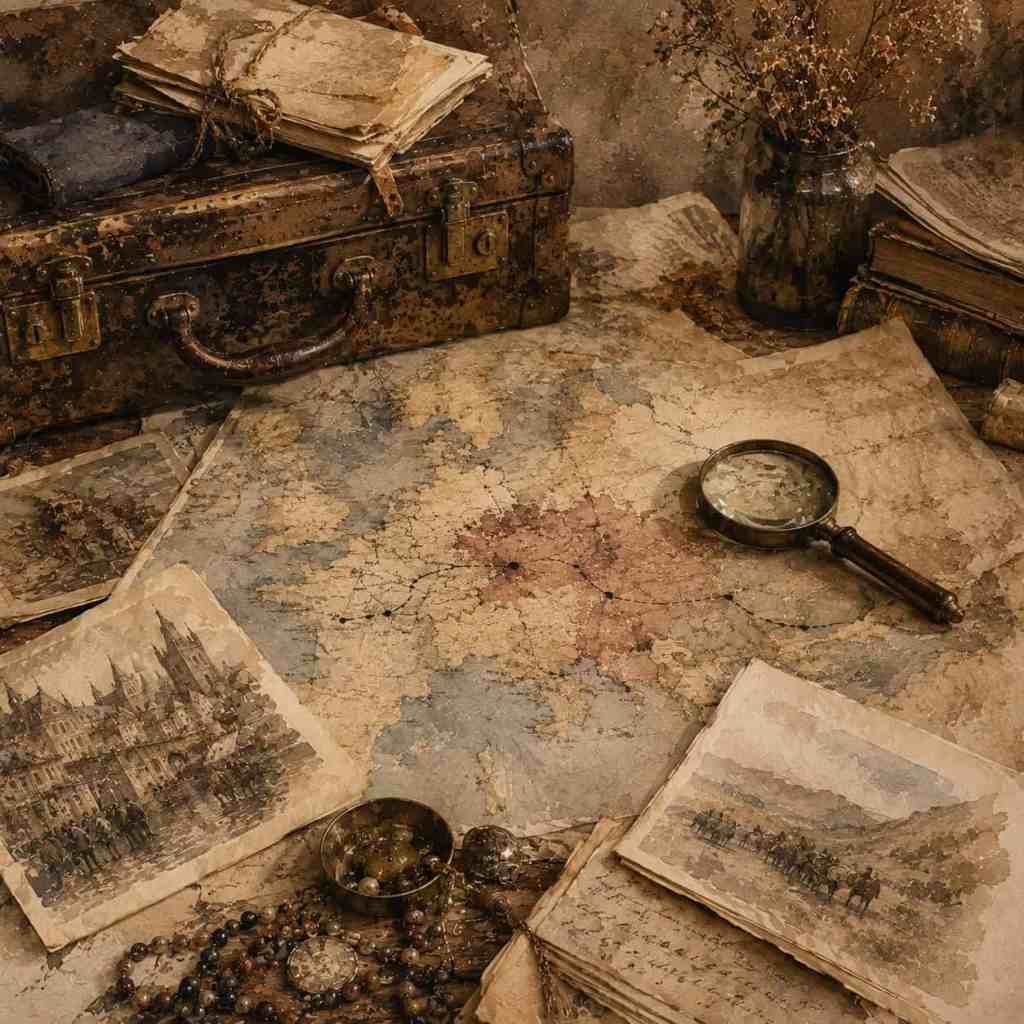
Parisian bohemia: rent bills වලින් උපන් legend එක
19 වැනි සියවසේ පළමු භාගයේ Paris paint, write, perform, argue, art වෙනස් කරන්න කැමති—හොඳයි, ඒ අතර බඩගින්නේ මැරෙන්නේ නැතුව—අයව ඇදගත් magnet එකක් වුණා. අන්තිම point එක romantic bohemia picture එකේ වැඩියෙන් highlight වෙන්නේ නැහැ.
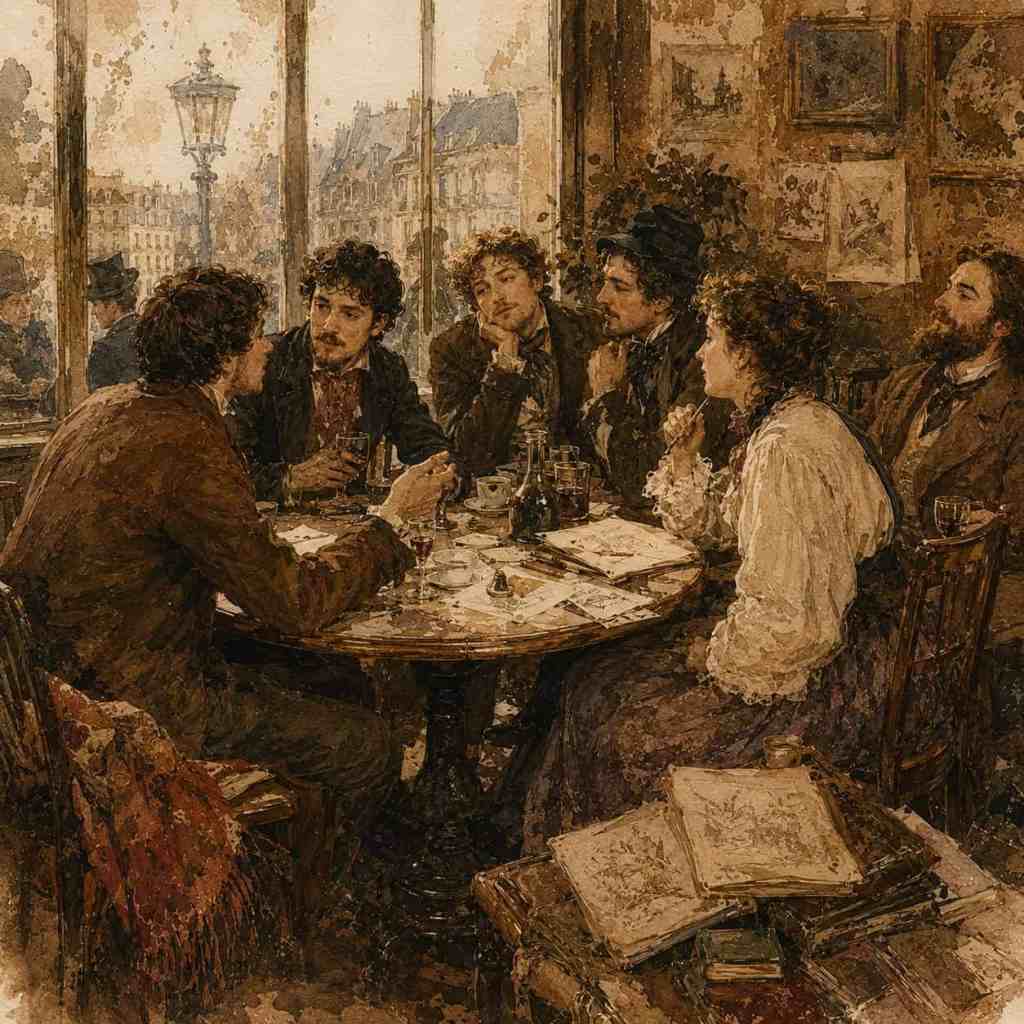
Parisian bohemian image හදන්න වැදගත් වුණු අයගෙන් කෙනෙක් Henry Murger. 1840s මැදින් ඔහු creativity, friendship, love, cafés, debt සහ financial planning එක්ක ඉතා experimental relationship එකක ජීවත් වූ young artists ගැන ලියලා තිබුණා. Scènes de la vie de bohème real artistic milieu එකක කොටසක් rental contract ගොඩකට වඩා දිගට ජීවත් වූ cultural legend එකක් බවට හරවන්න උදව් කළා.
මෙතනින් Boho එක follow කරන mechanism එකක් පටන් ගන්නවා: reality ටිකෙන් ටික aesthetic වෙනවා. සැබෑ ජීවිතයේ cold room එක cold room එකක් විතරයි; literature එකේ ඒක අන්තිම candle light එක යට immortal work එකක් උපදින attic එකක් වෙන්න පුළුවන්. Debt reality එකේ annoying letter එකක්; legend එකේ bourgeois world එකට soul sell නොකළ proof එකක් වෙන්න පුළුවන්. Poverty නිසා ඇඳපු worn coat එක generations කිහිපයකට පස්සේ “authentically distressed” item එකක් වෙලා original bohemian කෙනාගේ මාස ගණනක rent ගෙවන්න පුළුවන් price එකකට ආපහු එන්නත් පුළුවන්.
ඒකෙන් bohemia pose එකක් විතරයි කියලා අදහස් වෙන්නේ නැහැ. ගොඩක් අය social norms ඇත්තටම question කළා, creation, relationships සහ life වෙනස් ආකාර වලින් හොයලා artistic හෝ intellectual freedom conventional path එකේ security එකට උඩින් දාන්න කැමති වුණා. ඒත් cultural memory editing කැමතියි: wine, poetry, lovers, midnight conversations තියාගෙන tuberculosis, hunger, existential anxiety frame එකෙන් quiet crop කරනවා.
ඒ විදිහට bohemian කෙනා just person එකක් නෙවෙයි. norm reject කරන, create කරන, තමන්ගේ terms වලින් ජීවත් වෙන, regular office hours දැක්කාම hives එයි වගේ පේන archetype එකක් වෙනවා. Modern Boho specific nineteenth-century wardrobe එකකට වඩා මේ archetype එක inherit කළා.
François Villonත් මේ story එකට ආපහු ආපහු බලනවා—අපේ favorite guest, සියවස් හතරක් විතර කලින් ආපු. Villon bohemia found කළේ නැහැ, festival vest එකකට secret historical thread එකක් නැහැ; ඒත් later cultural image එක rebellious poet කෙනෙක් විදිහට එතරම් attractive නිසා later generations ඔහුව nonconformist artist family එකට happy adopt කළා.
මේක හරිම human. කෙනෙක් rebellion ancestor කෙනෙක් විදිහට අපේ story එකට හොඳට fit වුණාම අපි pencil එකෙන් family tree එකටම add කරන වෙලාව තියෙනවා.
Lola Tralala: Villon family reunion එකට එන්න පුළුවන්. “François Villon — Boho Ltd. founder, since 1431” card එකක් විතරක් හදන්න එපා.
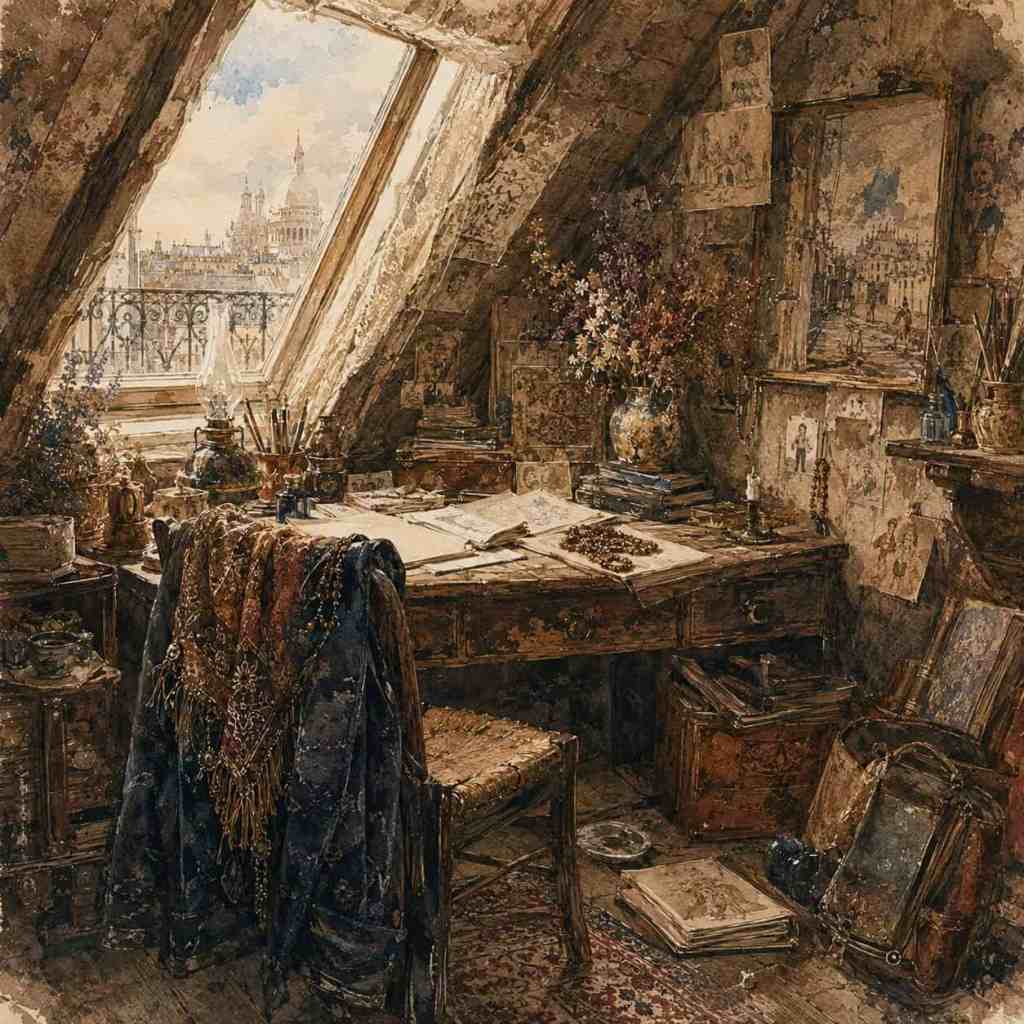
Montmartre සහ nonconformist life එක wearable image වුණු මොහොත
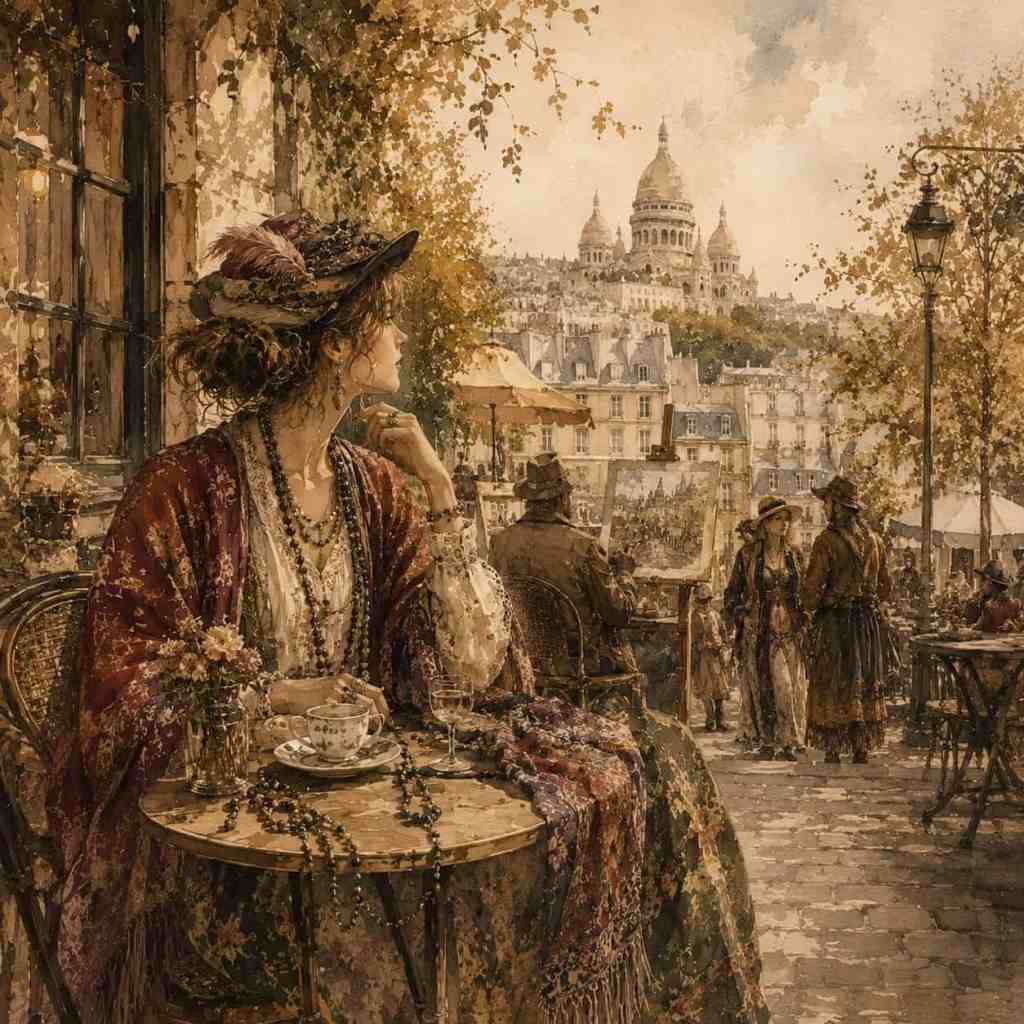
Collective imagination Montmartre කැමතියි, perfect bohemian picture එකට අවශ්ය හැමදේම එතන තියෙන නිසා: sloping streets, studios, cafés, cabarets, smoke, painters, poets, ඒත් එක්ක modern legend එකට අනුව Paris එකට separate sewer එකක් ඕන වගේ absinthe. Reality එක වඩා varied—වැදගත් විදිහට, පස්සේ.
Artists Montmartre වෙත වැඩි ගණනින් පදිංචි වුණේ ප්රධාන වශයෙන් 1870s ඉඳන්. lower rents, space, light, එදා තිබුණු partly rural character, පස්සේ dense social/nightlife ඔවුන් ඇදගත්තා. twentieth century turn එකට එය major artistic centre එකක්; Murger එතන good-looking නිසා decades ගණනක් history එක පස්සට ගෙනියන්න ඕන නැහැ.
Boho history එකේ තවත් shift එකක් වඩා වැදගත්: bohemia visible වෙනවා. single uniform එකක් නැහැ, Paris office එකක් velvet vest එකකට “bohemian licence” දුන්නෙත් නැහැ, ඒත් nonconformist circles visual signs එක්ක connect වුණා: loose/unusual clothes, old pieces, striking accessories, historicising elements, roughness degrees—සමහර deliberate, සමහර economics forced.
Society එකට photo එකකින් way of life එක හඳුනාගන්න පුළුවන් වුණාම fashion දොර ළඟ. look එකේ කොටස reality, කොටස self-expression, කොටස pose; කිසිම alternative එකක් එච්චර alternative නෙවෙයි—අන්තිමට කෙනෙක් තමන්ගේ spontaneity appearance carefully plan කරන්නේ නැති තරම්.
මේක Boho persistent paradox එකක්. Style එක personality, life, travel, chance finds වලින් naturally grow වුණා වගේ පේන්න ඕන, එහෙත් සමහර කෙනෙක් nearly identical scarves හතකින් “least chosen” එක හොයන්න මිනිත්තු හතළිහක් යවලා තියෙන්න පුළුවන්.
මෙතනින් original way of life එක image of a way of life වෙනවා. Image එක තිබුණාම borrow, imitate, modify, sell කරලා අන්තිමට coffee table එක ළඟ catalogue එකේ දාන්න පුළුවන්.
Wardrobe ඇතුළේ world එක: cultural exchange, trade සහ හැමවිටම කැමැත්තෙන් travel නොකළ objects
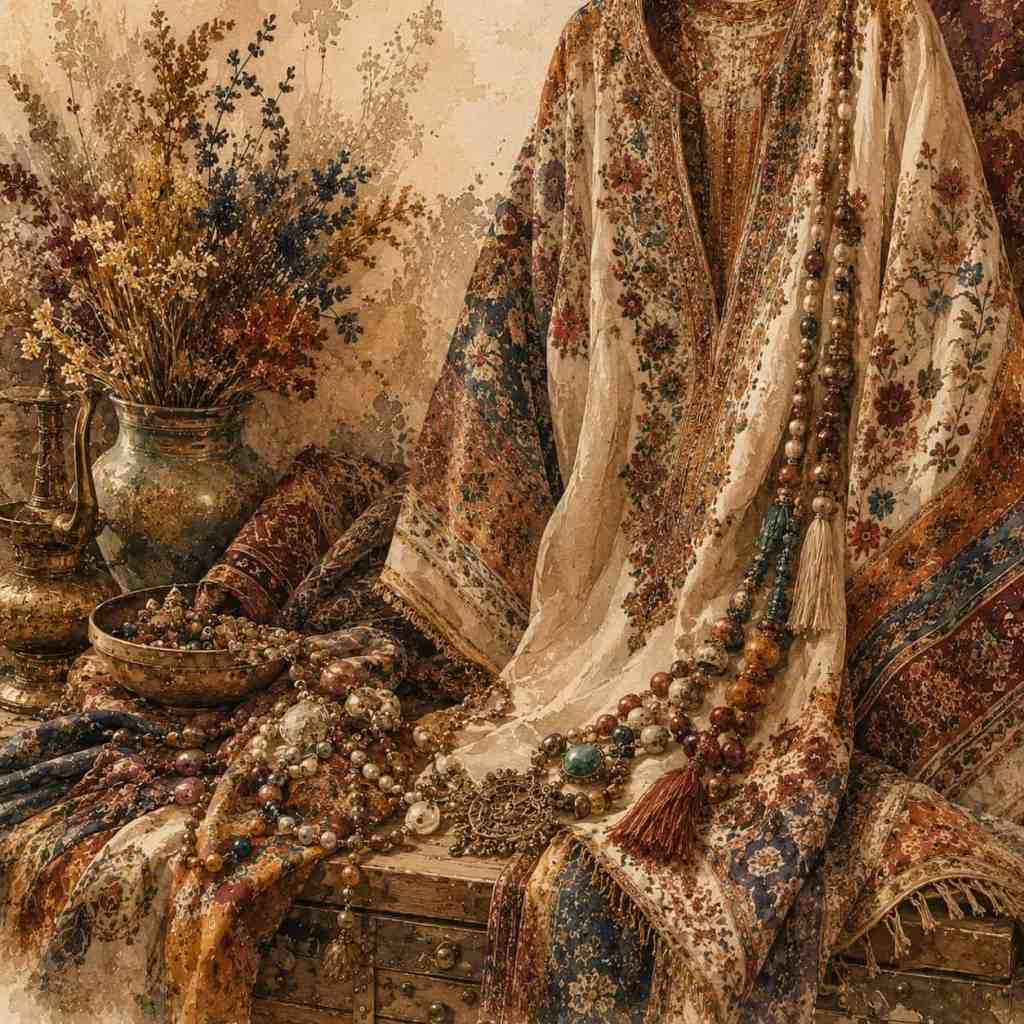
Old Boho stories මෙතන romantic gallop එකක් පටන් ගන්නවා. Artists supposedly “exotic” fabrics discover කළා, merchants distant lands වලින් wonders ගෙනාවා, cultures creative dialogue එකකට ගියා, colourful mix එකෙන් open global aesthetic එකක් උපන්නා. Some truth තියෙනවා, ඒත් omitted chapters full bookshelf එකකට සෑහෙනවා.
European fashion isolation එකක develop වුණේ නැහැ. textiles, dyes, shawls, silk, embroidery, cuts, production techniques modern Boho වලට centuries කලින් trade routes වල travel කළා. Indian textiles global trade එකේ central, Kashmir shawls European fashion shape කළා, Chinese silk luxury commodity, Japanese clothing/aesthetics විවිධ period වල European designers සහ consumers fascinate කළා.
ඒත් හැම object එකක්ම වෙනස් මාර්ගයකින් travel කළා. සමහර long-standing trade, සමහර migrants එක්ක, සමහර luxury goods, සමහර colonial networks. සමහර European industry copy කළා; සමහර Europe වල new meanings ගත්තා, original maker story එකෙන් small workshop නම multinational label එකෙන් අතුරුදහන් වෙනවාටත් ඉක්මනින් ගියා.
ඒ නිසා “Boho Africa වලින් jewelry, India වලින් fabric, South America වලින් textiles ගත්තා” කියන එක rough වැඩියි. Africa එක jewelry piece එකක් නෙවෙයි, India එක fabric එකක් නෙවෙයි, South America universal colourful cushion warehouse එකක් නෙවෙයි Western interior එකක් “soul” ටිකක් ගන්න යන.
Useful question එක specific: object එක මොකක්ද? කවුද හැදුවේ? මොන region එකෙන්ද? කොහොම travel කළා? meaning එක මාර්ගයේදී කොහොම වෙනස් වුණාද? එතකොට vague “global inspiration” real human story එකක් වෙනවා—BeadCulture untangle කරන්න ඕන thread එක, giant anonymous “ethnic” blanket එකකට weave කරන්න නෙවෙයි.
Cultural exchange එකම problem නෙවෙයි. මිනිස්සු food, music, technology, words, materials, decorative ideas, dressing share කරලා තියෙන්නේ හැමදාම; cultures mix නොවුණා නම් world එක වැඩියෙන් authentic නෙවෙයි, food අඩු interesting, wardrobes වැඩියෙන් boring.
Difference එක හැම exchange එකක්ම equal conditions වල නොවීම. සමහර admiration, collaboration, ordinary trade; සමහර copying, inequality, හෝ origin community එකට same cultural marker එකේ stigma, later usersට applause සහ likes තුන් දහසක්.
ඒ නිසා “respectfully use කරනවා” cultural audit අවසන් කරන්න සෑහෙන්නේ නැහැ. Respect fabric softener එකක් නෙවෙයි problematic history thirty degrees wash කරලා clean කරගන්න. අපි මොනවා use කරනවද, කොහෙන්ද ආවේ, meaning මොකක්ද, කාට name, context හෝ money owe වෙන්න පුළුවන්ද කියලා දැනගන්න එක.
වෙන culture එකක හැම object එකක්ම sacred, ritual, ancient wisdom වලින් full වෙන්න ඕනත් නැහැ. සමහර වෙලාවට beautiful bead එක beautiful bead එකක් විතරයි, maker craftsperson කෙනෙක්—හොඳ work කරලා sell කරන්න කැමති, third moon cosmic energy mystical guardian කෙනෙක් නෙවෙයි.
හොඳ news එකක්. Real people marketing catalogue generic shamans වලට වඩා ගොඩක් interesting.
1960s සහ 1970s: modern Boho mirror එකේ තමන්ව හඳුනාගනී
අද Boho visual DNA අපි හඳුනාගන්න shape එකට එකතු වෙන්න පටන් ගත්ත period බලන්න nineteenth century ඉඳන් 1960s සහ 1970s වලට jump කරන්න වෙනවා. Fashion “මොකක්ද ලස්සන” කියන එක විතරක් නෙවෙයි; generational identity, political attitude, sexuality, musical belonging, සමහර වෙලාවට parents ගේ රෑ කීපයක් නැති කරන්න effective tool එකක් වුණා.
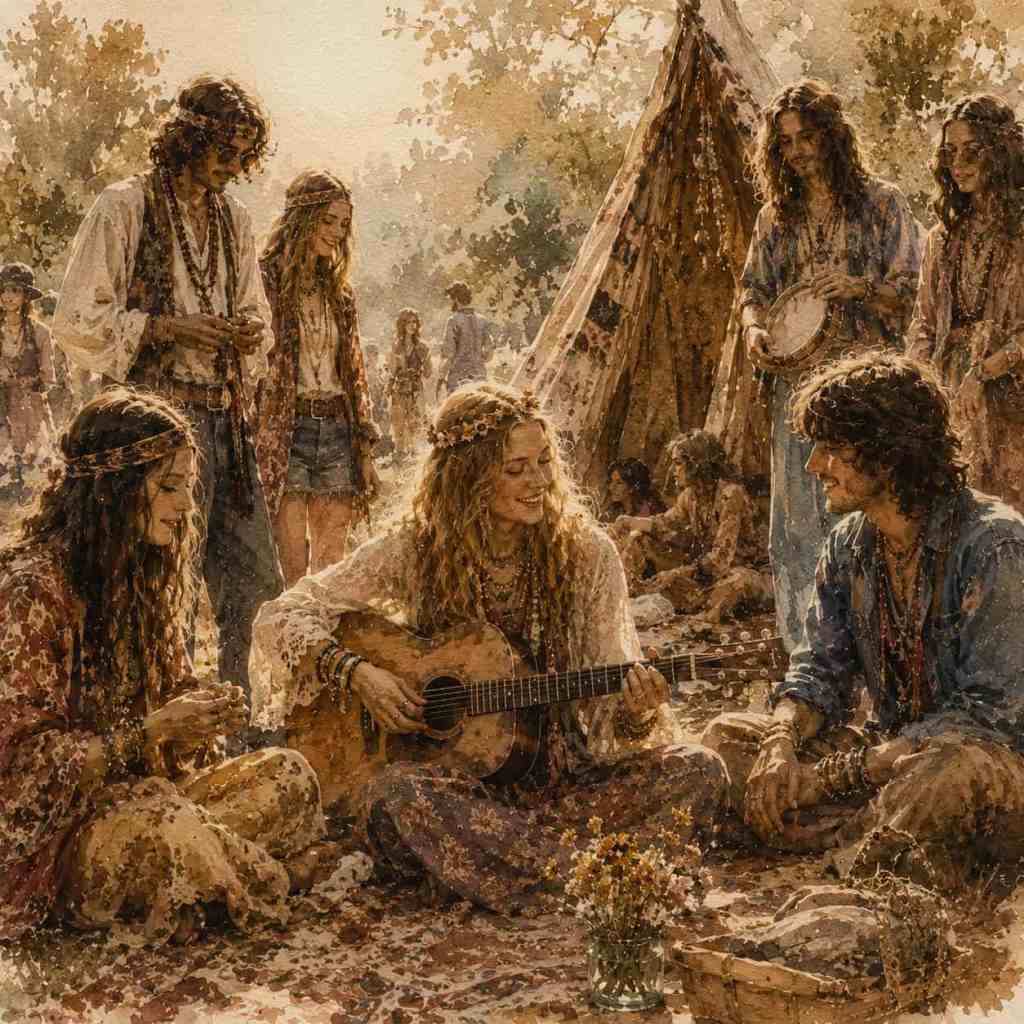
Hippies සහ broader counterculture loose silhouettes, long dresses/skirts, layering, second hand, old clothes, embroidery, beads, tie-dye, patchwork, DIY prominent කළා. ගොඩක් දේ කලින් තිබුණත් Western youth culture එකේ new meanings ගත්තා සහ previous generation polished, conventional, consumer fashion reject කරන visual language වුණා.
Old clothes දැන් හැම වෙලාවෙම “new afford කරන්න බැහැ” කියන එක නෙවෙයි. new ඕන නැහැ කියන එකත් විය හැක; worn jacket එකේ mass-produced outfit එකේ නැති trace of life, individuality සහ තමන්ගේ image තමන් assemble කරන freedom එක තියෙනවා.
මේ period non-European clothing, textiles, jewelry, crafts ගැන interest වැඩි කළා, වෙන way of life වලට open වෙන්න countercultural idea එක්ක. සමහර genuine curiosity/exchange, සමහර shallow belief—world එකේ වෙන තැනක clothes අඳිනකොට expanded consciousness price එකේ free එනවා වගේ.
Hippie culture moral perfection fairy tale එකක් නෙවෙයි. ඒක human: beautiful, naive, brave, experimental, sometimes problematic, බොහෝ වෙලාවට ඒ හැමදේම එකට.
මේ layer එකෙන් Modern Boho favourite visual vocabulary ගොඩක් inherit කළා: layering, texture, handwork, embroidery, beads, patchwork, long silhouettes, vintage, tidy fashion system වෙන වෙන drawers වල දාන things එකට combine කිරීමේ fun.
පස්සේ Thea Porter වගේ designers counterculture aesthetic luxury fashion එකට යන්නත් පුළුවන් කියලා පෙන්වනවා. Porter rich textiles, kaftans, Middle Eastern dress traditions influenced elements use කළා, thrift shop එකකට donated old dress එනකම් බලාගෙන ඉන්න අවශ්ය නැති clients සඳහා.
Boho beautiful paradox එක: mainstream consumption oppose කරන style mainstream consumption සඳහා excellent product වෙනවා. Capitalism counterculture බලලා ටිකක් හිතලා කියනවා: “Cute. Medium තියෙනවද?”
Lola Tralala: Revolution එක ඉවර වුණේ embroidered vest එකකට price tag දාන්න පුළුවන් කියලා කෙනෙක් තේරුම් ගත් මොහොතේ.
Festival culture visual language එක තව recycle/reshape කළා. විශේෂයෙන් 2000s වල Glastonbury older hippie, vintage, Boho elements mainstream festival fashion එක්ක mix වුණු place එකක්.
boho chic සිට internet දක්වා: controlled mess global product වුණ හැටි
Millennium එක වටා older bohemian සහ hippie inspiration very visible mainstream trend එකක් වෙලා reorganize වුණා: boho chic. Sienna Miller, Kate Moss සහ 2000s icons layered skirts, tunics, vests, belts, boots, oversized bags, vintage, loose hair සහ එළියට යන්න මිනිත්තු දහයකට කලින් “ඕනවට” කළා වගේ styling popular කළා.
Naturally apparent effortlessness එක military operation precision එකෙන් prepare කරලා තියෙන වෙලාව වැඩියි. “Carelessness” fashion effect එකක්; each hair strand exact prove කරන්න ඕන ඔබ care කරන්නේ නැහැ කියලා නම් work වැඩියි.
Boho chic aesthetic original bohemian එකෙන් කොච්චර දුර ගියාද පෙන්වනවා. Historical artist worn coat එක new afford කරන්න බැරි නිසා අඳිනවා; boho-chic customer expensive new coat එක ගන්නේ ඒක owners තුනක්, train journeys දෙකක්, laundry එක්ක complicated relationship එකක් ගියා වගේ පේන නිසා.
මේක Modern Boho “fake” කරන්නේ නැහැ. Function වෙනස් වුණා: way of life aesthetic language එකක් වුණා, historical bohemia හෝ counterculture direct link නැතිව use කරන්න පුළුවන්.
Internet broad aesthetic එකට usual දේ කළා: tomato fertilizer ලැබුණු houseplant speed එකෙන් multiply. Boho chic, dark boho, western boho, coastal boho, minimal boho, desert boho, artisan boho සහ තවත් fusion.
Labels සමහරක් fairly clear history, years use; සමහර recent internet/marketing categories; සමහර දැන් හදනවා. Problem නෙවෙයි. Culture branch වෙනවා; new style historical committee permission ඕන නැහැ.
Problem Modern micro-aesthetic එකකට fake ancestors හදනකොට. Internet Monday aesthetic invent, Wednesday “ancient symbolism”, Friday TikTok mysterious Celtic roots—එහෙත් ඒ roots කිසිම Celtic source එකක නැහැ.
ඒ නිසා BeadCulture Boho variants distinguish කරනවා. Historical එක historical, newer fashion category newer, internet/original fusion එහෙමම. Imagination beautiful වෙන්න fake family tree ඕන නැහැ.
Boho වලින් ඉතිරි වුණේ මොනවාද — ඇයි තවම වැඩ කරන්නේ
Specific dresses, fringe, colors, bags සහ square metre එකකට dry grass “regulation amount” අයින් කළාම repeated principles ඉතුරු වෙනවා: rigid rules resistance, personal mixing/layering, vintage, craft, texture, roughness, තමන්ගේ biography වගේ object.
ඒ නිසා Boho best වෙන්නේ එක mannequin එකක complete set වගේ නොපේනකොට. old ring, new sweater, small workshop bracelet, second-hand bag, “boho aesthetic” diagnosis එකක් කියලා හිතන previous owner කෙනෙක්ගෙන් inherited scarf—perfectly coordinated “Boho collection” එකකට වඩා convincing.
Visible human work important. embroidery, weaving, ceramics, beadwork, repair, patina, small irregularities object anonymous වගේ නැහැ—modern market “handmade imperfection” precise industrial copy එකත් හදන්න පුළුවන්.
Boho sustainability එක්ක naturally overlap කරනවා, automatic green halo නෑ. vintage, second hand, repairs, upcycling, local craft, quality objects long use sustainable වෙන්න පුළුවන්; mass-produced polyester blouse fringe සහ cactus photo එකෙන් eco citizen වෙන්නේ නැහැ.
Boho ongoing value මෙතන වෙන්න පුළුවන්. Object meaningful වෙන්න new, perfectly smooth, yesterday-bought වෙන්න ඕන නැහැ. scratch, repair, history, previous owner තිබුණාට කමක් නැහැ; new catalogue fringe මේ year centimetres හතරක් shorter කියලා retire කරන්න ඕන නැහැ.
World එකෙන් inspiration ගන්න එක නවත්තන්න ඕන නැහැ. more curious/precise: “ethnic jewelry” ඇත්තටම කොහෙන්ද? “tribal pattern” කාගේ community එකේද? සමහර beautiful ornament එකක් invented spiritual story නැතුව beautiful ornament එකක් විතරක් වෙන්න පුළුවන්.
එහෙනම් Boho ඇත්තටම මොකක්ද?
මේ whole journey එකේ අන්තිමට elegant definition එක tempting, ඒත් Boho resist කරනවා. එක birthday එකක් තියෙන historical subculture නෙවෙයි, Paris bohemia direct continuation නෙවෙයි, hippie culture එකම නෙවෙයි, entry එකේ macramé සහ monstera ownership certificate දෙන automatic sustainable lifestyle එකක් නෙවෙයි.
Boho කියන්නේ historical layers ගොඩකින් හදපු modern aesthetic language එකක්. Parisian bohemia වලින් free artist myth, counterculture/hippie fashion වලින් visual vocabulary, global contact වලින් materials/ideas, fashion industry වලින් repackage-and-sell ability, internet වලින් almost infinite branching ලැබෙනවා.
Strongest part එක specific skirt, jewelry, interior නෙවෙයි; things වෙන කෙනෙක්ගේ rulebook එකට perfectly match නොවුනත් එකට අපේ story කියන්න පුළුවන් කියන idea එක. Personality layers වලින් build වෙන්න පුළුවන්, shelf එකෙන් complete identity එකක් ගන්න ඕන නැහැ.
අද old romantic stories වල missing දේ add කරන්න පුළුවන්: objects real origin ගැන curiosity. Style freedom කියන්නේ වෙන අයගේ history ignore කිරීම නෙවෙයි; අපි මොනවා borrow කළාද, කොහෙන්ද, ඇයි matters කියලා දැනගන්න confidence එක.
Lola Tralala: Real Boho fringe ගණන් කිරීමෙන් පටන් ගන්නේ නැහැ. “මේ දෙක match වෙන්නේම නැහැ” කියලා හිතලා දෙකම අඳින්න — පස්සේ දෙවැනි piece එක ඇත්තටම කවුද හැදුවේ කියලා හොයන්න — එතනින් පටන් ගන්නවා.
Original bohemian එක හොඳටම survive වෙලා තියෙන්නේ මේ small stubborn idea එකේ වෙන්න පුළුවන්: life එක exact වෙන කෙනෙක් prescribe කළා වගේ පේන්න ඕන නැහැ, personal style uniform එකක් නොව small autobiography එකක් වෙන්න පුළුවන්.
FAQ
Boho style එක ආරම්භ වුණේ කවදාද?
එකම දිනයක් නැහැ. Parisian bohemia 19 වැනි සියවසේ වැදගත් වුණා; අද boho visual language එකේ බොහෝ කොටස් 1960–70 counterculture සහ hippie fashion, පසුව boho chic වලින් ආවා.
Historical bohemia සහ boho එකමද?
නැහැ. Bohemia ජීවන රටාවක් සහ සමාජ පරිසරයක්; boho අද ප්රධාන වශයෙන් aesthetic term එකක්.
Boho Roma ජනතාවගෙන් ආවද?
Roma ජනතාව modern boho නිර්මාණය කළේ නැහැ. නමුත් bohémien වචනයේ ඉතිහාසය යුරෝපීය Roma stereotypes එක්ක සංකීර්ණව බැඳී තිබෙනවා.
Hippie සහ boho අතර සම්බන්ධය මොකක්ද?
එකම දෙයක් නෙවෙයි, නමුත් hippie culture layering, vintage, DIY, beads, patchwork සහ embroidery වගේ boho visual language එකට දැඩි බලපෑමක් කළා.
Boho automatically sustainable ද?
නැහැ. vintage, repair සහ දිගු භාවිතය sustainable විය හැක; mass-produced polyester styling නිසා sustainable වෙන්නේ නැහැ.
🧵 මේ නූල් කොහෙන්ද එන්නේ
මේ ලිපිය archives, museums, specialist literature සහ material culture වල historical traces අනුගමනය කරලා හදලා තියෙන්නේ. මේවා ප්රධාන threads — සහ අපි ඒවා use කරන හේතුව.
🏛 TRACE: Parisian bohemia
BnF — Scènes de la vie de bohème.
ඇයි: real milieu සහ later romantic myth වෙනස් කරන්න.
🏛 TRACE: Montmartre
Musée de Montmartre — 1870–1910.
ඇයි: chronology හරි තැන තියාගන්න.
🗃 TRACE: bohémien වචනය
Académie française — bohème / bohémien.
ඇයි: word history සහ Roma stereotypes.
🧵 TRACE: Textiles travel
The Met — Indian Textiles / V&A.
ඇයි: trade, copying, power.
🏛 TRACE: Hippies සහ patchwork
V&A — Patchwork fashions / 1960s fashion.
ඇයි: Modern Boho visual DNA.
📚 TRACE: Bohemian වෙන්න කියන්නේ මොකක්ද
Jerrold Seigel සහ Elizabeth Wilson.
JHU Press.
ඇයි: broader social context.
📚 තවත් ගැඹුරට? Books සහ further reading
Parisian bohemia සිට modern Boho දක්වා journey එක ඔයාට අල්ලගත්ත නම් මේ තුන හොඳ next stops; fact-check sources උඩ block එකේ.
📚 Jerrold Seigel — Bohemian Paris
Real Parisian bohemia ගැන detailed social history.
📚 Elizabeth Wilson — Bohemians: The Glamorous Outcasts
Bohemia, myth, identity ගැන more accessible cultural history.
📖 François Villon — Poésies / Testaments
Reliable critical edition හෝ translation එකක් තෝරලා poet direct කියවන්න, later legend එක විතරක් නෙවෙයි.