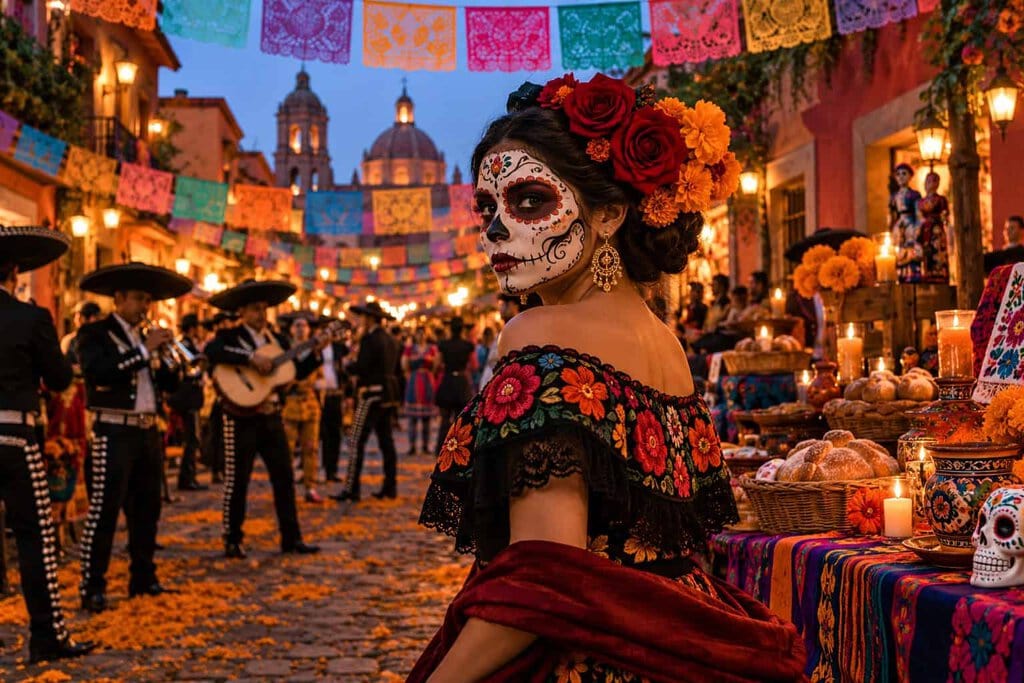
Mexico’s Día de Muertos is one of those holidays the internet may love a little too much. Add orange cempasúchil, a colorful skull, a few candles and a Catrina, and the algorithm starts tapping its foot because it smells content. Pinterest opens another tab, Coco starts playing somewhere in the distance, and suddenly it feels dangerously easy to think we have understood Mexico.
We haven’t. But it is a pretty good place to start.
The real Mexico is far more interesting than that perfectly lit postcard. There is no single “Day of the Dead” celebrated from Yucatán to Sonora according to one script. There are families, towns, Indigenous communities, urban festivities, Catholic layers, local calendars, tourist events, public ofrendas and contemporary Halloween — worlds that sometimes meet, overlap and borrow images from one another, but are not the same thing.
This article is a gateway into Mexico’s many ways of remembering the dead. We are not going to squeeze an entire country into one skull, partly because it will not fit and partly because Grandpa Tralala would file a three-page methodological objection.
💬 Grandpa Tralala: “Five Pinterest photos are not a representative sample.”
Unfortunately, he is right again.
We are going to ask what Día de Muertos actually is, when it is observed, why it is not Mexican Halloween, what ofrendas, flowers, food and photographs can mean, and why regional diversity is not a footnote but half the story.
Then we will keep going. To flowers. Bread. Cemeteries. Crafts. Catrina. Individual regions. And beads, obviously, because this is still BeadCulture and a bead will find its way into the story even if it has to crawl in through an air vent.
What does Día de Muertos actually mean?
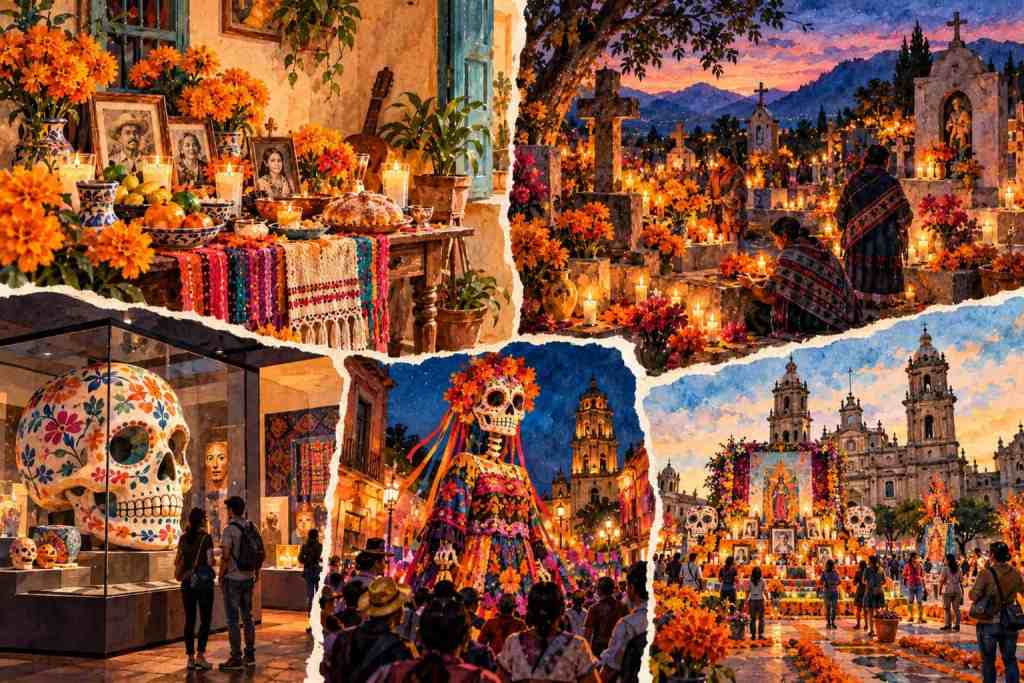
Día de Muertos is an umbrella term for Mexican ways of remembering people who have died, centered mainly on the beginning of November. In many families and communities, people prepare home ofrendas, visit cemeteries, light candles, bring flowers, food or personal objects, and remember particular people who are gone.
And one quiet word matters here:
particular.
Not an abstract category called “the dead.” Not an anonymous army of ghosts sent a group invitation for the first weekend of November.
A particular person.
A grandmother’s photograph. A food someone loved. The drink they always ordered. An object that brings them to mind. Something that returns a person to family memory not as a symbol, but as a personality.
That is why an ofrenda is not spooky stage scenery. It is a space of memory.
💬 Alma Sorel: “Some objects do not need to explain an entire life. It is enough that they can bring a person back into the room for a moment.”
That is also why we will be careful whenever the internet starts translating an object as “this ALWAYS means…”
Human memory does not fit neatly into a spreadsheet. Excel will simply have to cope.
Since 2008, UNESCO has included the Indigenous festivity dedicated to the dead in Mexico on the Representative List of the Intangible Cultural Heritage of Humanity. That still does not mean there is one correct UNESCO version of the holiday that every household from Tijuana to Mérida reproduces obediently.
UNESCO works with particular traditions and communities.
Mexico is not a cultural photocopier.
When is Día de Muertos celebrated?
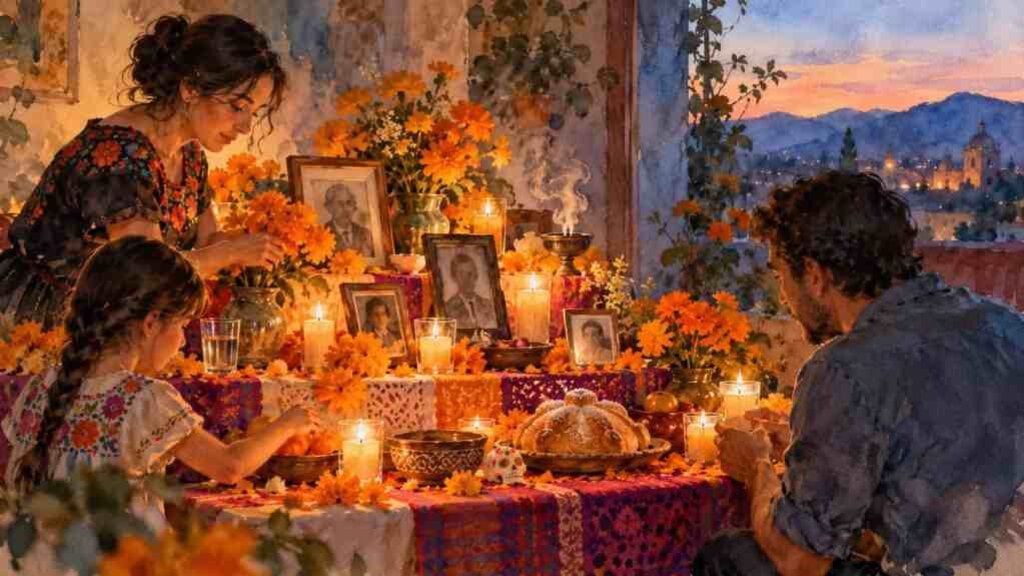
If Día de Muertos sat obediently inside a calendar, it would get two boxes: November 1 and 2. The first is often associated with deceased children, the second with deceased adults. Close the calendar. Done.
Except Mexico has just opened the calendar again.
In different places, preparations may begin earlier, some traditions distinguish several moments for the arrival of the dead, and the night, a cemetery visit, a home ofrenda or a family gathering may each have a different role. Día de Muertos is not a train that pulls into the same station across the entire country at 12:01 a.m. on November 1 while the conductor announces: “Passengers, please disembark in the order children, adults, ancestors.”
💬 Lola Tralala: “And on the third, are the ghosts legally required to vacate the premises? Asking for a friend.”
So yes: November 1 and 2 are the main dates, and they are useful to know. But they are not a universal timetable for all of Mexico. And frankly, that is much more interesting than a tidy infographic with two boxes.
Día de Muertos is not Mexican Halloween
This may be the most important sentence in the whole article:
Día de Muertos is not the Mexican version of Halloween.
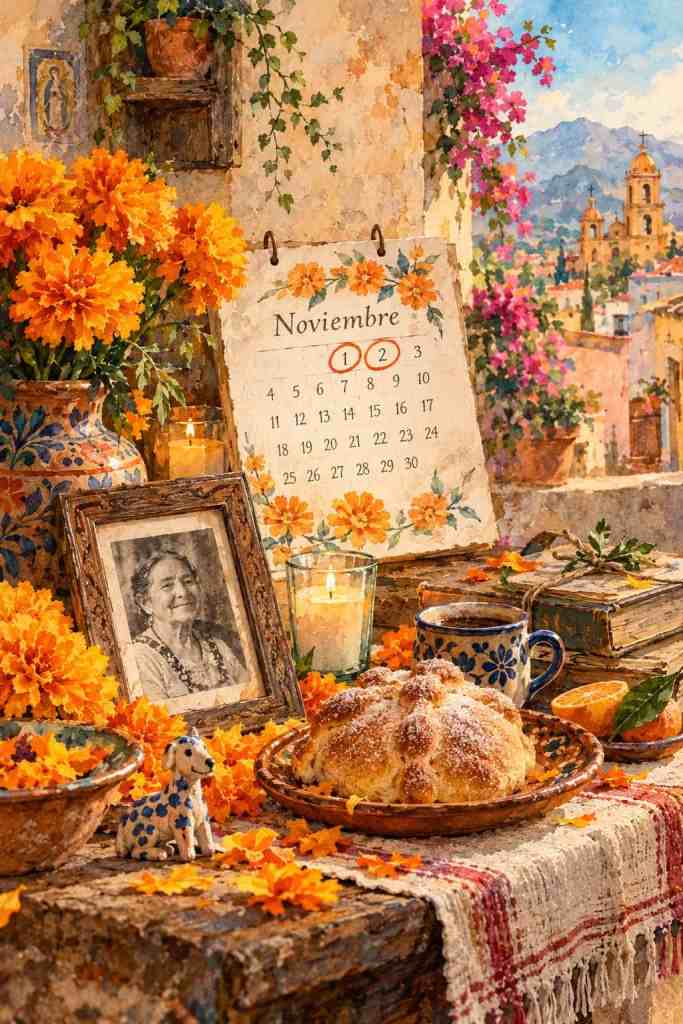
Yes, both worlds can now stand in the same shopping mall. Children can see pumpkins and calaveras, and the same Instagram account can show a costume on October 31 and a family ofrenda two days later. Modern life can contain more than one thing at once. Shocking, we know.
Halloween and Día de Muertos have different historical roots, functions and meanings. Contemporary Halloween is visible in Mexico mainly as an urban, school, commercial and pop-cultural layer: costumes, parties, shop windows, social media, pumpkins and everything else that fits in a shopping basket. Día de Muertos, by contrast, is connected with remembrance of the dead, family memory, cemetery visits and ofrendas.
And one person can perfectly well take part in both.
Coexistence is not identity.
💬 Babča: “I bake Christmas bread and watch crime dramas too. That still has not created a traditional Czech Christmas murder.”
The same caution helps with calaverita rounds. Children may go out for sweets or small gifts, but the meaning and form vary by place. One photograph of a child with a plastic pumpkin is not evidence that “Mexico abandoned its traditions and became Americanized.” Just as one perfectly traditional-looking ofrenda does not prove that all of Mexico ignores Halloween.
The internet loves making civilizational conclusions from one photograph. BeadCulture prefers a second photo. And a third. And a source.
Grandpa Tralala insists on a fourth.
Ofrenda: an altar that tells you about a person
The ofrenda is one of the most visible parts of Día de Muertos — and one of the things the internet most likes to turn into a shopping list. 7 THINGS EVERY OFRENDA MUST HAVE! Number four will surprise you.
In reality, it depends on the family, the region, local tradition, available materials and the person to whom the ofrenda is dedicated. It may include photographs of the deceased, candles, water, flowers, food, drinks, fruit, bread, salt, incense or copal, and personal belongings.
Some elements recur in traditional explanations. But meaning is not a symbolism vending machine where you insert a candle and receive a universal interpretation. The same object may have a religious or ritual meaning in one household and be primarily personal in another.
So a much more interesting question than “What belongs on an ofrenda?” is: “Who is this ofrenda for — and why is this particular thing on it?” Suddenly we are not looking at decoration. We are looking at somebody’s story.
💬 Orla Křen: “An object without provenance is decoration. An object with a story is a trace.”
And those are exactly the traces we will follow.
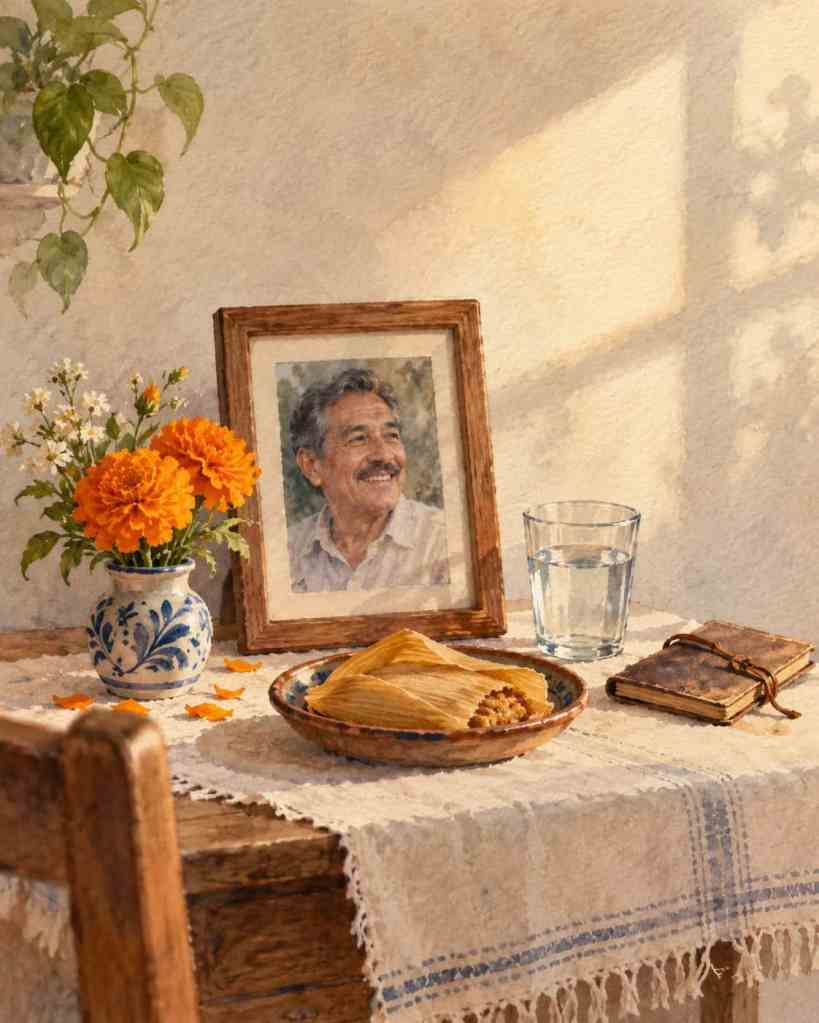
Cempasúchil: the flower the internet recognizes instantly
Orange and yellow cempasúchil flowers are among the most recognizable images of the Día de Muertos season. One glowing trail of petals is often enough to signal where the visual language is heading. But the flower is more interesting than its Instagram profile.
Many contemporary explanations describe its intense color and scent as a path or guide for souls. With claims like these, though, we want to know who says it, where, and in what context. A sentence copied across three hundred blogs does not become ethnography simply because it has traveled a long way.
💬 Grandpa Tralala: “Repeating a claim does not create a new source.”
Grandpa is really on form today.
Behind cempasúchil there is much more: growers, fields, seasonal markets, botanical species, local production, prices, cut flowers, nurseries and family preparations. Cempasúchil is not orange confetti. It is a living plant, a material, labor, commerce and a symbol.
💬 BiBi Pampeliška: “FINALLY someone remembered that before a flower was used, it existed as a plant.”
BiBi has already brought her herbarium.
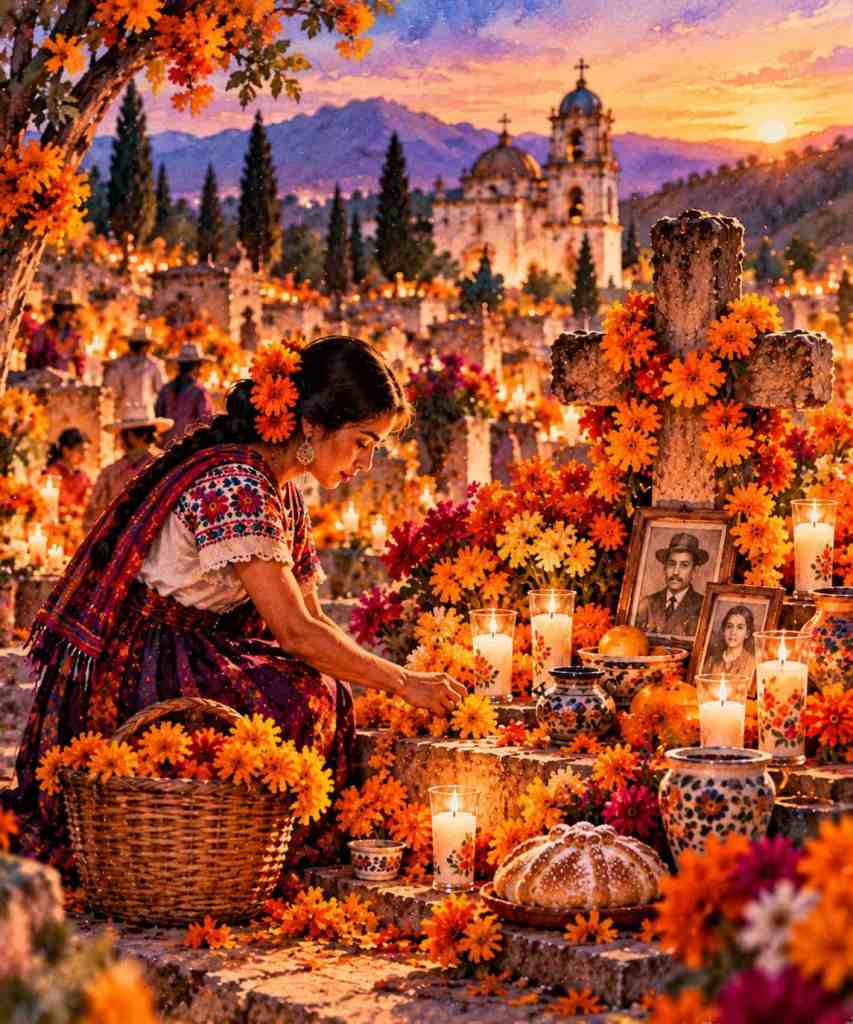
Copal, candles and the scent of memory
Photographs have one major problem: they do not smell. Día de Muertos is photographed so intensely that it is easy to forget half of the sensory world of the occasion.
Copal. Wax. Flowers. Bread. Fruit. Cooked food. Cooler night air in the cemetery. Smoke. Suddenly we are not inside an image gallery. We are in a place.
Copal is also a good example of why one familiar word deserves a closer look. The label copal can refer to different resins from different plants. Botany and provenance are therefore not a boring appendix for people who ruined the party by bringing a herbarium. They are part of the story.
💬 Sibi Sibi: “If we burn it, wear it, eat it or buy it in large quantities, it is fair to ask where it came from.”
That will become an important trail later, when we reach materials and the ecology of the season.
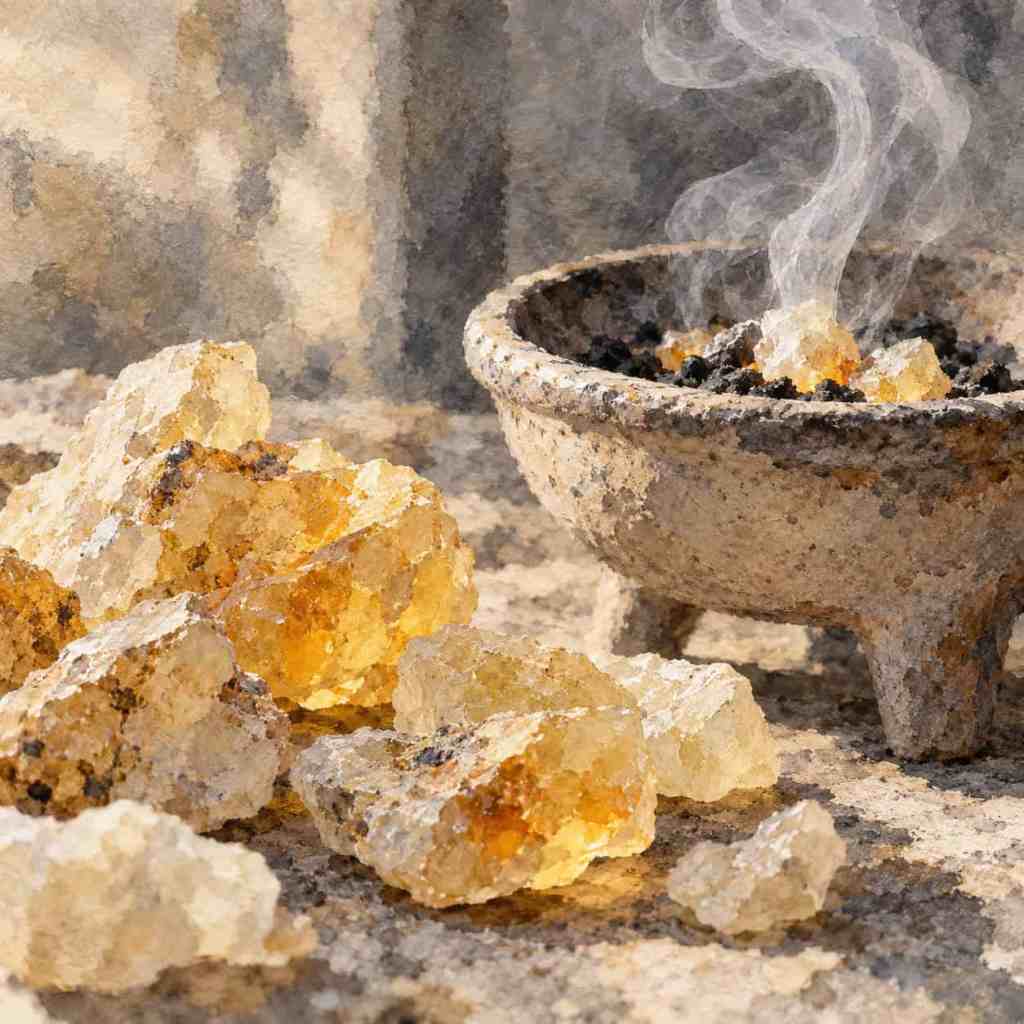
Pan de muerto: one name, many breads
Another thing the global internet likes to settle with one photograph: pan de muerto. A round loaf. Sugar. Dough “bones” on top. End of presentation.
Except, no.
Across Mexico there are regional versions that differ in shape, decoration, flavor and local tradition. In some places you will find the now globally familiar round form; elsewhere breads may resemble human or animal figures, or look completely different.
So if an article ever appears called “The One True Recipe for Authentic Pan de Muerto”…
💬 Babča: “…send it to Grandpa first. At least he will have something to do all afternoon.”
Even more interesting is food placed on an ofrenda not because an article called “Traditional Mexican Foods You Need” recommended it, but because someone loved it. That changes everything.
An ofrenda is not a catalogue of national cuisine. It can hold something completely ordinary that means one particular person to one particular family. Memory does not order from an SEO menu.
Papel picado, cartonería and everything somebody actually had to make
Día de Muertos is also an enormous story of hands and materials. Paper. Cardboard. Textile. Ceramics. Flowers. Paint. Wood. And yes — in some places, beads. Now we are home.
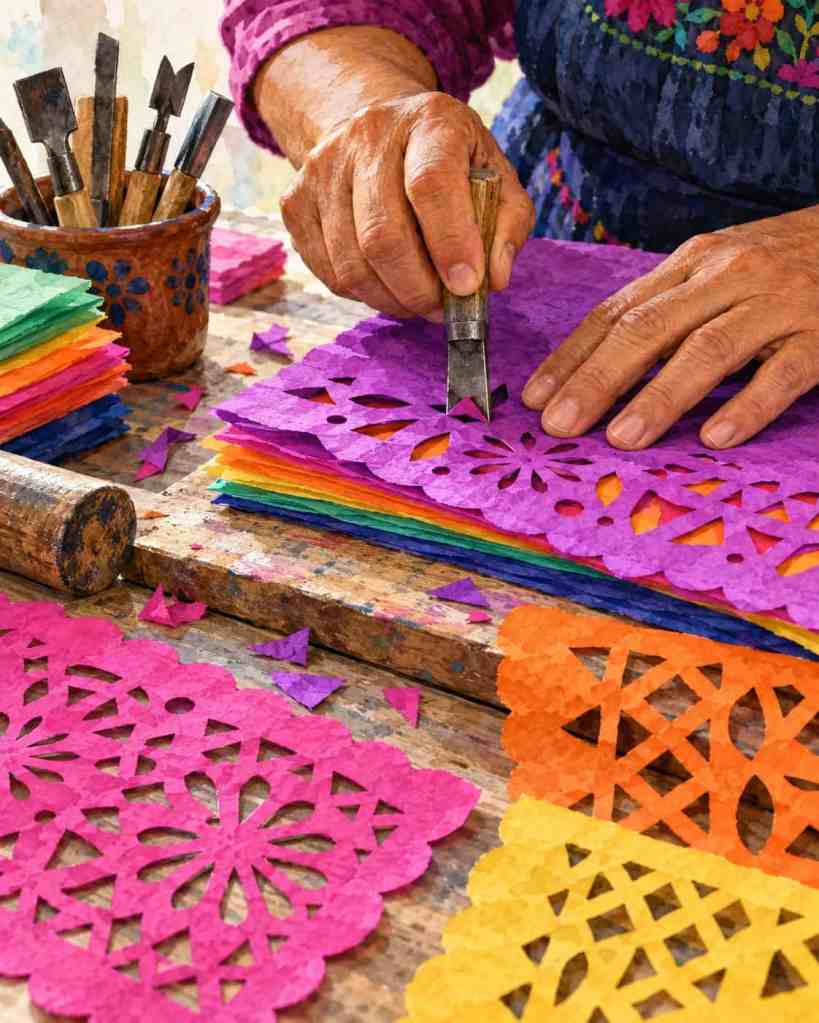
Papel picado, paper work, cartonería, ceramic objects and other decorative elements can appear in both domestic and public forms of the holiday. But beware our favorite internet equation: colorful + Mexican = traditional. No.
💬 Roxy Riot: “So a neon plastic skeleton from Temu is not automatically folk art?”
With every craft we will ask: Who makes it? Where? With what technique? From what material? For whom? And what documented connection does it actually have to Día de Muertos? This is exactly where BeadCulture wants to go deeper than an ordinary seasonal lifestyle article.
Not “buy five colorful decorations.” Instead: follow the hands, the material and the object’s journey.
💬 Šustěna Bludná: “FINALLY, the journey of the object. I was beginning to think nobody would call me.”
Easy. Your moment is coming. And it will be long.
Mexico is not one region: a small map of enormous differences
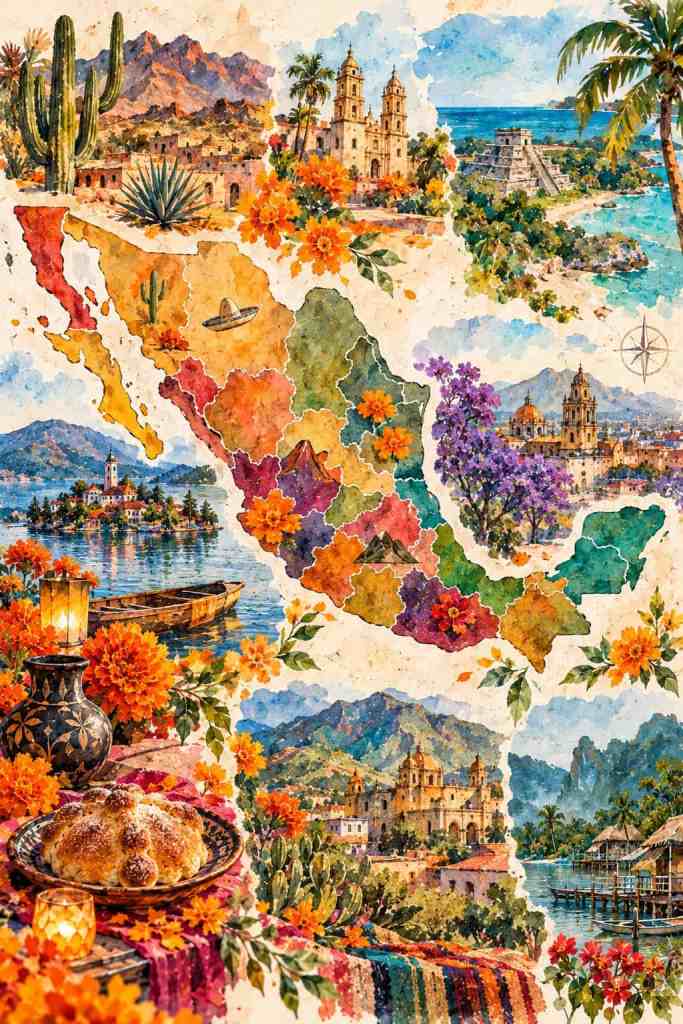
If one map stays in your head after this article, let it be this one: Michoacán is not Yucatán. Huasteca is not Oaxaca. Pomuch is not Mexico City. And Janitzio is not all of Mexico.
That sounds obvious. Yet the internet sometimes treats Mexico as if photographs from millions of square kilometers could all be poured into one album titled TRADITIONAL DAY OF THE DEAD.
They cannot. And regional differences are precisely where the subject opens up like an accordion.
Michoacán and Noche de Muertos
Michoacán — especially some areas associated with Purépecha communities — belongs to the best-known images of Mexican remembrance of the dead. Perhaps too well known.
Once a particular place becomes a global icon, a very easy trick happens: its image starts standing for the whole country. Then three stock-photo libraries are enough and suddenly we have “how Mexicans celebrate Día de Muertos.”
We do not. We have three stock-photo libraries.
The tourist popularity of places such as Janitzio therefore deserves special care. We want to follow local meaning and community voices, not turn them into colorful scenery.
Yucatán and Hanal Pixán
In Yucatán and surrounding areas we enter the world of Hanal Pixán, a Maya framework for remembering the dead with its own names, foods, calendar and local logic.
This is exactly where the convenient formula “It is basically Día de Muertos, just the Yucatán version” stops working. Because that sentence has already thrown half the interesting part out of the window.
We will read Hanal Pixán through local and Maya sources as a cultural framework in its own right, not as a regional skin for one nationwide Mexican tradition.
💬 Lexa Byte: “Skin rejected. Different system.”
Thank you, Lexa. Surprisingly useful.
Huasteca and Xantolo
Another world of its own is Xantolo in the Huasteca region. Here we may encounter masks, music, dance, communal celebration and other elements in which local, Indigenous and Catholic layers meet.
And let us please put the phrase “Mexican spooky show” into the drawer where we already keep “mystical Indigenous rituals,” “ancient ancestral wisdom,” and other expressions that start embarrassing themselves under closer inspection. Every element has its own context. And context is more interesting than spooky.
Pomuch and the care of human remains
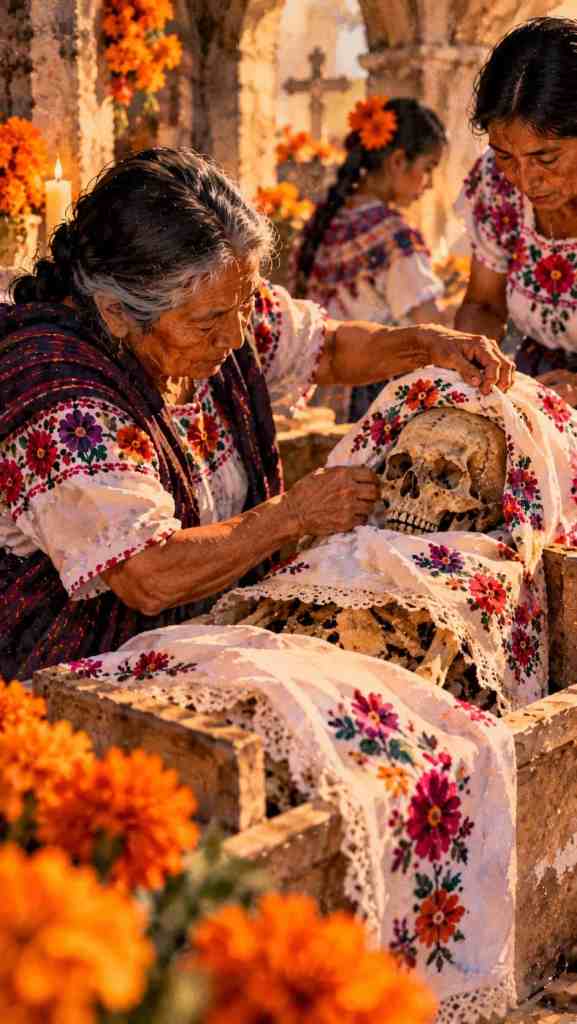
Pomuch in Campeche is known for a specific practice connected with caring for the remains of deceased relatives. Here we turn the humor down.
Because the internet can turn exactly this kind of subject, within three seconds, into: YOU WON’T BELIEVE WHAT THEY DO WITH THE DEAD IN MEXICO 😱
We will do the opposite. We will focus on context, local meaning, the history of the practice and the way it is described by the people it actually concerns.
No freak-show framing. No cultural amusement park. Just a deeply interesting human way of relating to the dead, which we will first allow to explain itself.
A cemetery, a home, a museum and a parade are not the same thing
Another favorite trap. Five Día de Muertos photographs: one is from a family home, one from a cemetery, one from a museum, one from a tourist installation and one from a city parade. All five receive the caption: “Traditional Mexican celebration.”
No.
A home ofrenda exists in a family context. A cemetery is a place of visiting, care and memory. A public ofrenda may be artistic, educational, political, communal or representative. A museum installation is a curatorial selection. A city parade is a public event.
These things can speak to one another. They can use similar symbols. They can exist in the same season. But they are not interchangeable.
💬 Lola Tralala: “So a six-meter skull in the town square is not a standard feature of every Mexican living room?”
No, Lola. And thank you for demonstrating exactly the problem.
Catrina: an icon that has not wandered through Mexico since the dawn of time
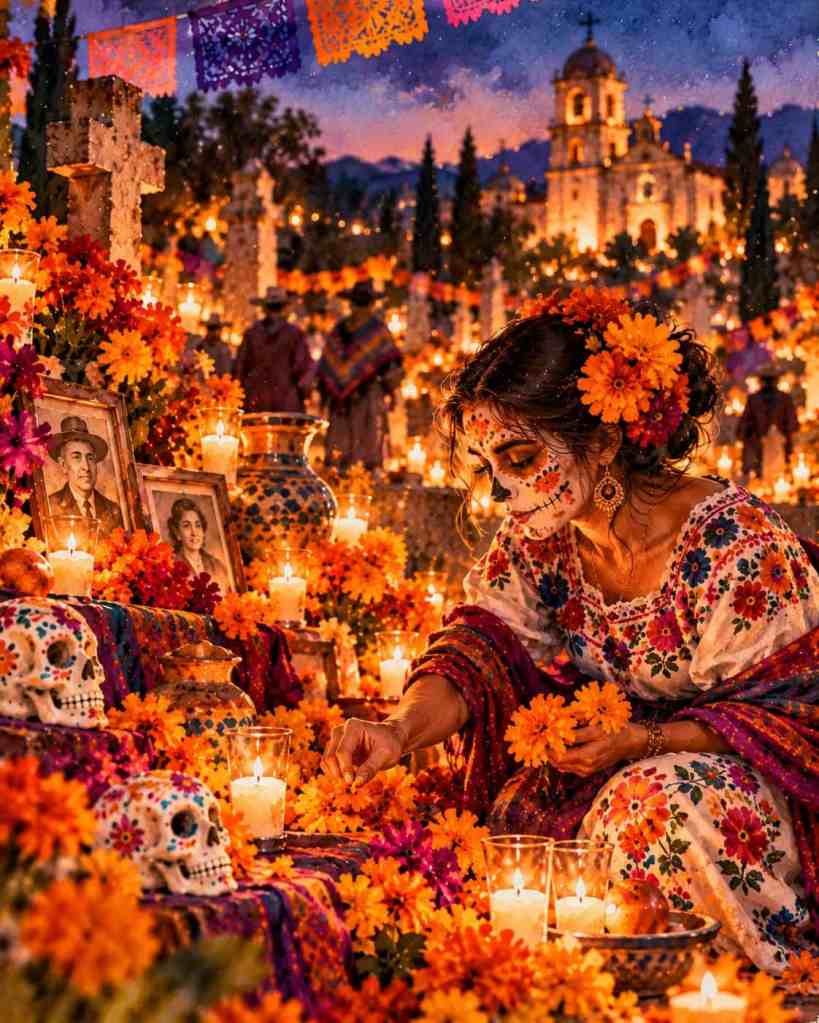
La Catrina now feels so natural beside Día de Muertos that it is easy to imagine she has been there at least since humanity invented the skeleton.
She has not.
Her modern history runs through the graphic work of José Guadalupe Posada and later cultural developments. It is a lovely example of why the sentence “traditions change” is far more interesting than “this tradition survived unchanged for thousands of years.”
Cultural symbols are not fossils. They live. They acquire new meanings. They move. Some become dominant only quite recently. And some end up on a mug, T-shirt, poster, tattoo, handbag and probably a dog collar, because capitalism has excellent stamina.
💬 Ruby Decibel: “Once you become a global fashion icon, nobody ever leaves you alone. Catrina could tell us a few things.”
And what about the film Coco?
Yes. We have to go there.
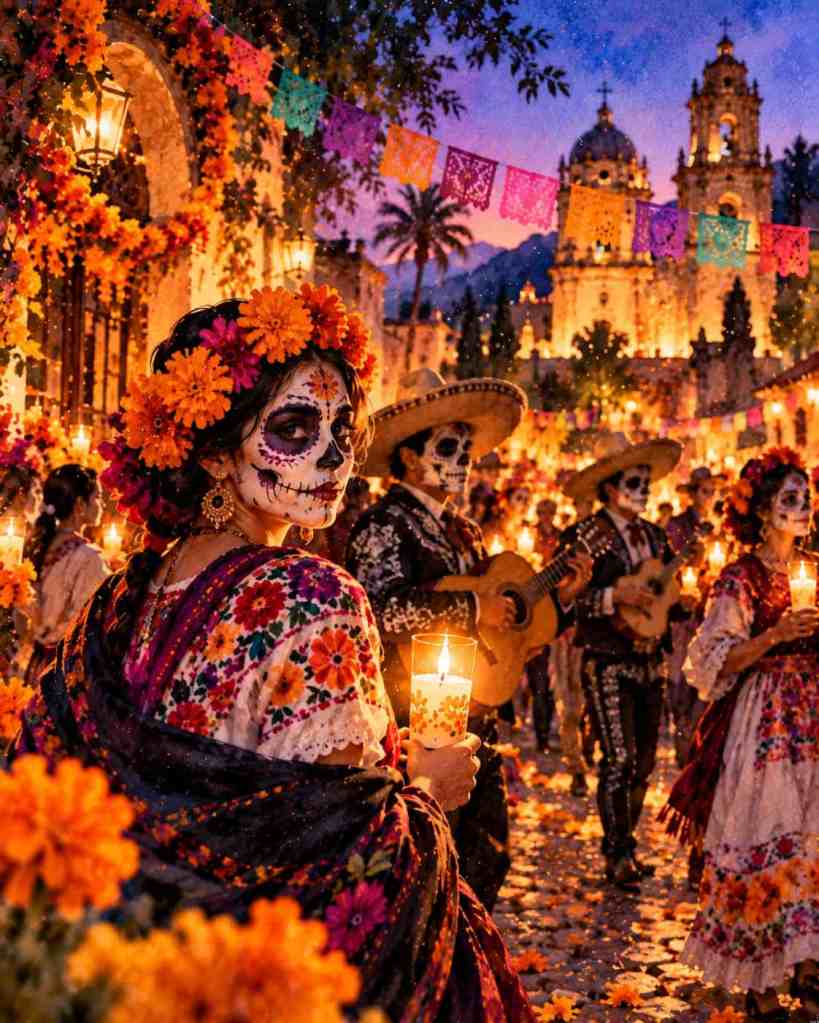
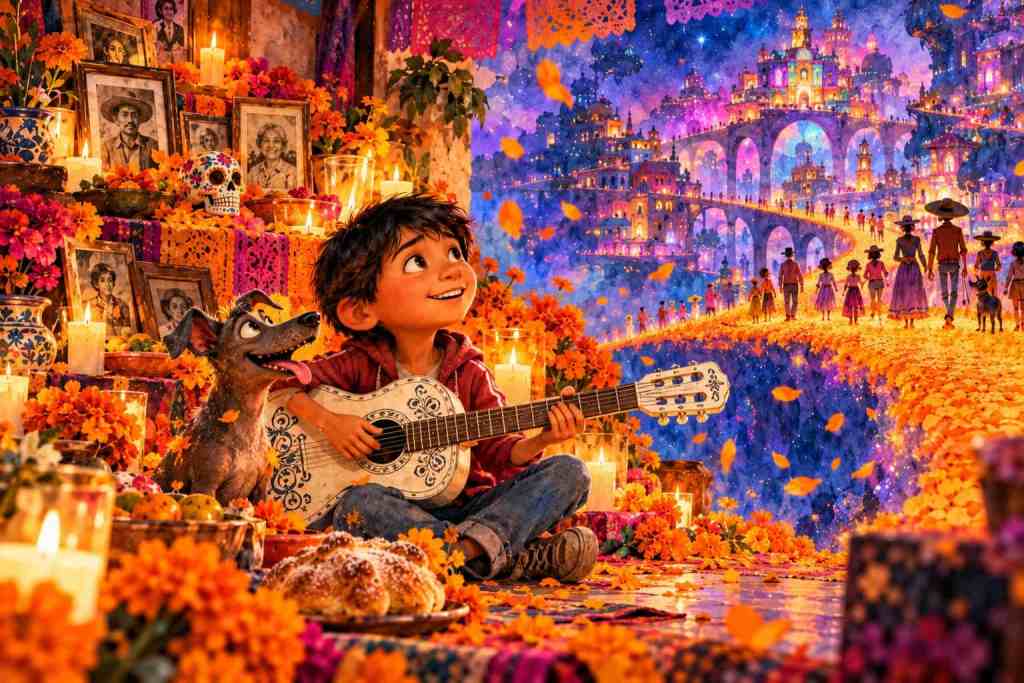
Coco helped millions of people around the world connect Día de Muertos with Mexico. For many, it was their first encounter with an ofrenda, cempasúchil or the idea of family remembrance of the dead. As an entry point, it works brilliantly.
But the doorway is not the whole house.
Coco is a film. It has a screenplay, dramatic structure, its own rules, a visual concept and a need to tell a story in roughly two hours rather than submit a twelve-volume anthropological monograph.
💬 Grandpa Tralala: “Which I, for one, would have appreciated.”
Nobody asked, Grandpa.
The film therefore selects some motifs, transforms others and combines still more into its own narrative. That does not make it culturally uninteresting. Quite the opposite.
We can follow how the film shaped the global image of Día de Muertos, tourist interest, commercial visual language and what people outside Mexico automatically imagine when they hear the name of the holiday. Pop culture does not merely show culture. Sometimes it starts changing it.
💬 Lexa Byte: “And then the algorithm teaches the next group of people from images made after a film made from cultural motifs. Loop closed.”
And there is another article. Excellent.
Día de Muertos outside Mexico
Today we encounter ofrendas, public celebrations, exhibitions, talks and workshops in the United States, Europe and elsewhere. Here a much more useful question than the automatic “Is this cultural appropriation?” is available.
First ask who organizes the event, who takes part, where the elements being used come from, and how their meaning is explained.
Is the Mexican community involved? Is it an educational project? A cultural presentation? An art installation? A family memorial event? A school workshop? A commercial party where someone bought twenty plastic skulls and declared November to be Mexico?
Those are very different situations.
We do not have to divide the world into two columns: AUTHENTIC MEXICO ✅ and EVERYONE ELSE IS WRONG ❌. It is much more useful to examine authorship, relationships, context and the changes that happen when cultural forms travel between places.
That is one of the big themes of BeadCulture anyway. Objects travel. People do too. Meanings travel with them. And sometimes their luggage gets lost on the way.
💬 Šustěna Bludná: “This is why we label our bags.”
How to approach the subject without a cardboard sombrero
You do not need Mexican ancestry or a home ofrenda to study Día de Muertos, admire it or be inspired by it. You can start much more simply: care about where things come from.
With a photograph, find the place and photographer. With a craft, look for a particular maker and technique. With a regional tradition, use its local name. With a family ofrenda, do not assume there is one universal checklist. In your own work, distinguish between “inspired by” and “traditional Mexican.” And when buying something, look at who made it and where it came from.
Respect does not always look like a monumental moral gesture. Sometimes it simply looks like: “Wait. Who actually made this?”
💬 Sibi Sibi: “And from what.”
💬 Orla Křen: “And how.”
💬 Šustěna Bludná: “And where did it come from.”
💬 Roxy Riot: “And can I drill a hole in it?”
NO.
What BeadCulture will investigate next
And now the bad news for anyone hoping we have just solved Mexico. We have barely opened the door.
The Mexican Día de Muertos branch can continue through cempasúchil, pan de muerto, copal, papel picado, cartonería, ceramics, cemeteries, Hanal Pixán, Xantolo, Pomuch, Catrina, public parades, contemporary Halloween, diaspora, digital memory, material ecology, tourism, schools, film, fashion and design…
…and yes. Beads. Finally.
We will ask where beadwork actually appears in connection with this season, who makes it, whether it belongs to a local craft tradition, contemporary studio work or tourist production, and how Día de Muertos motifs change when they move into jewelry.
FAQ: Common questions about Día de Muertos
When is Día de Muertos celebrated?
The main dates are November 1 and 2. In some families and communities, however, preparations begin earlier, and local traditions may distinguish additional days or moments connected with remembering the dead.
What is observed on November 1 and November 2?
In a widely used distinction, November 1 is often associated with deceased children and November 2 with deceased adults. The exact calendar can vary by region and local tradition.
Is Día de Muertos the same as Halloween?
No. They are distinct traditions with different histories, functions and meanings. In contemporary Mexico they can exist side by side, and one person may take part in both.
How is Día de Muertos different from All Souls’ Day in Europe?
Both can involve remembering the dead and they overlap in the early-November calendar, but they belong to different cultural and religious settings. Día de Muertos has its own Mexican historical, regional and community layers, including ofrendas, specific foods, flowers and local forms of remembrance.
Do Día de Muertos and European All Souls’ traditions have the same origin?
Not in any simple sense. Both contemporary frameworks intersect with the Christian period of All Saints and All Souls, but present-day Día de Muertos developed in Mexico where Catholic and diverse Indigenous traditions concerning the dead interacted.
What goes on a Día de Muertos ofrenda?
Ofrendas may include photographs of the deceased, candles, water, salt, flowers, food, fruit, pan de muerto, copal, drinks and personal belongings. There is no single mandatory list for all of Mexico. The form of an ofrenda depends on the family, region and person being remembered.
When is an ofrenda set up and taken down?
Timing varies by family, region and local tradition. Ofrendas may be prepared several days before the beginning of November, and there is no single universal date when they must be set up or removed.
How many levels should an ofrenda have?
Ofrendas can have different numbers of levels, including two, three or seven. No single number is compulsory for every household or region.
Why is cempasúchil used for Día de Muertos?
The vivid orange and yellow cempasúchil is one of the best-known plant elements of Día de Muertos. Many explanations connect its color and scent with a path or guide for the dead. Specific symbolic meanings may vary by place and tradition.
Do all Mexicans celebrate Día de Muertos?
No. The form and intensity of observance vary between regions, communities, families and individuals. Some families build ofrendas, others visit cemeteries, some join public festivities, and others do not observe the holiday.
Can someone outside Mexico make a personal ofrenda?
Yes, if they approach the tradition respectfully and distinguish clearly between personal inspiration and a traditional Mexican practice. It is better to acknowledge the source of the inspiration than to label a personal decoration “an authentic Mexican ofrenda” when it is not.
Does the person remembered on an ofrenda have to be Mexican?
No. A personal ofrenda can be dedicated to one’s own deceased loved one regardless of nationality. The relationship and memory matter, not citizenship.
Can I use Día de Muertos as inspiration for making jewelry or art?
Yes, but describe what you are making accurately. “Jewelry inspired by Día de Muertos” is not the same as “traditional Mexican jewelry.”
With motifs, techniques or objects tied to a particular community, research their origin and meaning.
Do deceased pets have their own Día de Muertos date?
Online sources often mention October 27 as a day for deceased pets. It should not be presented as an ancient, uniform tradition observed across all of Mexico.
Pets can also appear on personal ofrendas as part of family remembrance.
Can food from an ofrenda be eaten afterward?
This varies by family and local tradition. In some cases the food is eaten after the period of remembrance; in others it is not.
Ordinary food-safety rules still matter if food has stood at room temperature for a long time.
Is La Catrina a pre-Hispanic figure?
No. Her modern history is connected with the graphic work of José Guadalupe Posada and later cultural developments that gradually made her one of the best-known icons associated with Día de Muertos.
Does Día de Muertos have a purely pre-Hispanic origin?
No. Contemporary forms are the result of a long historical development involving diverse Indigenous traditions concerning the dead, the Catholic calendar, colonization, regional practices and later Mexican cultural layers.
Is Día de Muertos joyful or sad?
It can contain both. Remembering the dead may include grief, family gatherings, food, music, humor and storytelling.
It is therefore misleading to describe Día de Muertos simply as a “cheerful celebration of death.”
Is the film Coco an accurate picture of Día de Muertos?
Coco uses real cultural elements such as ofrendas, family memory, photographs and cempasúchil. It is also a fictional film with its own story, visual world and rules.
It is a useful doorway into the subject, not a documentary description of the whole Mexican tradition.
Is there really a flower bridge to the land of the dead as in Coco?
Not as a literal feature of a general Mexican tradition. The flower bridge is a cinematic treatment of motifs connected with cempasúchil and the return of the dead.
Why can European remembrance customs seem quieter than Día de Muertos?
Partly because they are different cultural traditions, and partly because people often compare intimate European cemetery or family practices with the most spectacular public images from Mexico.
That comparison can mislead. Mexico also has very intimate and quiet forms of remembrance.
Are Día de Muertos events held outside Mexico?
Yes. Public cultural events, exhibitions, workshops, ofrendas and other programs are held in many countries.
For a particular event, it is useful to look at who organizes it, who participates and how the Mexican cultural context is explained.
Is Catrina-style face painting okay?
Context matters. It helps to know what Catrina represents, where her image comes from and that she is not an anonymous “Mexican skull.”
The more a specific cultural symbol is reduced to a generic exotic costume, the greater the risk of simplification or caricature.
Is it okay to travel to Mexico for Día de Muertos?
Yes. Many cities and regions hold public cultural events and festivities open to visitors.
It is important, however, to distinguish public programming from personal family and mourning situations.
Is it okay to photograph people in cemeteries during Día de Muertos?
In family and mourning settings, respect local rules, keep your distance and do not photograph specific people close-up without permission.
A public parade and a family at a grave are not the same kind of space.
🧵 Where the threads lead
- UNESCO — Indigenous festivity dedicated to the dead — used to define the holiday as living intangible cultural heritage and to keep the focus on specific communities rather than one supposedly correct nationwide version.
- INAH — El origen del Día de Muertos — used for the historical framework and for the warning that present-day Día de Muertos should not be described as an unchanged survival of one pre-Hispanic tradition.
- INPI — Elementos de una ofrenda de Día de Muertos — used for common ofrenda elements and their meanings, while keeping regional and family variation in view.
- Smithsonian Folklife — Altered Altars, Changing Traditions — used for changing traditions, diaspora and contemporary forms of ofrendas.
- Smithsonian National Museum of American History — Day of the Dead: It’s Not Halloween — used to distinguish Día de Muertos from Halloween.
- INPI — Pan de muerto — used for the regional diversity of pan de muerto.
- INPI — Xantolo en la Huasteca Hidalguense — used for the distinct regional context of Xantolo in the Huasteca.
- INPI — Hanal Pixán, Conkal, Yucatán — used for the Maya framework of Hanal Pixán and to avoid reducing it to a generic regional “version” of Día de Muertos.
- INAH — Pomuch y la limpieza de huesos — used for the sensitive description of the local practice of caring for human remains in Pomuch.
📚 Want to go deeper?
Start with the wider map in Halloween, All Souls’ Day and Festivals of the Dead Around the World, where we compare different ways of remembering the dead without turning them into one global tradition.
For the European history of Halloween, Samhain and the Christian calendar, continue with Why Do the Dead Return at the Turn of October and November?.
We will continue the Mexican branch separately through ofrendas, cempasúchil, pan de muerto, Catrina, Xantolo, Hanal Pixán, Pomuch, crafts, materials, jewelry, diaspora and contemporary changes in the holiday.

Why Do the Dead Return at the Turn of October and November? Halloween, Saints, Souls and One Very Tangled History
How did Samhain, All Saints, prayers for the dead, Irish turnips, guising and American pranks become Halloween with pumpkins, costumes and bags of candy?


Halloween, All Souls’ Day and Festivals of the Dead Around the World: A Big Guide to Traditions That Are Not the Same
Halloween, All Souls’ Day, Día de Muertos, Undas, Fèt Gede and giant Guatemalan kites: a guide to what happens around the world at the end of October and beginning of November — and why these traditions do not merge into one.
Japan in September: When the Equinox Gets a Government Stamp
In Japan, the September equinox falls on September 23, 2026 at 09:05 JST. Shūbun no Hi is a national holiday tied directly to the equinox, while Higan is a broader Buddhist and family season — and in 2026, September 22 becomes a day off as well.