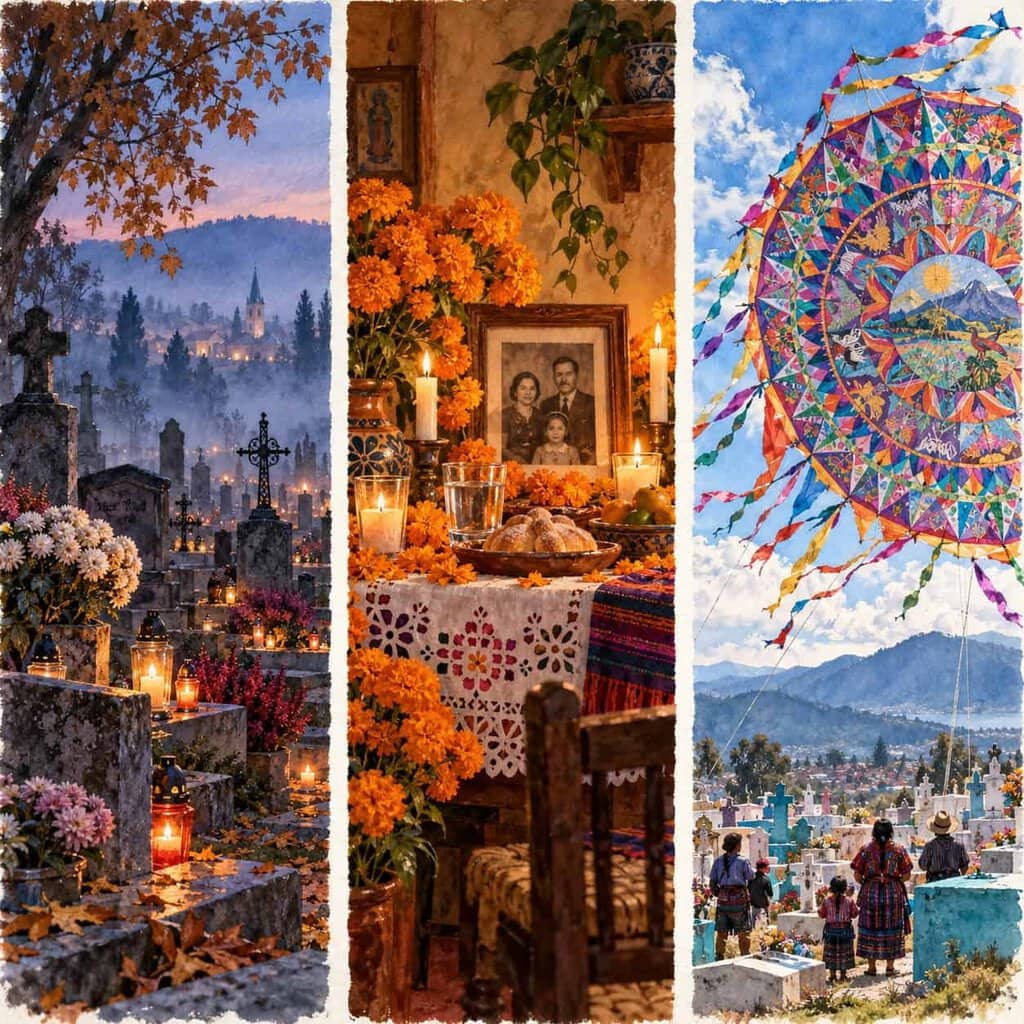
At the end of October, the calendar starts looking suspiciously crowded with the dead. Somewhere, a child dressed as a dinosaur rings the doorbell and demands sugar under a mild threat of vandalism. A few days later, entire cemeteries light up elsewhere. In Mexico, altars are built for specific people who have died; in Guatemala, giant paper kites rise above cemeteries; in the Philippines, families bring food; and in Haiti, remembrance of the dead may pray, sing and dance — and it certainly does not have to whisper.
Because all these things sit suspiciously close together on the calendar, the internet does what the internet loves most: pours them into one bowl, gives them a stir, and announces that humanity has been celebrating one great ancient festival of the dead since time immemorial. It would be beautifully simple. Unfortunately, it would also be wrong. Halloween, All Saints’ Day, All Souls’ Day, Día de Muertos, Undas, Fèt Gede, Korean charye, Japanese Obon and Moroccan hiloula have their own histories, different religious and cultural roots, and often completely different dates.
What connects them is less one ancient festival than one human question: What do we actually do with a person who has died but has not entirely disappeared from our lives? Somewhere we light a candle. Somewhere we prepare their favorite food. Somewhere we keep them in the family story; somewhere we go to their grave; somewhere we set an entire mountainside on fire; and somewhere, by contrast, respect means not showing their image for a time. Humanity never agreed on a method. Thank goodness, because otherwise this article would end after roughly three paragraphs.
First, let’s tidy up the calendar. By October 31, it is already getting a little crowded
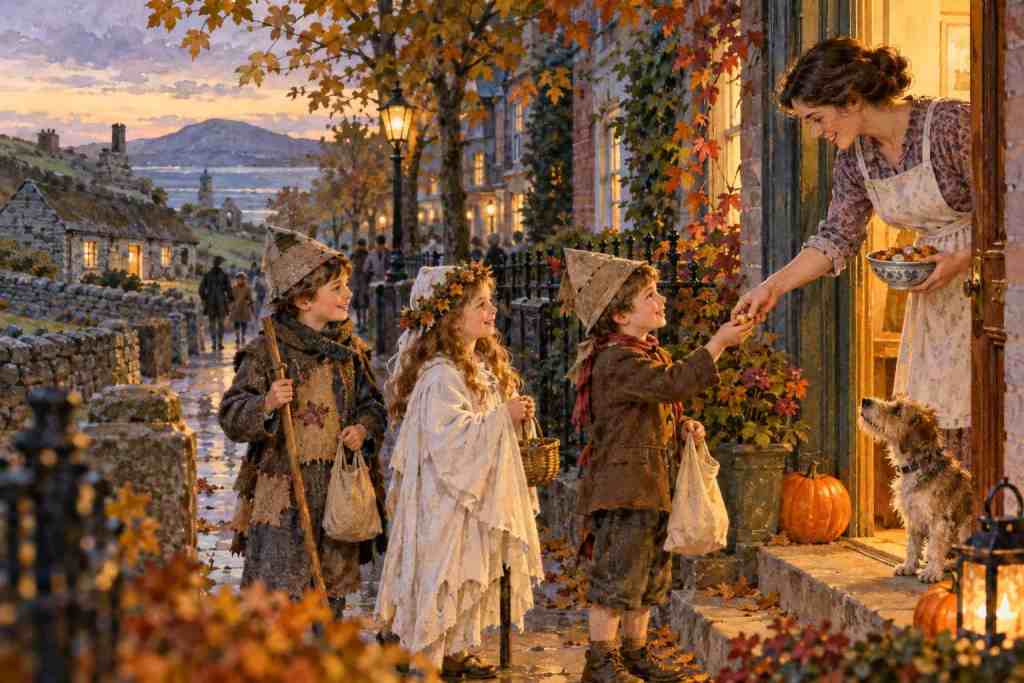
Halloween falls on October 31, and its name leads back to All Hallows’ Eve, the eve of All Saints’ Day. November 1 is All Saints’ Day in the Western Catholic calendar, and November 2 is the Commemoration of All the Faithful Departed, or All Souls’ Day. The three days stand right next to one another, but they are not three episodes of the same series. One evening may belong to costumes and candy, the next day to a church service, and the next to visiting a grave. In some places the layers overlap; elsewhere they exist side by side, and local people distinguish them perfectly well.
And history has not even started traveling yet. Modern Halloween is not a cultural tin can that somebody sealed in Ireland two thousand years ago and that we simply open today. It is a highly social creature. It borrows something from Irish and Scottish traditions, something from the Christian calendar, something from folk visiting customs, packs a large suitcase for America, discovers pumpkins, suburbia, the candy industry and television there, and then returns to Europe as if nothing happened.
The calendar, then, is a neighborhood.
Not a DNA test.
From Samhain to turnips: the Atlantic has not even set sail and things are already complicated
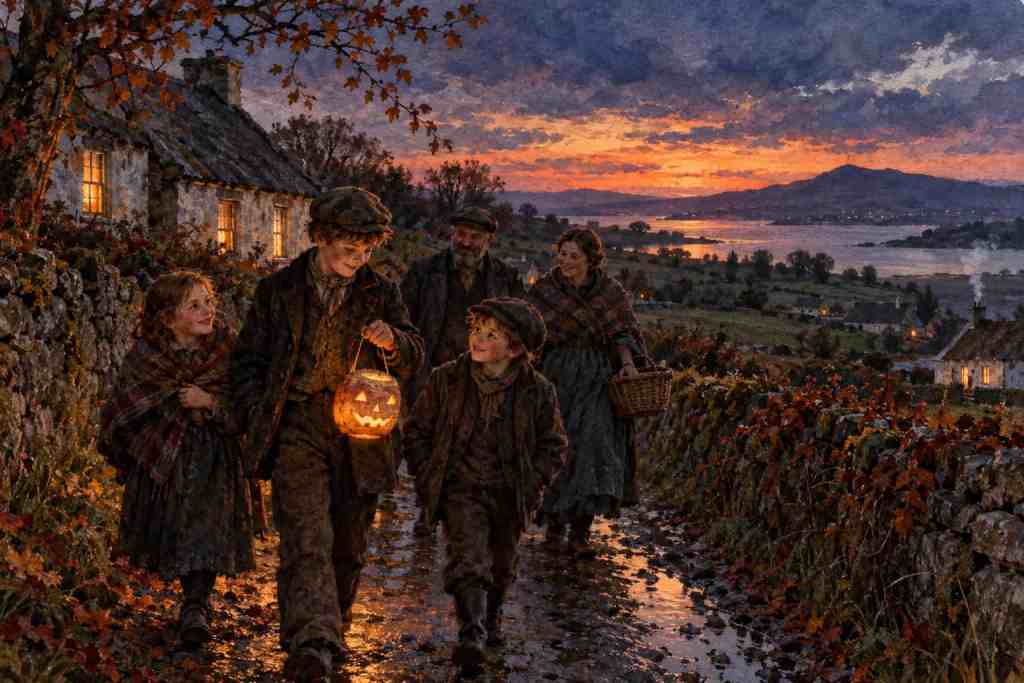
On the island of Ireland, the end of October was associated with Samhain, one of the major turning points of the traditional Gaelic year. The winter half of the year began, and folkloric records around this period contain layers of games, food, disguises, divination and ideas about the supernatural world. That is a real and important part of the family tree of today’s Halloween. But it is not a license to take every plastic fang from a discount store and declare it an unbroken two-thousand-year-old Celtic inheritance. The earlier draft was right to warn that the straight line “Samhain = modern Halloween” is far too convenient.
That is precisely why the Isle of Man is so delightful: Hop tu Naa still lives there on October 31. In 2026 Manx National Heritage continues to celebrate it with the carving of traditional turnip lanterns — moot — alongside songs, music, dancing, storytelling and seasonal customs. Hop tu Naa is linked to the end of the harvest and the arrival of the long nights, showing that older island traditions do not have to dissolve into global Halloween just because pumpkins have a better PR department.
The turnip, by the way, is one of the most beautiful moments in the whole history of Halloween. It is smaller than a pumpkin, harder, more difficult to hollow out, and the finished lantern often looks as if the vegetable has just learned something deeply unpleasant about its own mortality. America later switched to the large orange pumpkin, and it is hard to resist the feeling that in this case cultural change really did mean technological progress.
Lola Tralala comments: The pumpkin is not a betrayal of tradition. The pumpkin is the moment someone said, “Couldn’t we carve something that doesn’t require a vise, a drill and a plastic surgeon?”
America takes Halloween into the workshop. It comes back with candy and a marketing department
Irish and Scottish traditions traveled with real people to North America in the nineteenth century, where they began to mix with other local and immigrant customs. Costumed rounds, guising, the older practice of souling, parties, divination and neighborhood pranks gradually created the environment from which modern trick-or-treating grew during the twentieth century. There was no single grandfather who one day handed the torch to a tiny Batman with a plastic bucket; folklorists trace several different strands that gradually became intertwined.
American Halloween also went through a period when the “trick” was not merely theoretical. Pranks could mean overturned barrels, painted windows, moved or dismantled objects and other activities after which a neighbor did not wake up wondering who ate his candy but where the gate had gone. Organized parties and children’s rounds were therefore, among other things, a fairly sensible way to steer seasonal chaos toward something less likely to end in a police report.
And then the candy industry arrived. In the first half of the twentieth century, children might still receive fruit, nuts, baked goods, coins or small gifts, but after the Second World War individually wrapped sweets gradually won. The idea that there was one evening when millions of households voluntarily bought miniature chocolates for strangers’ children must have looked almost like a religious revelation to a marketing department.
Europe, then, sent a mixture of traditions across the Atlantic. America remixed it, added pumpkins, television and industrial quantities of sugar, and sent it back.
“Hello, your Halloween has returned. It now has a polyester costume and a discount code.”
Europe after dark: somewhere a candle, somewhere a bread roll — and in Sicily your dead grandmother brings the present
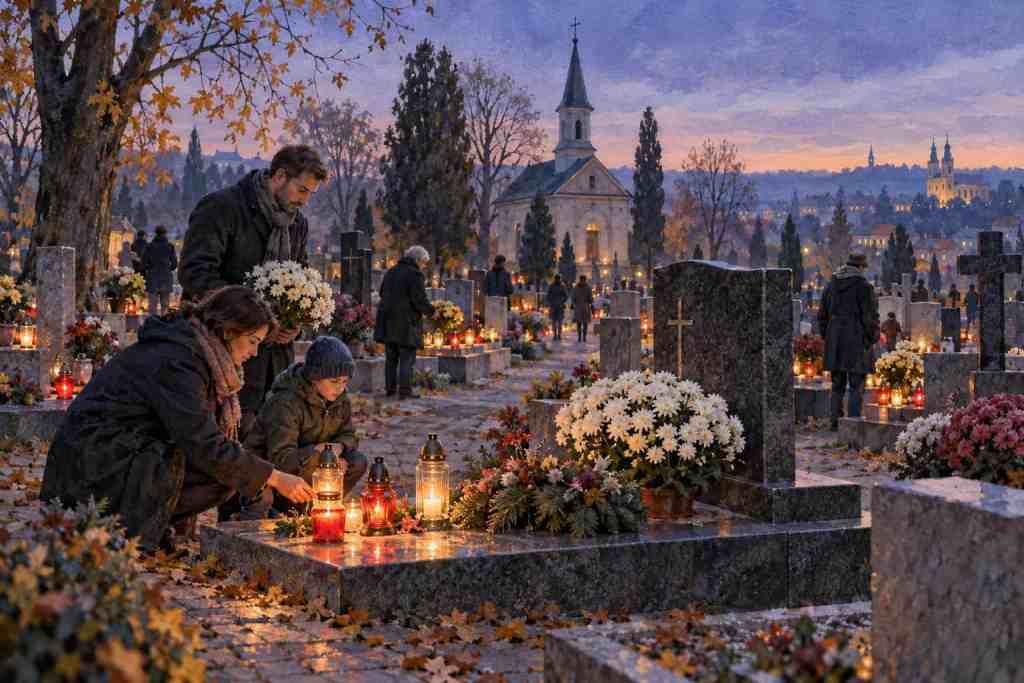
The beginning of November has a completely different atmosphere from American Halloween in many parts of Europe. In Poland, cemeteries on November 1 become vast landscapes of light after dark, and families often visit several graves in a single day. The earlier article rightly noted that even here there is no single perfectly uniform “European tradition”: the day may look different depending on region, family, generation or relationship to religion.
And Czechia belongs naturally in this picture. All Souls’ Day on November 2 remains strongly associated with cemetery visits, candles, wreaths and flowers; Radio Prague reported in September 2026 that, according to a survey at the time, more than eight out of ten Czechs actively observe it even though the country is among European societies with low levels of religious affiliation. That alone is interesting: a ritual can long outgrow the boundaries of the people who would describe it as purely ecclesiastical.
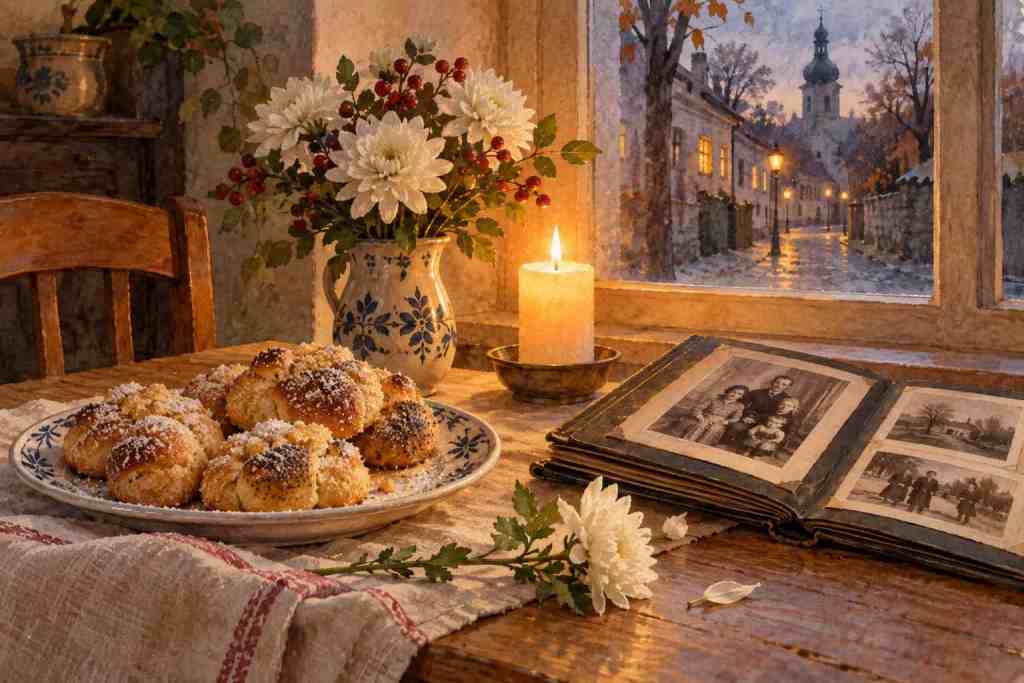
And Czech All Souls’ customs were not always just a glass grave candle, a chrysanthemum and a search for where we put the rake last year. Older folk customs also knew special All Souls’ baked goods, and in parts of South Bohemia children went from house to house on behalf of the dead and expected pastry — Radio Prague explicitly mentions “caroling for the dead” and bread rolls. So the next time we watch American children making the neighborhood rounds for chocolate with mild amusement, Czech folklore can cough discreetly from behind us: “Hello. We used to go out for a bread roll because of the dead.”
Sicily offers an even sharper turn. There, the traditional Festa dei Morti on November 2 linked remembrance of the dead with gifts for children: families hid them and children were told they had been brought by dead parents, grandparents or other relatives. The custom also includes colorful sugar figures called pupi ri zuccaro and biscuits known as ossa di morto, literally “bones of the dead.” Sicily’s regional administration itself describes the tradition as a way of passing memory between generations.
Elsewhere, then, we tell a child: “Grandma isn’t here anymore.” The Sicilian custom could add: “Yes. But apparently she still knows where to buy presents.” And suddenly we see that European remembrance of the dead does not have to be only somber. It can also be sweet, playful and directly addressed to children — without losing its meaning.
Then Asia arrives and politely breaks our entire November system
If we had started to get the impression that ancestors hold an international contract for the turn of October and November, Korea cancels it very elegantly. Chuseok falls on the fifteenth day of the eighth month of the lunisolar calendar and traditionally includes family gatherings, the memorial rite charye, visits to graves known as seongmyo, and grave maintenance called beolcho. New rice and half-moon rice cakes called songpyeon may appear on the table. The Seoul Metropolitan Government also notes that formalized traditional rites are less common today than in the past, while returning to hometowns and celebrating with family remain important parts of the holiday.
In 2026, then, ancestors entered the South Korean autumn calendar already in September. Graves may be tended, the songpyeon finished and the family together while a European supermarket is still deciding which shelf deserves the plastic skull. The global meeting of the dead was apparently convened without Korea. Korea had its own calendar and sent its apologies.
Japan goes even further. Obon falls in summer in many regions and is associated with the idea of ancestors returning to their families, visits to graves, and their symbolic welcoming and send-off. In Kyoto, Obon culminates in the famous Gozan Okuribi, when enormous fires in the shapes of characters and other symbols blaze on five mountains around the city on August 16. The Japan National Tourism Organization describes them as fires that close the ancestors’ stay among the living and show them the way back.
So the ancestors arrive, the family receives them, and light shows the way — except it is August, and a European All Souls’ jacket would probably kill you before anything supernatural could. Korea and Japan beautifully demonstrate why similar motifs cannot automatically be turned into proof of a common origin. Ancestor + food + light + grave is still not a DNA test for tradition.
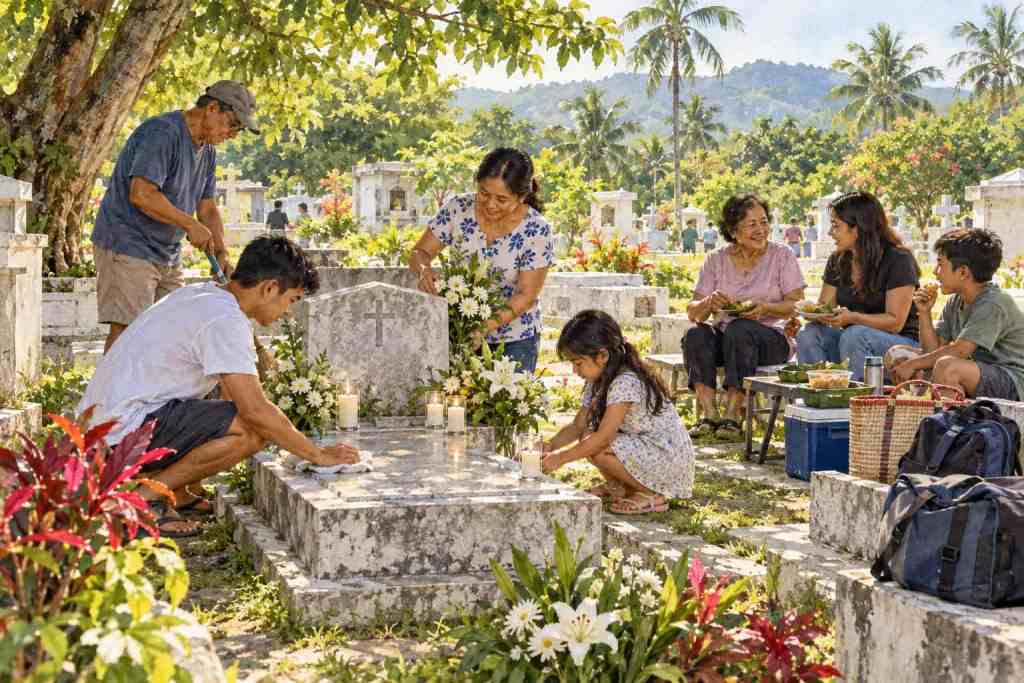
And then there are the Philippines, which bring us back to the beginning of November. During Undas, families clean graves, travel to relatives and spend long periods in cemeteries. The National Museum of the Philippines also describes the specific Ilocano practice of atang, food prepared as an offering for the dead. The earlier draft correctly kept this practice with Ilocano communities instead of stretching it across more than seven thousand Philippine islands with one sweep of the keyboard.
The cemetery can become a place for family gathering, food and a long stay. A dead member of the household was not automatically crossed off the guest list just because they cannot RSVP.
In the Americas, memory can stand on a table — or fly several meters above a cemetery
Día de Muertos is one of those traditions that global visual culture loves almost too much. Skulls, marigolds, candles, color — a few clicks and the internet is already turning it into “Mexican Halloween.” This is exactly where we need to slow down.
In specific Mexican communities, ofrendas — altars and offerings — are created for specific people who have died. Photographs, candles, water, food or things the person loved do not merely say a general “we remember the dead.” They say something much more personal: “Grandma loved this. Dad drank this. We have heard this story about him a hundred times and we are going to tell it again anyway.” The earlier text rightly reminds us that Día de Muertos varies by region and community and that an ofrenda is not automatically a decoration that can be detached from the people who make it.
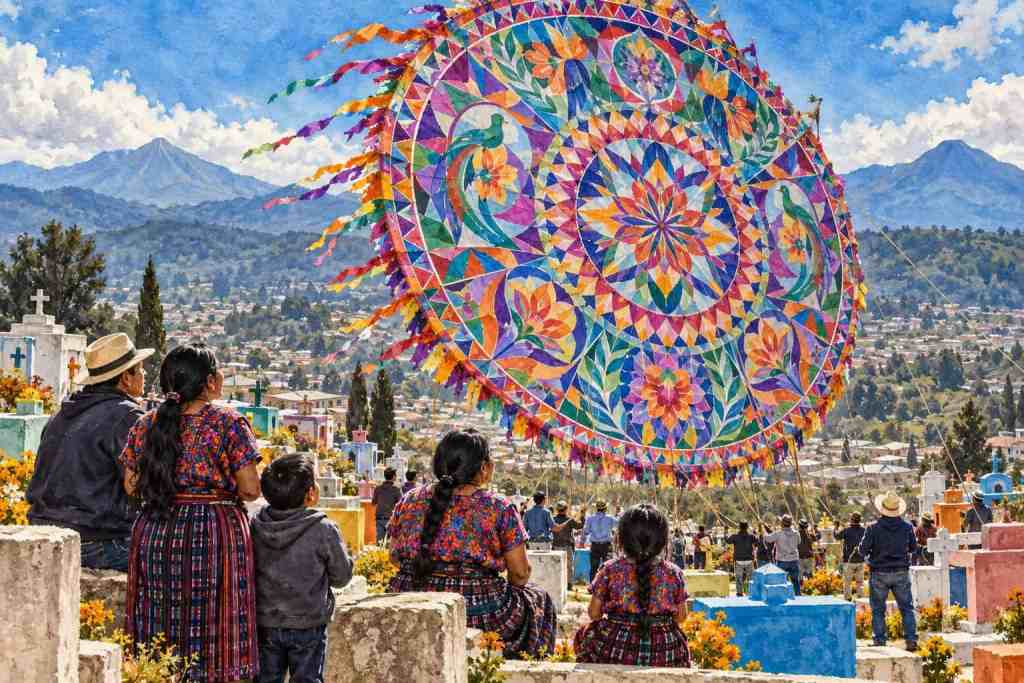
Right next to it on our imaginary atlas stands Guatemala, where two specific communities — Sumpango and Santiago Sacatepéquez — show that sometimes memory does not even fit on a table. November 1 is marked there by giant paper-and-bamboo barriletes, kites on which groups work for months and which carry intricate designs and messages connected with ancestors.
Someone lights a candle. Someone prepares an altar. And someone looks at a paper circle several meters across and announces: “We still need more bamboo.” The same human need can create completely different material languages.
Meanwhile, the Caribbean points out that respect for the dead has no prescribed volume
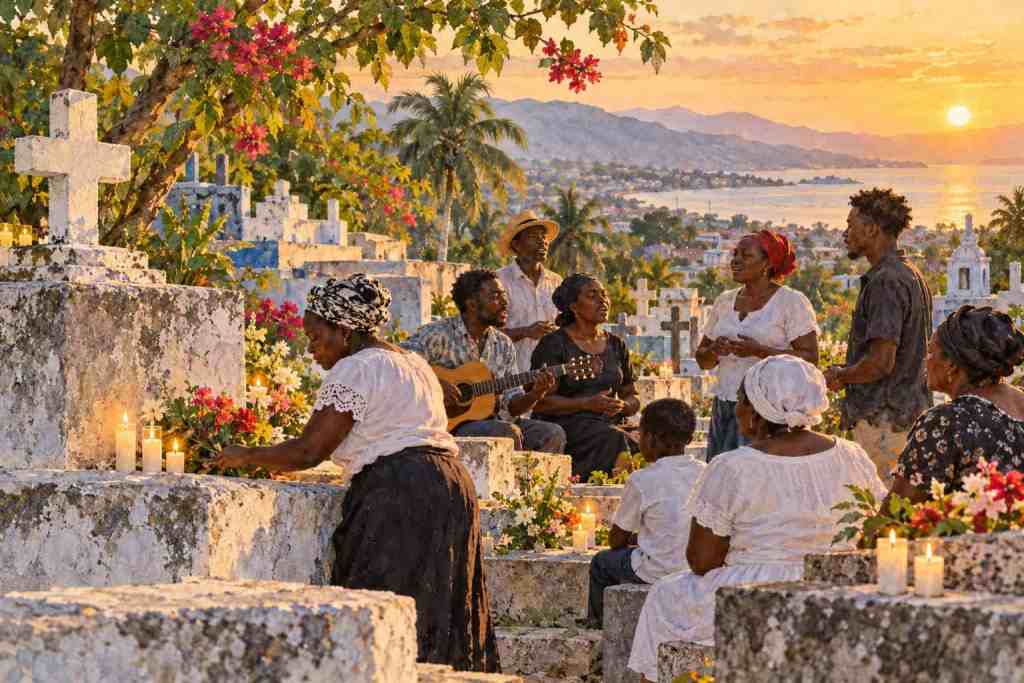
In Haiti, Fèt Gede takes place around the beginning of November and is associated with Haitian Vodou and the Gede spirits. Its calendar proximity to All Saints’ and All Souls’ Days is real, but Fèt Gede is not a “Haitian version of All Souls’ Day” or a costume detour from Halloween. It has its own Haitian and African religious history. Cemeteries may hold prayers and offerings, but also singing, dancing, humor and strong public energy.
For the European habit of associating piety with silence, this is a useful cultural alarm clock. Respect is not a universal measuring unit that increases as the volume decreases. Dancing among graves does not automatically mean that someone takes death less seriously. It may mean that a society uses a completely different language for its relationship with the dead.
Lola Tralala comments: Humanity has a strange tendency to measure piety in decibels going downward. Apparently the Gede never received the spreadsheet.
North Africa: sometimes the dead do not come anywhere. The living get in the car and go to them
In Morocco we find another form of an ongoing relationship with the dead: Jewish hiloulot, annual pilgrimages to the graves of venerated rabbis and scholars. Morocco’s Ministry of Culture lists “Pèlerinage juif Hiloula au Maroc” among elements of the national intangible heritage. Individual hiloulot take place at different graves and on different dates, so once again there is no shared November calendar.
Pilgrims may arrive from another Moroccan city or from the diaspora abroad, light candles, pray at the grave, eat, sing and meet people connected by the same saint, place or family origin. Some hiloulot attract thousands of people, others only small groups.
And here another automatic assumption flips over. We do not always have to wait for the dead to “come home.”
Sometimes the living go to them.
Memory can be a pilgrimage.
And in southern Africa we discover that “bringing the ancestors home” is sometimes not a metaphor at all
South Africa brings a much heavier layer into this article, and no joke is needed here. In March 2026, 63 Khoi and San ancestors were reburied in Steinkopf in the Northern Cape. Their remains had been removed from graves without consent during the colonial period and ended up in museum and university collections. The repatriation and burial process was led by state institutions together with representatives of the affected communities; some of the remains were returned from the University of Glasgow in 2025.
This is of course not a seasonal “festival of the dead,” and we should not turn it into one. That is precisely why it belongs in a broader story about memory. It reminds us that the relationship of the living to the dead is not only folklore, a candle or a festival. It can also be a matter of dignity, colonial violence, a community’s right to decide about its own ancestors, and the literal return of human remains to the land from which they were taken.
Sometimes, then, “bringing an ancestor home” is not a poetic image.
It is literally the work of repairing history.
Australia makes one more turn: sometimes we remember by choosing not to show the image
After all the altars, photographs and names, Australia brings an important reminder that making the deceased visually present is not a universal expression of respect either.
AIATSIS points out that in some Aboriginal and Torres Strait Islander communities, displaying photographs, playing a recording of the voice, or using the name of a person who has recently died may be culturally sensitive or contrary to strongly observed restrictions. Institutions therefore routinely publish warnings on historical material and respect access restrictions set by communities and knowledge holders. And it stresses the most important point: the specific rules differ from community to community.
It is a striking counterpoint to a Mexican ofrenda. Somewhere we say: “So that we do not forget, we will display their photograph.” Elsewhere, the exact same respect may say: “Precisely because we remember, we will not display their photograph right now.”
One gesture intensifies presence through an image.
The other makes room for it through absence.
Neither is “more memory.”
Each simply speaks a different language.
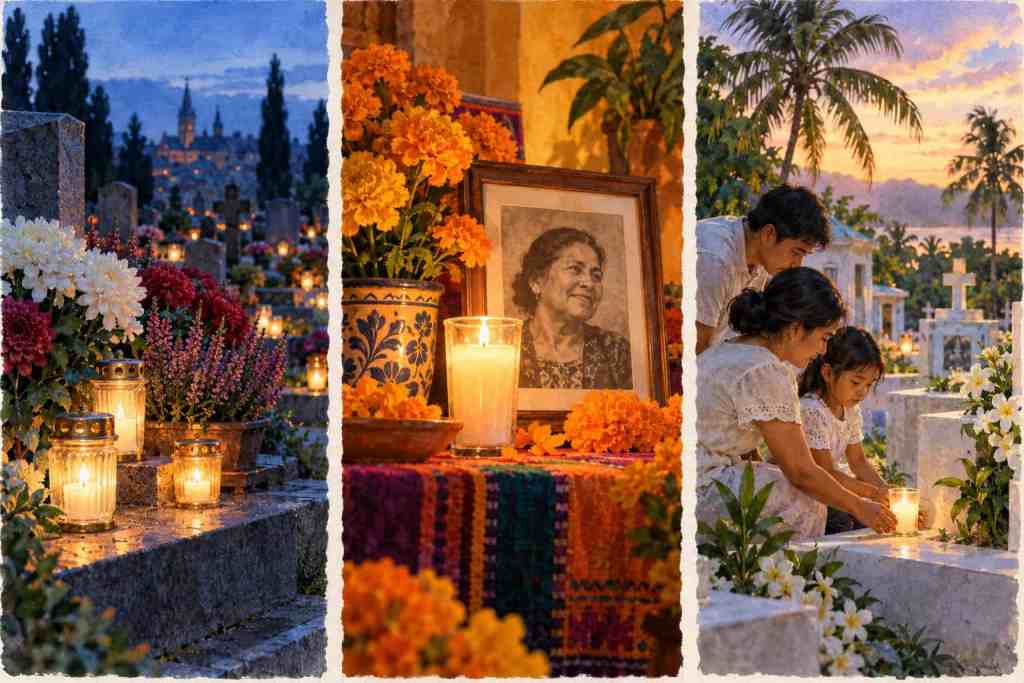
Now try squeezing all of this under one label: “All Souls’ customs”
A Czech candle. A Sicilian gift from a dead grandmother. A Manx turnip. Korean songpyeon. Japanese August fires. Filipino atang. A Mexican ofrenda. A Guatemalan kite. Haitian dancing. A Moroccan pilgrimage. The return of Khoi and San ancestors to the earth. An Australian decision not to show the image of the deceased.
At first glance, it is chaos.
At second glance, something much more interesting begins to appear.
Humanity did not invent one festival of the dead. It invented hundreds of ways to reject the idea that death automatically erases a person from the relationships of the living.
Somewhere the relationship is renewed through light. Elsewhere through food. A trip to the cemetery. A gift for a child. A photograph. Or precisely by covering it. A song. A dance. A pilgrimage. A giant kite. The return of remains home. And somewhere, several centuries and one ocean away, by a tiny Batman who rings the doorbell, looks at a box of raisins with the expression of a person deeply betrayed by life, and asks whether you really have no chocolate.
That is why it makes little sense to ask: “Which country has the strangest All Souls’ Day?” A better question is: who maintains this particular tradition, why, at what time of year, and what are they actually doing with memory through it?
Once we ask it that way, we stop collecting exotic curiosities.
We start seeing people.
And we discover that across the planet they agreed neither on the date, nor on the props, nor on the required volume.
Perhaps they agreed on only one thing:
forgetting completely is somehow not enough.
And then every culture takes what it needs.
A candle, food, a turnip, paper, bamboo, fabric, a photograph, fire — or silence.
History has a peculiar sense of humor.
And the dead, it seems, categorically refuse a shared calendar.
🧵 UNESCO: Indigenous festivity dedicated to the dead (Mexico) — UNESCO inscription framework and a description of the festivity in specific Indigenous communities.
National Museum of Ireland: Halloween / Samhain — folklife collections and documented Irish customs.
Vatican News: The Catholic roots of Halloween — the church meaning of the eve of All Saints and the November observances.
Vatican.va: All Souls’ Day — prayer for the dead and care for graves in Catholic tradition.
Smithsonian: Five facts about Día de los Muertos — ofrendas, cempasúchil and local meanings.
National Museum of the Philippines: Undas and atang — food offerings in a regional Ilocano practice.
Ministerio de Cultura y Deportes de Guatemala: Barriletes Gigantes — history and contemporary form of the festivals in Sumpango and Santiago Sacatepéquez.
Temple University Press: Death, Dying, and the Soul in Haitian Vodou — scholarly context for Fèt Gede.
📚 Want to go deeper?
This is where the threads only begin to spread. In the world calendar of holidays and rituals, you can continue with a specific country, festival or tradition — and see what happens when we trade the world map for a magnifying glass. Because a Sicilian gift from a dead grandmother, a Mexican ofrenda, a Czech All Souls’ candle or Japanese fires deserve much more than one sentence under a shared heading.
That is why separate articles untangle individual stories where they actually arose: who keeps the tradition, what it looked like before, what survived, what changed, and what the internet has confidently glued onto it in the meantime.
This article is a map of the crossroads, not a claim that the same thing waits down every road. Customs change between regions, communities, families and generations — and those differences are often the best part of the story.
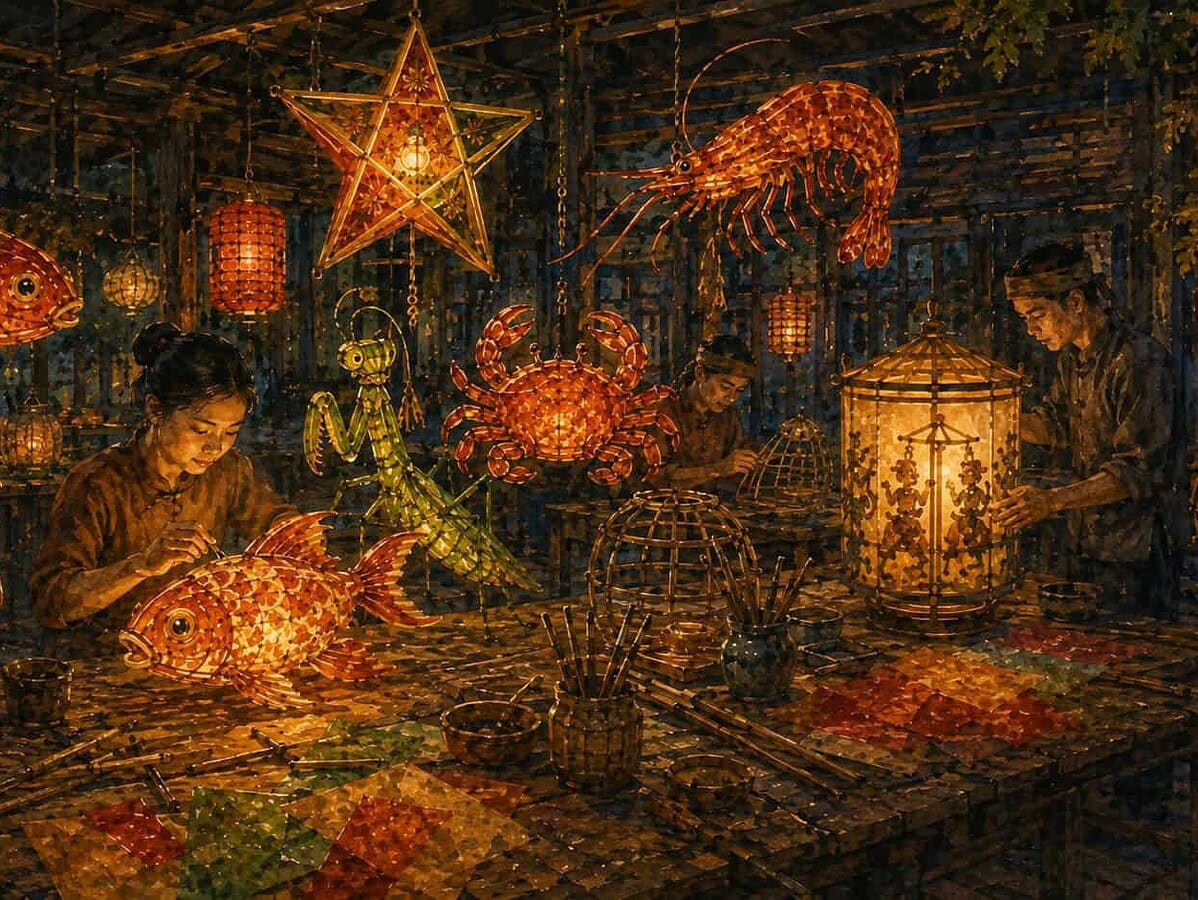
Autumn Equinox in Vietnam: Children Carry Lanterns, the Moon Runs the Festival, and the Rain Still Doesn’t Ask Anyone About September 23
If September in Vietnam were run by one large central office, the meetings would be a disaster. The Sun would arrive with a spreadsheet and announce that astronomical autumn begins on September 23. The Moon would barely have sat down before replying, “Lovely. Trung Thu is on the twenty-fifth this year.” Rice in the northern…
Keep reading
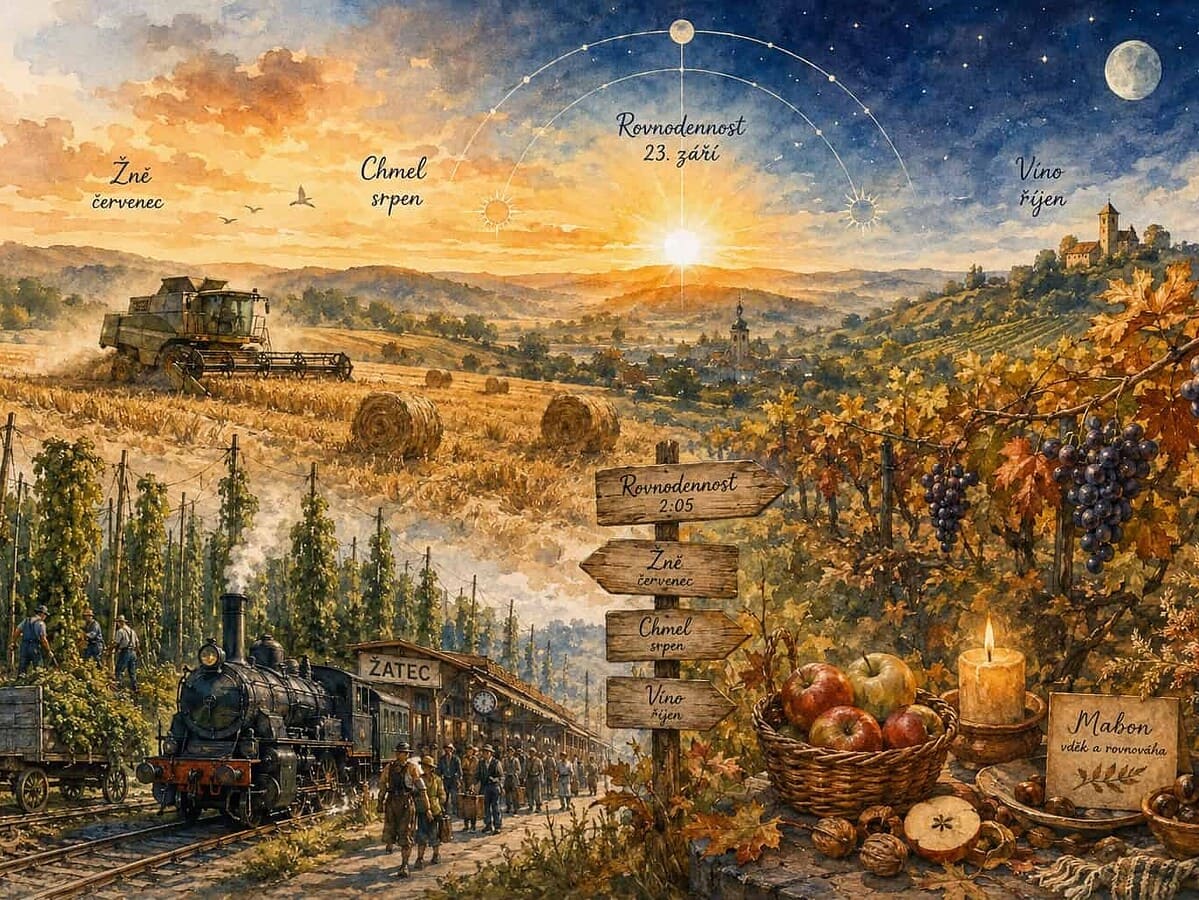
Autumn Equinox in Czechia: Mabon, Harvest Festivals, Hops, Wine — and an Autumn That Refuses to Follow One Calendar
Autumn has a small organizational problem in Czechia. Astronomers say it begins with the equinox. Meteorologists, for statistical purposes and with very little drama, switch it on as early as 1 September, because tables like order even when the weather clearly does not. Farmers can look over both groups’ shoulders and politely note that this…
Keep reading 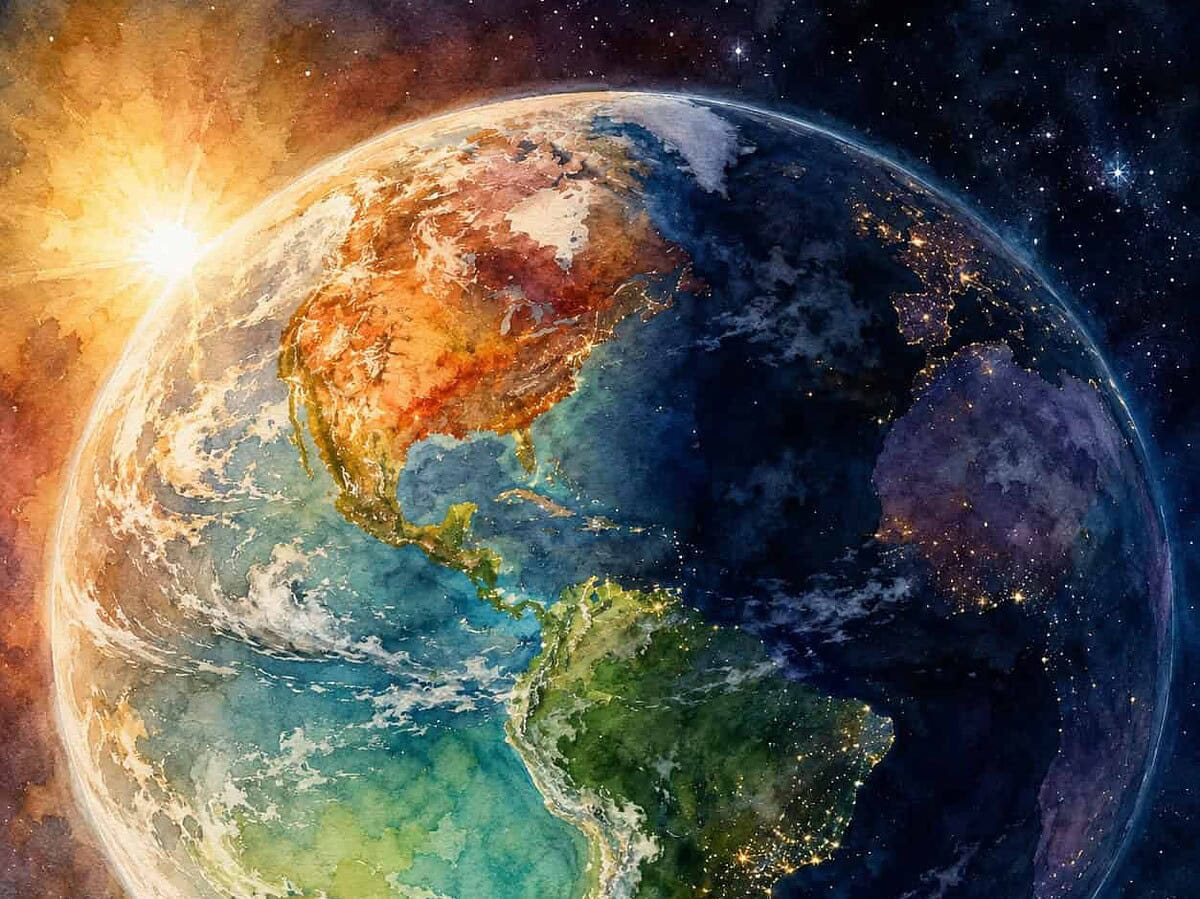
September Equinox Around the World: Autumn in the North, Spring in the South — and Why That’s Not the Whole Story
Sometime around the end of September, the internet starts behaving as if the planet has been issued a single dress code. Leaves. Pumpkins. Cinnamon. Candles. A burgundy sweater. A gold pendant with the Sun and Moon. Add a few lines about the “perfect balance of light and darkness,” and according to the algorithm we are…
Keep reading