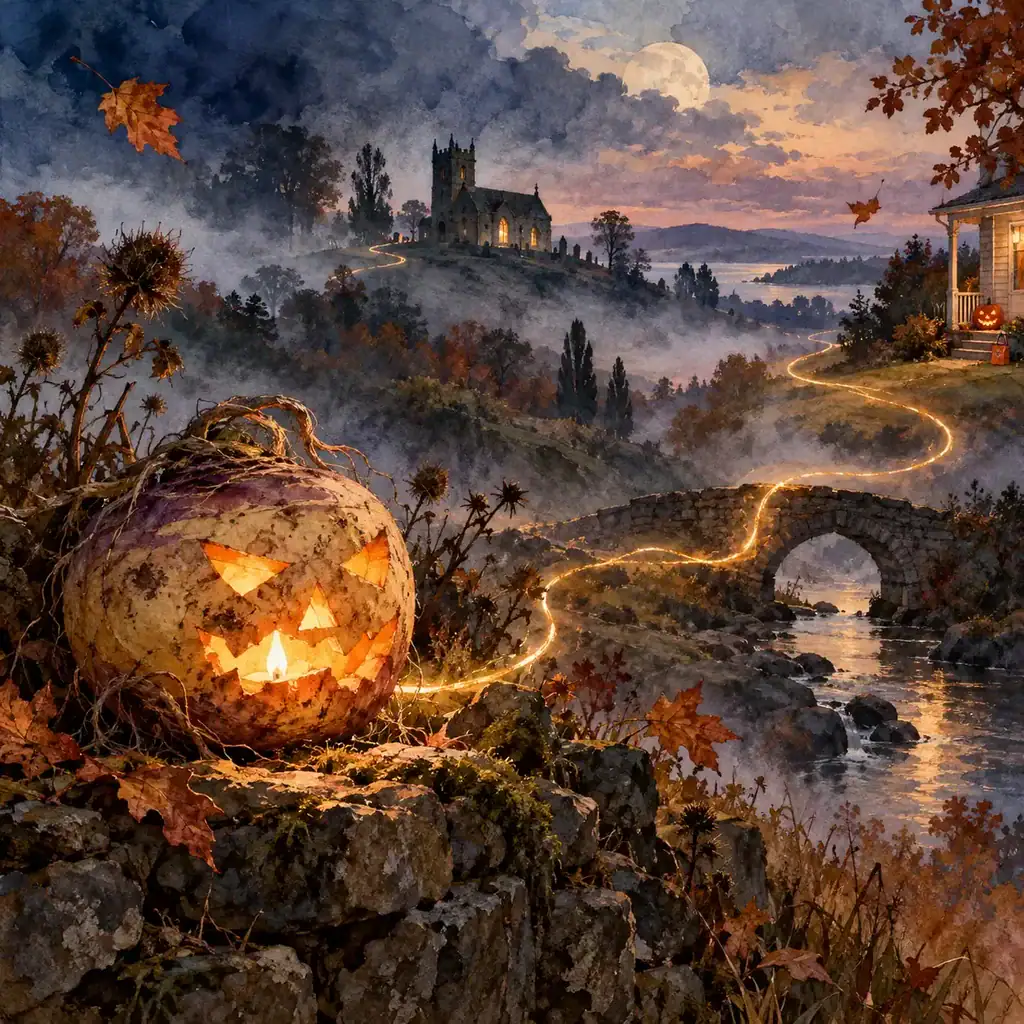
Kung may birth certificate ang Halloween, malamang mukha itong dokumentong nakaligtas sa baha, sunog, ilang beses na paglipat ng bahay, at isang registrar na sobrang malikhain.
Lugar ng kapanganakan? Ireland? Scotland? Rome? Isang French monastery? United States? Petsa ng kapanganakan? Bago ang Christianity? Ika-8 siglo? Ika-11? Ika-19? 1950s?
Ina? Samhain. Ama? All Saints’ Day. Mga kamag-anak? Paggunita sa mga yumao, souling, guising, nakakatakot na Irish turnips, American pumpkins, panghuhula tungkol sa magiging asawa, neighborhood vandalism, candy industry at Donald Duck.
Sa madaling salita, ang Halloween ay hindi piyestang may malinis at maayos na family tree. Isa itong cultural patchwork na ilang siglo nang tinatahi, binabaklas, dinadala sa kabilang panig ng Atlantic, dinadagdagan ng bagong piraso, at sa huli ay ibinabalik sa Europe na may pumpkin sa isang braso at bag ng individually wrapped candy sa kabila.
At iyan mismo ang dahilan kung bakit napakaganda ng kasaysayan nito.
Una ang masamang balita: walang isang sandaling masasabi nating ‘at doon isinilang ang Halloween’
Kapag nabasa mong “nagsimula ang Halloween 2,000 taon na ang nakaraan bilang Celtic Samhain,” shortcut iyon na halos kasingganda ng pagsasabing isinilang ang smartphone noong naimbento ang telephone. Oo, may genealogy. Pero napakaraming nangyari sa pagitan ng dalawang dulo ng kuwento.
Ang modernong Halloween ay may mga elementong mula sa mas lumang Gaelic seasonal traditions, medieval at early modern Christian calendar, European house-visiting customs, Irish at Scottish folk culture, migration papuntang North America, urban pranks, 20th-century mass culture at commercial industry.
Kaya mas mabuting sundan ang magkakahiwalay na hibla kaysa mag-imbento ng isang great-grandfather na responsable sa lahat. Magulo ang historical family trees. At sa birth certificate ng Halloween, baka nakasulat: father not stated, enormous extended family.
Samhain: ang sandaling natatapos ang summer at humihinto ang nature sa pagiging friendly
Ang pinakamatandang mahalagang hibla ay papunta sa Gaelic world, lalo na sa Ireland. Ang Samhain ay isa sa malalaking seasonal boundaries ng tradisyunal na Irish year. Dumarating ito sa simula ng November at nagmamarka ng pagpasok sa winter half ng taon; gaya ng iba pang importanteng calendar days, marami sa mga gawain ay nagsisimula na noong gabi bago iyon. Inilalarawan ng Irish folklore collections ang October 31, Oíche Shamhna, bilang gabi ng feasting, games, disguising, divination at mga paniniwala tungkol sa paggalaw ng dead at iba pang supernatural beings.
At sa human point of view, napakalogical nito. Isipin ang northwestern Europe na walang electric light, central heating, supermarket na bukas hanggang 10 p.m., at app na nagsasabing 16:47 ang sunset. Halos lahat ng harvest ay naitabi na. Mabilis na umiikli ang araw. Paparating ang winter, cold at uncertainty. Ang landscape na buong summer nagbibigay ng pagkain ay parang kababang-kababa lang ng shutter.
Kaya ang calendar boundary sa pagitan ng summer at winter ay hindi poetic line lang. Practical iyon. At ang boundaries sa folklore ay may isang interesting trait: mahilig silang magpapasok ng kakaibang bagay.
Talagang inuugnay ng medieval Irish texts ang Samhain sa mga sandaling mapanganib na lumalapit ang human world at Otherworld. Pero kailangang nakaapak tayo sa historical brake: medieval ang mga tekstong ito, isinulat matagal pagkatapos ma-Christianize ang Ireland. Kapag nire-reconstruct natin ang pre-Christian Samhain, wala tayong reporter sa tabi ng bonfire noong 200 BCE na nagsasabing, “Yes, confirmed ko na: three masks at one ghost.”
Mayroon tayong later written sources, language, archaeology at folklore. May traces tayo. Wala tayong CCTV footage.
Lola Tralala comments: Kapag may nagsimulang magsabi ng “The Celts believed exactly that…”, automatic naghahanap si Lola ng footnote. Sadly, walang iniwang PowerPoint ang Celts na may title na “Samhain: goals, KPIs and communication with the dead”.

Pero sila ba talaga ay ‘the dead’?
Oo — pero hindi sila lang. Dito masyadong inaayos ng modern Halloween ang mas lumang larawan. Sa Irish tradition, ang Samhain ay hindi simpleng “Day of the Dead”. Nakaugnay ito sa otherness, danger, future, divination, beings from the Otherworld, home protection, winter at disruption of normal order.
Sa folklore, lumilitaw ang dead, pero pati púca, fairies at ibang supernatural beings, divination games at iba’t ibang paraan para makalampas sa gabi nang hindi ka dinadala ng kung ano man sa lugar na siguradong hindi mo naman bino-book.
Kaya ang modern phrase na “the boundary between the living and the dead grows thin” ay tumatama sa isang bahagi ng tradition, pero halos sobrang neat. Mas magulo ang old world. Sa kabilang side ng boundary, hindi lang lola at lolo ang maaaring naghihintay. Puwedeng kahit ano.
At, aminin natin, mas masamang balita iyon.
Then the Christians came. At hindi, wala tayong meeting minutes na ‘let’s steal Halloween from the Celts’
Dito nagsisimula ang isa sa paboritong internet stories: nakita raw ng Church ang pagan Samhain, nagdesisyong sirain ito, at inilipat ang All Saints’ Day sa November 1.
Elegant. Siguro medyo too elegant.
May collective Christian commemorations ng martyrs at saints matagal bago naging dominant date sa West ang November 1, at iba’t ibang Christian centers ay nag-celebrate sa iba’t ibang panahon ng taon. May alam tayong commemorations of all martyrs sa Late Antiquity, eastern traditions after Pentecost, at isang May commemoration sa Rome na nauugnay sa Pantheon, na dine-dedicate ni Pope Boniface IV sa Virgin Mary at all martyrs noong early 7th century.
At ngayon ang isang awkward pero beautiful historical sentence: hindi natin eksaktong alam kung bakit November 1 ang naging established date sa Western Christianity.
Noong 8th century, nag-dedicate si Pope Gregory III ng chapel sa St Peter’s Basilica para sa all saints. By late 8th at early 9th century, documented na ang November feast sa Western Europe, at noong 9th century lalo pang na-establish ang November 1 bilang All Saints’ Day. Pero sinasabi pa rin ng scholarship na hindi fully certain ang exact origin ng November date.
May papel kaya ang contact with Gaelic traditions? Posible, at malinaw ang cultural overlap. Pero puwede ba nating sabihing may tao sa Rome na humampas sa table at nagsabi, “We must eliminate Samhain, open the calendar”?
Hindi. Walang iniwang memo ang history.
Lola Tralala comments: Nakakatuwang isipin ng mga tao ang medieval Church bilang marketing agency: “Clients, kinukuha ng pagans ang Q4 natin. Ilipat ang saints sa November.” Reality: less PowerPoint, more chaos.

At by the way: Christian din mismo ang salitang Halloween
Isa ito sa pinakamagandang paradoxes sa buong kuwento. Puwede kang magkaroon ng festival na puno ng old Gaelic motifs, ghosts, divination at disguising — habang ang pangalan ay diretso galing sa Christian calendar.
Hallow meant saint or holy. All Hallows means all saints. Ang evening before their feast ay All Hallows’ Eve, na unti-unting naging Halloween.
Kaya kapag may nagsasabing sa October 31 na ang Halloween ay “has absolutely nothing to do with Christianity”, ang mismong word ay nakatayo sa corner at medyo awkward na umuubo.
Literal na tumutukoy ang pangalan sa eve of All Saints’ Day. Siyempre, hindi ibig sabihin nito na Christian ang lahat ng customs.
Welcome to cultural history. Iwan ang simple answers sa cloakroom.

November 1 para sa saints. November 2, finally may sariling day din ang ibang dead
Hindi pareho ang All Saints’ Day at remembering all the dead. Isa pa itong layer.
Matagal nang umiiral ang prayers for the dead sa Christian world bago magkaroon ng isang universal November day. May sariling dates ang iba’t ibang monasteries at regions. Pero isang importanteng push ang nanggaling sa Cluny sa Burgundy, isa sa most influential monastic centers ng medieval Europe.
Ipinatupad ni Abbot Odilo of Cluny sa kanyang monastic network ang special commemoration para sa all departed faithful noong November 2. Nag-iiba ang exact dating sa sources, pero mas mahalaga ang sumunod: kumalat ang Cluniac tradition sa ibang monasteries at unti-unting sa Western Church.
At biglang may nice trio tayo: October 31 — eve of All Saints’ Day. November 1 — All Saints’ Day. November 2 — all departed faithful.
Three consecutive days. Three different historical layers. At roughly one million future internet articles na gagawin silang one thing.
Paano tayo napunta mula prayers for souls hanggang kids ringing doorbells?
Slowly. At higit sa lahat, through several routes at once.
Sa medieval at later Britain may house-to-house customs na madalas inuugnay sa souling. Poor people, at later children too, could visit homes and receive food — traditionally soul cakes — kapalit ng prayers for departed family members.
Sa Ireland at Scotland, nag-develop naman ang guising: disguised visitors went door to door and offered a song, rhyme, joke or little performance in exchange for food or another reward.
Tingnan ang structure. Pupunta ako sa pinto mo. May gagawin ako. May ibibigay ka sa akin.
Nagsisimula na nating makilala ang future little Batman with plastic bucket.
Pero again: ang straight line na “souling → trick-or-treat” ay too simple. Folklorists discuss several possible predecessors ng American trick-or-treat, including guising, souling at other masked house-visiting customs in Europe and North America. Halloween again refused to have only one parent.
At costumes? Hindi sila inimbento ng polyester shop
Documented ang disguising sa Irish at Scottish traditions long before the modern costume industry. Puwedeng itago ng mask ang identity, takutin ang neighbors, payagan ang behavior na iba sa ordinary day, at bagay ito sa isang night kung kailan hindi fully reliable ang normal order.
Dito natin nakikita ang isa sa most durable Halloween principles: for one night, puwede kang maging ibang tao.
Ghost. Animal. Monster. Celebrity. Vampire. Barbie. Inflatable dinosaur.
Malayo na ang narating ng human civilization, pero ang kakayahang maglakad sa street bilang three-meter banana ay tila permanent need pa rin.

Pumpkins? Turnip muna. At hindi siya pretty
Kung may isang object na agad nagsasabing “Halloween”, iyon ang hollowed-out orange pumpkin. Pero ang old Irish Halloween ay malamang titingin dito at magtatanong: “Ano iyan?”
Sa Ireland, scary lanterns were carved from turnips and other root vegetables. The National Museum of Ireland preserves a famous example connected to Fintown, County Donegal. A candle was placed inside the hollowed turnip, at ang carved face ay talagang meant to scare. The museum directly connects the modern pumpkin lantern to the American continuation of this older tradition.
Kapag nakita mo ang Irish turnip demon na iyon, obvious na ang pumpkin ay hindi cultural decline. Isa itong user-interface upgrade.
Bigger. Hollower. Easier to carve. Nice color. At pinakaimportanteng — after half an hour, buo pa lahat ng daliri mo.
Lola Tralala comments: Pumpkin is not an ancient Celtic Halloween symbol. Pumpkin is the American redesign of the turnip. Same product, better UX.

Then migration arrives, at nakakakuha ang Halloween ng ship ticket to America
Noong 19th century, millions left Ireland for North America, especially during and after the Great Famine. Ayon sa Library of Congress, between 1820 and 1930 around 4.5 million Irish people arrived in the United States. Languages, songs, recipes, faith — and of course calendar customs — travel with people.
Irish and Scottish traditions entered a new environment. At dito nagsimulang gawin ng Halloween ang best skill nito: mixing.
Sa North America, nakasalubong nito ang local autumn festivals, house parties, costumes, pranks at traditions of other immigrant communities. Slowly, it stopped being just a custom of particular groups and became a much more visible American seasonal festival.
Pero Halloween around 1900 might disappoint a modern eight-year-old a little. Candy wasn’t the main character yet.

Halloween around 1900: less Snickers, more ‘will I finally get a husband this year?’
Yes. Halloween was surprisingly romantic too.
Around the turn of the 19th to 20th century, Halloween parties in the United States were popular with divination about future partners and marriage. Historical newspapers and Library of Congress collections preserve instructions in which young women used apples, mirrors, nuts, water and other props to discover whom they would marry.
A great reminder of how fast a festival can change.
Halloween now: “I’m Wednesday Addams.”
Halloween around 1910: “If I walk backward to the well and look over my left shoulder, will my future husband appear?”
Humanity seems to have always needed horror. Only the plot changed.

Then kids decided cultural heritage needed a little vandalism
American Halloween had a long and lively tradition of pranks. And by prank we don’t just mean ringing a doorbell and running away.
Late-19th- and early-20th-century sources describe overturned barrels, dismantled carts, painted windows, damaged property, false alarms and other tricks beside which today’s “haha, we put toothpaste on the neighbor’s door handle” looks like an administrative meeting.
In cities, Halloween disorder became annoying enough that communities started promoting organized parties and children’s activities. The older “we’ll wreck your fence” model gradually gave way to the safer “we’ll give you something tasty, now will you go home?” model.
And this is exactly where the system we now call trick-or-treat starts gaining speed.
‘Trick or treat’ is not a medieval formula. It’s younger than it looks
House-to-house customs are older. But the phrase trick or treat and its modern social form are surprisingly recent.
The phrase appears in North American newspapers in the 1920s. American trick-or-treat develops more strongly in the 1930s and becomes a mass children’s tradition especially in the following decades.
Worth repeating. Today a masked child with a candy bag looks almost like Halloween’s oldest form. In reality, it is one of its younger mutations.
So an ancient Celt probably wasn’t walking around the village saying: “Give me a Twix or I’ll soap your window.”
That is a 20th-century cultural innovation.
And candy wasn’t always there either
One more blow to the feeling of eternal tradition: Halloween wasn’t always a candy festival.
Even in the first half of the 20th century, kids might receive fruit, nuts, coins, homemade baked goods, small toys or other gifts. Candy truly came to dominate American trick-or-treat only after World War II, especially in the 1950s and 1960s.
Several things helped at once. Postwar suburbanization created neighborhoods full of families and easily walkable houses. Trick-or-treat offered a socially acceptable way to tame the older prank tradition. Radio, magazines, television and film showed the same model to millions. Candy manufacturers discovered there was one night when the entire United States voluntarily tried to fill children’s bags with sugar.
And the marketing department probably cried quietly with joy for a few minutes.
In 1952, Disney even released the short film Trick or Treat with Donald Duck and his nephews. Pop-culture images like these helped normalize the new ritual nationwide.
Lola Tralala comments: Old Irish people: “Careful, the Otherworld may open tonight.” America, 1955: “Understood. How many mini chocolate bars should we order?”
And America shapes the Halloween we can recognize today from three meters away
In the second half of the 20th century, the ingredients finally come together into the familiar picture: pumpkin jack-o’-lantern, children’s costumes, spooky decorations, trick-or-treat, horror films, adult parties, witches, skeletons, bats, ghosts and individually wrapped candy.
And gradually, a huge seasonal industry.
Some elements are hundreds of years old. Others only decades. Beside the mask and ghost, whose family tree reaches deep into European folklore, stands a plastic cup bearing a movie-franchise logo made last month.
And strangely, they don’t fight.
Halloween has an extraordinary ability to absorb everything it touches.
Then something historically very funny happens: Halloween crosses the Atlantic back
European traditions helped create American Halloween. America rebuilt it. Then movies, TV series, music, retail chains, the internet and pop culture began exporting it back to Europe — and from there around the world.
The modern cultural route looks roughly like this:
Europe → America → blender → pumpkin → television → Europe, please sign here for delivery.
That is why today Halloween parties exist in countries that historically have almost nothing to do with Samhain.
Halloween no longer needs a common origin. Wi‑Fi is enough.

So why do ‘the dead return’ specifically at the end of October?
Now we can finally answer the title question.
Partly because in the Gaelic agricultural calendar, the beginning of November was a major seasonal threshold: the transition into the winter half of the year. Transition moments in folklore are strikingly often connected to disrupted boundaries, the supernatural and divination. Samhain therefore supplied a powerful story layer about the Otherworld, spirits and a dangerous night.
Alongside it, the Western Christian calendar gradually became established with All Saints’ Day on November 1 and remembrance of the dead on November 2. Their precise historical relationships and the reasons these November dates were chosen follow complex and partly uncertain paths. Over centuries, the layers touched, influenced and mixed with one another.
This does not mean every autumn tradition about the dead in the world comes from Samhain. Quite the opposite. Human societies remember their dead at very different times of year and for very different historical reasons. Mexico’s Día de Muertos has its own complex history; other cultures have memorial days in spring, summer or according to lunar calendars.
In short, the dead do not follow one global calendar.
Which makes sense. They probably already have enough paperwork.
So what remains of old Halloween?
Surprisingly much: the mask, disruption of normal order, a night full of uncertainty, food, games, divination, house visits, pranks, fire and light, ghosts — and above all the idea that once a year we can treat the boundary between safe and dangerous a little differently than usual.
But almost none of these elements traveled through the centuries unchanged in a glass case. Meanings changed. A mask could protect or frighten, later entertain neighbors, and today turn you into Shrek for three hours. A house visit could mean a prayer, performance or small threat to property; today it means candy. The lantern moved from turnip to pumpkin. Remembering the dead met the game of dressing as dead. A religious eve also became a huge secular festival.
And that is Halloween’s real historical miracle.
Not that it survived unchanged.
It survived precisely because it never stopped changing.
If we put an Irish turnip from 1900, a medieval All Saints calendar, a soul cake, a child’s mask, a candy bag and a plastic supermarket pumpkin on one table today, they would not look like one tradition.
And yet a thread runs between them. Not straight. Not clean. Not always perfectly documented. But it is there.
And somewhere at the end of that thread stands a child dressed as a dinosaur asking for chocolate.
History sometimes really knows how to deliver a good punchline.
Makakakita ka pa ng mga festival, ritual at calendar curiosities sa aming cultural calendar ng mga pista at ritwal sa buong mundo at sa overview ng mga pista at mahahalagang araw ayon sa rehiyon.
Mga madalas itanong
Galing ba ang Halloween sa Samhain?
Ang Samhain ay isa sa pinakamahalagang historical layers ng Halloween, lalo na through Irish and Scottish traditions. Pero ang modern Halloween ay hindi lang preserved Samhain. Nabuo ito sa mahabang paghahalo ng Gaelic traditions, Christian Allhallowtide, European disguising and house-visiting customs, at later American developments.
Inilipat ba ng Church ang All Saints’ Day sa November 1 dahil sa Samhain?
Walang dokumentadong story na ganoon kadiretso. Collective feasts for martyrs and saints existed in different Christian regions on different dates. Ang origin ng Western November 1 date ay partly uncertain pa rin sa scholarship.
Bakit October 31 ang Halloween?
Dahil ito ang eve ng November 1 All Saints’ Day — dito nanggaling ang All Hallows’ Eve, na naging Halloween. Kasabay nito, ang evening before November 1 ay tumapat din sa traditional Irish Samhain eve.
Saan galing ang Halloween pumpkins?
Mula sa European tradition ng pag-carve ng root vegetables, lalo na Irish turnip lanterns. Nang makarating ang tradition sa North America, kinuha ng mas malaki at practical na pumpkin ang role.
Ancient Celtic tradition ba ang trick-or-treat?
Hindi sa modern form nito. Posibleng may predecessors ito sa souling, Irish-Scottish guising at iba pang house-visiting customs, pero ang phrase at standardized American form ay lumilitaw lang sa 20th century at kumakalat nang malawakan lalo na after World War II.
Palaging candy ba ang natatanggap ng mga bata sa Halloween?
Hindi. Sa first half of the 20th century, nakakatanggap din sila ng fruit, nuts, coins, baked goods o small gifts. Candy became clearly dominant in American trick-or-treat especially from the 1950s.
🧵 Saan nagmumula ang mga hibla?
National Museum of Ireland — Halloween / Samhain — pangunahing source para sa Irish seasonal calendar, disguising, games, divination at folklore ng Halloween night.
National Museum of Ireland — Ghost Turnip — tungkol sa Irish turnip lanterns at relasyon nila sa later American pumpkins.
University College Cork — Secrets at Samhain — tungkol sa medieval Irish texts connecting Samhain with the Otherworld, supernatural beings at divination.
Encyclopedia of Catholicism — All Saints at Catholic Encyclopedia — All Souls’ Day — tungkol sa development ng All Saints, uncertainty around November 1, at spread ng remembrance of the dead mula sa Cluny.
Library of Congress — The Origins of Halloween Traditions at Irish-Catholic Immigration to America — tungkol sa souling, guising, trick-or-treat at migration ng Irish traditions sa US.
Smithsonian — When Halloween Was All Tricks and No Treats at A Cultural History of Candy — tungkol sa American pranks, development ng trick-or-treat at rise of candy.
📚 Gusto mong mas lumalim?
Jack Santino (ed.), Halloween and Other Festivals of Death and Life — folkloristic collection tungkol sa Halloween, festivals of the dead at kanilang social at material transformations.
Lisa Morton, Trick or Treat: A History of Halloween — detailed history ng Halloween, journey nito to America at later global spread.
Library of Congress — Halloween & Día de Muertos Resources — gateway to historical newspapers, photos, folklore materials at iba pang sources.

Halloween, mga araw ng pag-alala sa mga yumao at mga pista ng patay sa buong mundo: malaking gabay sa mga tradisyong hindi pare-pareho
Halloween, All Souls’ Day, Día de Muertos, Undas, Fèt Gede at higanteng saranggola ng Guatemala: gabay sa nangyayari sa buong mundo mula huling Oktubre hanggang unang Nobyembre — at kung bakit hindi iisa ang mga tradisyong ito.
Keep reading

Taglagas na ekwinoks sa Laos: may sariling oras ang mga ninuno, at may sariling plano ang Mekong
Sa Setyembre sa Czechia, sapat nang makita ang unang kastanyas para mapaisip ka agad sa sweater. Pero kung dadalhin mo ang ganitong bersiyon ng taglagas sa Laos, malamang darating ka sa usapan hindi lang maling bihis kundi maling kalendaryo rin ang dala. Iba ang pinagkakaabalahan ng Setyembre dito: naghahanda ng mga handog para sa yumao,…
Keep reading 
Ekinoksyo ng taglagas sa Vietnam: may dalang mga parol ang mga bata, ang Buwan ang namamahala sa pista, at walang pakialam ang ulan sa Setyembre 23
Kung iisang malaking sentral na opisina ang namamahala sa Setyembre sa Vietnam, siguradong disaster ang mga meeting nito. Darating ang Araw na may spreadsheet at iaanunsyong sa Setyembre 23 nagsisimula ang astronomikal na taglagas. Kakaupo pa lang ng Buwan, sasagot na agad: “Ayos. Sa ika-25 ang Trung Thu ko ngayong taon.” Sasabihin ng palay sa…
Keep reading Something went wrong. Please refresh the page and/or try again.