
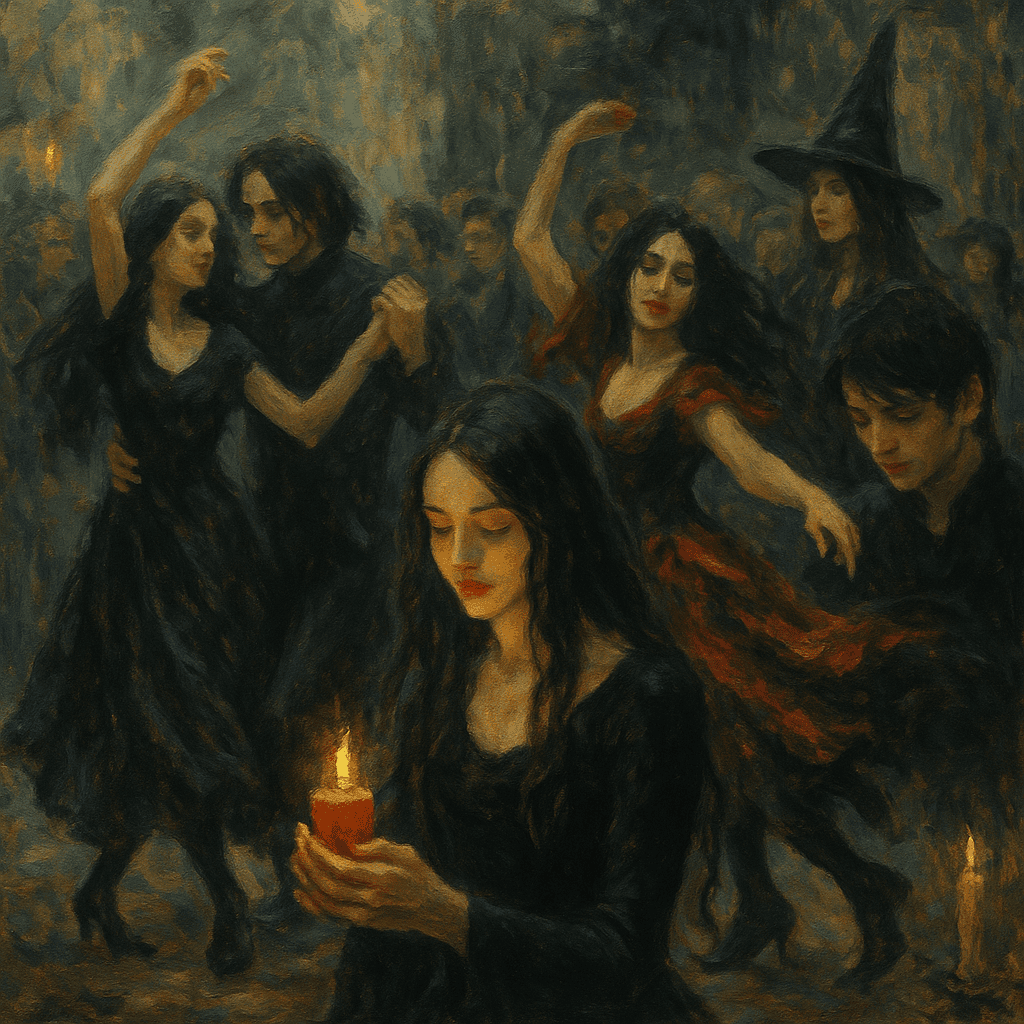
Dívka tančí v tajemné atmosféře, okolí je plné umělecké inspirace s hávem magie a mystiky.
Table of Contents
The gothic subculture is a fascinating world where melancholy proudly walks in black velvet, where music whispers about death yet makes you dance, and where every outsider finds a corner. It’s not just about aesthetics — although black, candles and dramatic accessories are typical. Above all, it’s a gothic community that offers refuge to those who feel different, introspective, or who simply don’t understand why life should always be “sunshine only.”
Goths show that darkness and humor are not opposites. On the contrary. Dark humor is their secret weapon, melancholy their muse, and belonging their true talisman. Whoever has been at a concert where thousands sing about the end of the world while hugging knows it’s a strange yet beautifully honest form of community.
🤝 The gothic subculture and support for outsiders: why it’s the ultimate safe space
In a world that often expects us to be constantly positive, successful and socially flawless, the gothic subculture acts as a safe harbor. Nobody here tells you “smile more.” On the contrary — your sadness can be an inspiration, and your difference is celebrated, not hidden.
Why does the gothic subculture attract sensitive souls and rebels?
- Empathy and understanding
The gothic subculture is known for its openness to heavy themes — from feelings of isolation to reflections on death. Here nothing is dismissed. Instead, it becomes the foundation of music, poetry, art and friendships. - Mutual support
The gothic community creates strong bonds among people who share a similar outlook on life. It’s not about competing for the best outfit or the deepest lyrics. It’s about being able to say even your darkest thoughts out loud — and someone else replies: “Yeah, I know that too.” - No judgment
If you’ve ever felt “different,” the gothic subculture embraces you. Whether your world is made of melancholic poems, a closet full of black, or a fascination with cemeteries.
🖤 Gothic subculture and emotions: sadness, melancholy and the beauty of darkness
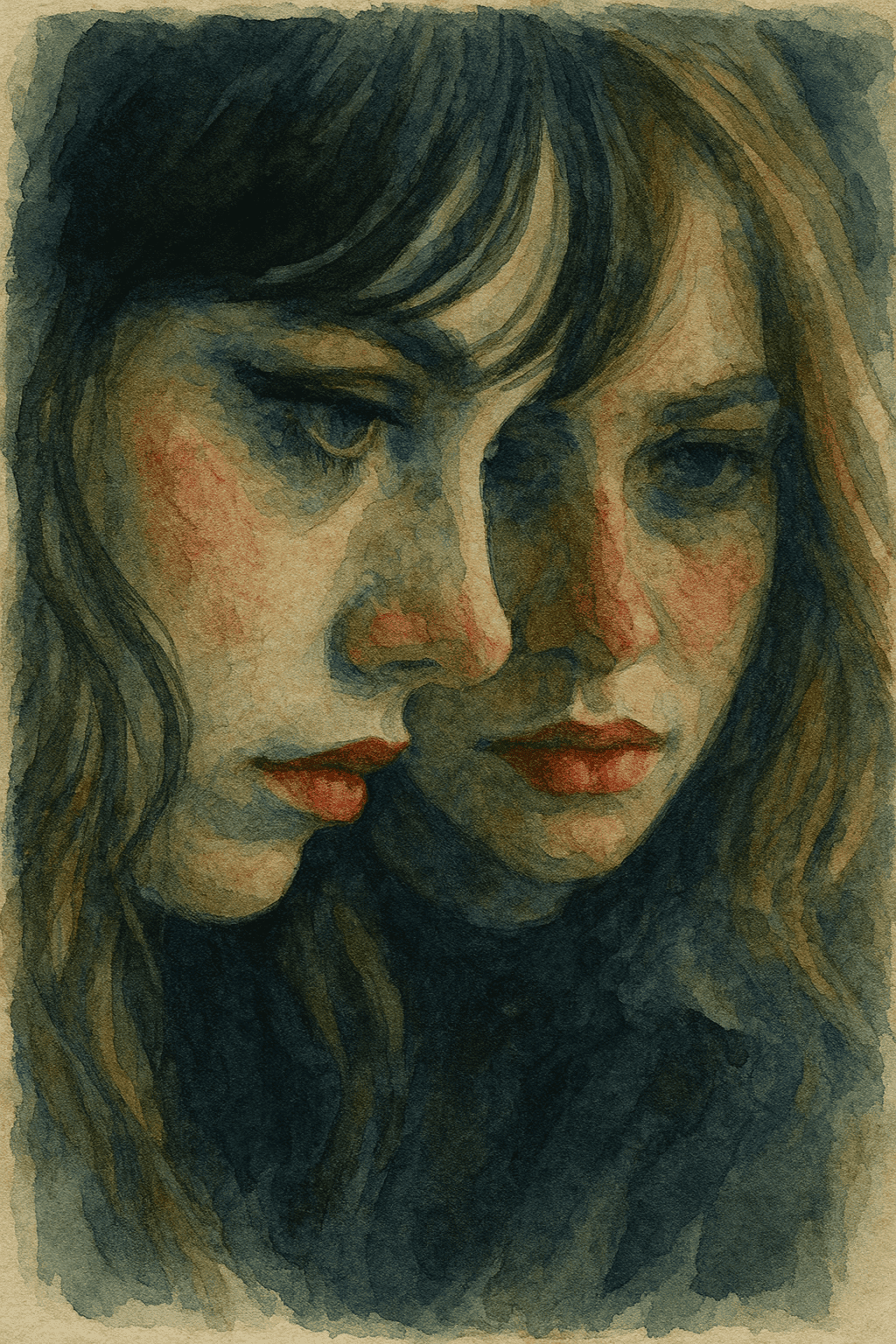
The gothic subculture is not just a music or fashion scene: it’s a way to process emotions. Everything mainstream culture calls “negative” finds here a place of expression: sadness, melancholy, loss, loneliness.
But beware: goth is not just about pain. It’s also about the beauty hidden in transience. The strength that comes from embracing the dark side. The realization that sometimes it’s better to laugh at death than to fear it.
🎶 Gothic music: from Bauhaus to today’s festivals
Without gothic music, the subculture wouldn’t exist. In the 80s it was Bauhaus, Siouxsie and the Banshees and The Cure who defined the melancholic sound. The 90s brought Sisters of Mercy, Fields of the Nephilim and the first major gothic festivals. And today? Music has branched out from dark electronic EBM to acoustic neofolk poetry. Everyone finds their own piece of darkness.
The world’s biggest gothic festival, Wave-Gotik-Treffen in Leipzig, attracts tens of thousands of people each year. It’s a mix of concerts, workshops, fashion shows and costume performances: a black version of the Olympics, only instead of medals, compliments are handed out for the biggest hat.
👗 Gothic fashion and jewelry: corsets, lace and dark talismans
Gothic fashion is a chapter of its own. Corsets, black lace, long coats, heavy boots, crosses, skulls, roses — all are part of the language goths speak without words. Makeup is usually dramatic: pale skin, dark eyes, red or black lips. Gothic jewelry is often handmade, sometimes even ritualistic in meaning.
The DIY approach has deep roots here: many sew their own clothes or repurpose thrifted pieces. That’s why every outfit is unique. In this way, the gothic subculture also becomes a sustainable culture, recycling and giving new life to old things.
💬 Lola says:
“I’m used to different kinds of sparkles — beads that shine and bring joy. But you know what? A gothic cross or a black rose can tell such a deep story that even grandma’s scarf would turn black with envy.”
💬 Babča comments:
“I feel melancholy every time I open the pantry and there’s nothing there. Back in our day it wasn’t memento mori, it was memento meat. And when the lard ran out, that was real depression.”
💬 Morana from the Carpathians:
“You wear death on your finger. And you don’t even know it.”

🌑 Gothic subculture around the world: fashion, music and jewelry
When people hear goth, they often think of cathedrals, black lace, London, Dracula or Leipzig’s Wave-Gotik-Treffen. But that’s just the beginning. The gothic subculture is like a necklace of beads: every continent has added its own piece. Sometimes it’s bone, sometimes obsidian, sometimes lace, sometimes electronic music. Together they form a necklace that circles the planet.
🇩🇪 Goth in Germany: Wave-Gotik-Treffen and the festival scene
In Leipzig, thousands gather each year to show that black is not the color of sadness but of celebration. The gothic subculture in Germany loves detail, quality and dramatic expression. From huge Victorian necklaces to modern chokers, gothic fashion here combines history and avant-garde.
💬 Roxy Riot grumbles: “Leipzig is a gothic Disneyland. Only instead of Mickey Mouse you’ve got a vampire with a pierced eyebrow.”
🇬🇧 Goth in England: from Bauhaus to Camden Market
England gave the gothic subculture its musical base and aesthetic. From Bauhaus and Sisters of Mercy to the legendary Camden Market, the island became a hub. Gothic jewelry here often carries a Victorian flair: lockets, portrait brooches and lace chokers.
💬 Babča (grumpy): “The Victorian era… must’ve been something. But I bet whipped cream was nowhere to be found!”
🇲🇽 Goth in Mexico: Día de los Muertos and colors
Latin America added color and a new take on death. In Mexico, skull masks, turquoise and obsidian jewelry and colorful beads show that the gothic subculture can also be festive. Here, death isn’t mourned — it’s celebrated.
💬 BiBi Pampeliška sighs: “Imagine marigolds shining on graves like beads of sunlight… that’s goth, Mexican style.”
🇮🇳 Goth in India: black saris, obsidian and fusion style
In Delhi and Mumbai, a subculture emerged where the sari turned black. The gothic subculture in India mixes chokers with bindis, obsidian bracelets and black-edged saris. It’s goth that smells of spice and mystery.
🇯🇵 Goth in Japan: Visual Kei, Gothic Lolita and cabaret style
In Japan, goth becomes spectacle. Cosplays that look like both fairy tales and horror stories, lace umbrellas and skull rings like candies. Visual Kei and Gothic Lolita are inseparable from the gothic subculture here.
💬 Ruby Decibel whispers: “This is goth that sings in falsetto and wears boas. Japan has style, darling.”
🇵🇹 Goth in Portugal: fado melancholy and silver jewelry
Fado music is practically the gothic soundtrack of the Atlantic: songs of loss and longing. Paired with gothic jewelry made of Portuguese silver — heavy rings and necklaces fit for a sea witch — it shows the gothic subculture in Portugal.
🇦🇺 Goth in Australia: the Dark Mofo festival
In Tasmania, the Dark Mofo festival mixes goth, fire, rituals and art. The gothic subculture here glows with bone jewelry, tattoos and masks that recall tribal ceremonies. It’s goth dancing under the Southern Cross.
🇰🇷 Goth in Korea: dark K-pop and a new generation
When a K-pop idol wears a black choker and hoops, that’s goth in export mode. The gothic subculture in Korea is still finding its form, but visually it’s powerful: dark, dramatic and stylish.
🇨🇳 Goth in China: black jade and Taoist symbols
In Beijing, jewelry is being created that combines gothic aesthetics with traditional Chinese motifs: dragons, yin-yang symbols, and jade carved into dark shades. The gothic subculture here speaks Chinese with a dark accent.
🇳🇴 Goth in the Nordics: runes, black metal and amulets
In Finland, Norway and Sweden, the gothic subculture merges with black metal. Rune amulets, Thor’s hammers and bone carvings reflect a land where darkness is not just fashion: it’s part of nature itself.
🌍 Goth in Africa: Afrogoth and the South African scene
In Cape Town, an African version of the gothic subculture was born: beads in black and red, metals and traditional amulets. Here, darkness meets the rhythm of drums.
💬 Sibi Sibi (whispers): “See? Even beads that only knew the sun can sink into the shadows.”
✨ Beadcore and goth: jewelry, symbols and global stories
The gothic subculture is not just Europe — it’s a worldwide network of stories, jewelry and subcultures. Every continent has contributed: obsidian, jade, bone, silver, beads, lace. Together they form an Atlas of Beadcore darkness, where jewelry is never just jewelry, but always symbol, memory or ritual.
💬 Madam Chaotika raises her staff: “Look closely enough and you’ll see goth is not fashion, but a spell. Sewn with a thread that never breaks.”
🌌 The power of the gothic subculture: why it’s still alive
The gothic subculture shows that being different is not a weakness, but a gift. That sadness can fuel creativity. And that even in darkness, humor can be found. That’s why so many people around the world are still drawn to the gothic community — whether for aesthetics, friendships, or simply a place where nobody forces a fake smile.
Some books smell of old paper, others of incense and coffee. And then there are those that rustle with black pages and whisper of melancholy. Here is a small atlas of sources woven into our story of the gothic subculture — from university studies and museum showcases to festival programs where black is not just a color, but a manifesto.
FAQ
What is the gothic subculture?
The gothic subculture is a cultural movement that emerged in the 1980s, rooted in post-punk and gothic rock. It is defined by its dark aesthetics, melancholic music, and a community that values introspection, creativity, and diversity.
Is the gothic subculture only about fashion?
No. While gothic fashion —corsets, black lace, and symbolic jewelry— is very visible, the subculture goes beyond appearance. It’s a way of expressing emotions, art, and belonging.
Where are the most important gothic festivals held?
The largest is Wave-Gotik-Treffen in Leipzig, Germany, which gathers tens of thousands of people each year. Other highlights include the M’era Luna Festival in Germany and Dark Mofo in Tasmania, Australia.
What role does music play in the gothic subculture?
Music is the heart of the movement. From pioneers like Bauhaus, The Cure, and Siouxsie and the Banshees to current styles such as EBM, neofolk, and cultural fusions, gothic music remains the main source of identity and connection.
How does Beadcore connect with the gothic subculture?
Beadcore expands gothic aesthetics into jewelry and craftsmanship. By combining traditional gothic symbols —crosses, roses, skulls— with handmade beadwork and cultural influences from around the world, Beadcore transforms gothic jewelry into a global storytelling medium.
📚 Bibliografie (APA 7th)
Goodlad, L. M. E., & Bibby, M. (Eds.). (2007). Goth: Undead subculture. Duke University Press.
Hodkinson, P. (2002). Goth: Identity, style and subculture. Berg.
Kilpatrick, N. (2004). The goth bible: A compendium for the darkly inclined. St. Martin’s Griffin.
Brill, D. (2008). Goth culture: Gender, sexuality and style. Berg.
Siegel, C. (2005). Goth’s dark empire. Indiana University Press.
Baddeley, G. (2002). Goth chic: A connoisseur’s guide to dark culture. Plexus.
Spracklen, K. (2013). Metal, rock, and goth subcultures: The persistence of subcultural identity. Routledge.
Pitchfork. (2017, October 25). The story of goth in 33 songs. Pitchfork. https://pitchfork.com/features/lists-and-guides/the-story-of-goth-in-33-songs
Tolhurst, L. (2023, September 26). In Goth: A history, The Cure co-founder Lol Tolhurst traces the often-misunderstood subculture. AP News. https://apnews.com/article/37451452c321455ea0c3c166a525d071
Wadsworth Atheneum Museum of Art. (2016). Gothic to Goth: Romantic era fashion & its legacy. Wadsworth Atheneum Museum of Art. https://www.thewadsworth.org
Victoria and Albert Museum. (n.d.). Lolita fashion: Japanese street style. V&A. https://www.vam.ac.uk/articles/lolita-fashion-japanese-street-style
Wave-Gotik-Treffen. (n.d.). Official website. https://www.wave-gotik-treffen.de
Dark Mofo Festival. (n.d.). Official website. https://darkmofo.net.au
Smithsonian Latino Center. (n.d.). Day of the Dead resources. Smithsonian Institution. https://latino.si.edu/learn/teaching-and-learning-resources/day-dead-resources
Smithsonian American Art Museum. (2020, October 30). The transformation of Día de los Muertos in the United States. Smithsonian Institution. https://americanart.si.edu/blog/dia-de-los-muertos-united-states
Bokksu. (2024, January 15). Rocking the visual: A deep dive into Japan’s Visual Kei movement. Bokksu Blog. https://www.bokksu.com/blogs/news/rocking-the-visual-a-deep-dive-into-japans-visual-kei-movement
Kahn-Harris, K. (2007). Black metal and notions of Norwegian national identity. Academia.edu. https://www.academia.edu/4563296/Black_Metal_and_Notions_of_Norwegian_National_Identity
Eshun, K., & Keeling, K. (Eds.). (2022). Afro-Gothic [Special issue]. liquid blackness, 6(2). Duke University Press. https://read.dukeupress.edu/liquid-blackness/article/6/2/4/319806/Afro-Gothic